DbcultAccessing Vault...
Cult Review
Senior Film Conservator
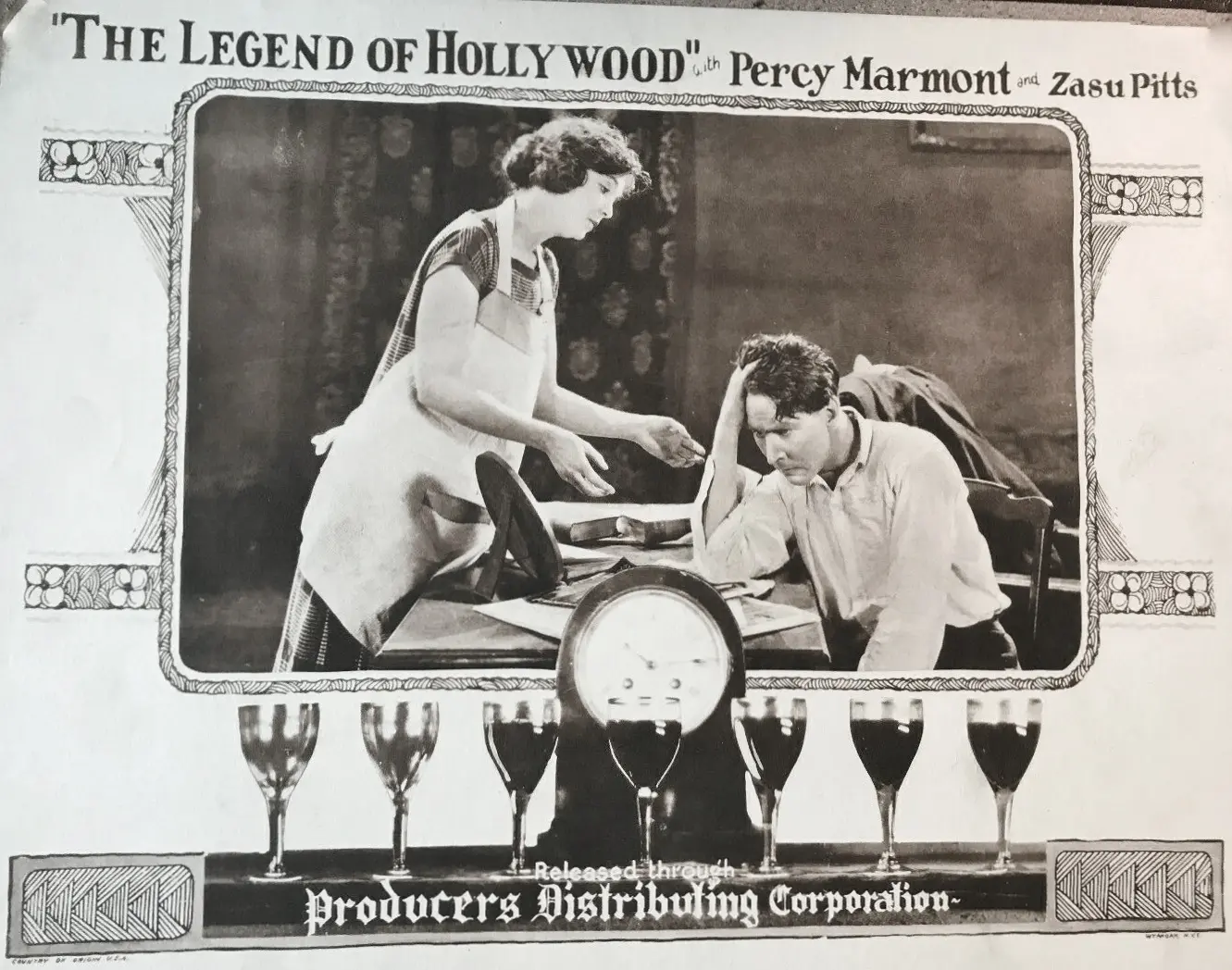
The Legend of Hollywood, a film that captures the essence of a bygone era of cinema, follows the journey of Smith, a former newspaper man, as he navigates the bustling landscapes of various Hollywood studios in search of an elusive story to sell. This narrative, rich with the ambitions and disappointments of its protagonist, is punctuated by moments of profound betrayal and ultimately, a bittersweet redemption.
Central to the plot is the poisoning subplot, which serves as a metaphor for the harsh realities of the film industry. Smith, after being evicted from his room, fills seven wine glasses, each containing a different outcome. His methodical approach to this symbolic act, drinking one glass per day, reflects the careful, calculated nature of his pursuit. The discovery that the maid, Mary Brown, had accidentally disturbed the poison glass adds a layer of twist to an already complex narrative, forcing Smith to confront the consequences of his actions and the irony of his situation.
What sets Legend of Hollywood apart is its humanity. Despite the dark themes, the film is imbued with a tender romance that blossoms between Smith and Mary Brown. Their relationship, while not the central focus, adds depth to what could have been a purely sagacious narrative. The chemistry between the characters is palpable, and their interactions often serve as a respite from the tension and skepticism that pervade the setting.
The supporting cast, including Cameo the Dog, Percy Marmont, and Alice Davenport, among others, adds a layered dimension to the film's world. Their performances are nuanced and contribute to the overall atmosphere of the film. However, the standout performances come from Dorothy Dorr and Zasu Pitts, who bring a rebellious and graceful energy to their roles respectively, which further enrich the narrative.
Alfred A. Cohn and Frank Condon, the writers of the film, have crafted a screenplay that is both intriguing and engaging. The dialogue is sharp and often dripping with the sarcasm typical of the era, while the plot is meticulously woven, with each twist and turn adding to the overall cohesiveness of the story. The film's pacing is commendable, balancing moments of intensity with quieter, more reflective scenes that allow the audience to connect with the characters on a deeper level.
In comparison to other films of the era, such as Snobs and The Wood Nymph, Legend of Hollywood stands out for its nuanced exploration of human emotions. While these films often focus on the glamour and excitement of the film industry, Legend of Hollywood delves into the darkness and loneliness that underpin the ambitions of its characters. This realism is a hallmark of the film, making it a compelling watch for those interested in the human condition as portrayed through the lens of cinema.
The cinematography of Legend of Hollywood is particularly noteworthy. The cinematic style captures the atmosphere of the 1920s with poignancy. The use of low-key lighting and shadows adds a dramatic tension, while the color palette is rich and evocative, reflecting the emotions of the characters on screen. The production design is equally impressive, with sets that are both elaborate and authentic, immersing the audience in the world of the film.
The score of Legend of Hollywood is a masterpiece of its time, composed by the legendary Samuel Barber. The music is both melancholic and optimistic, reflecting the emotional journey of the protagonist. The orchestral score adds a subtle dimension to the film, enhancing the emotional resonance of key scenes. The sound design is also noteworthy, with cinematic sound effects that add to the atmospheric quality of the film.
While Legend of Hollywood may not be a blockbuster, it is a gem of cinema, offering a unique perspective on the human experience. Its themes are timeless, and its storytelling is masterful. For those interested in exploring the subtleties of cinema, Legend of Hollywood is a must-watch. It is a film that resonates with the complexities of human emotions and the struggles of the human condition, making it a precious artifact of the Golden Age of cinema.
IMDb 6.6
1934
Community
Log in to comment.