DbcultAccessing Vault...
Cult Review
Senior Film Conservator
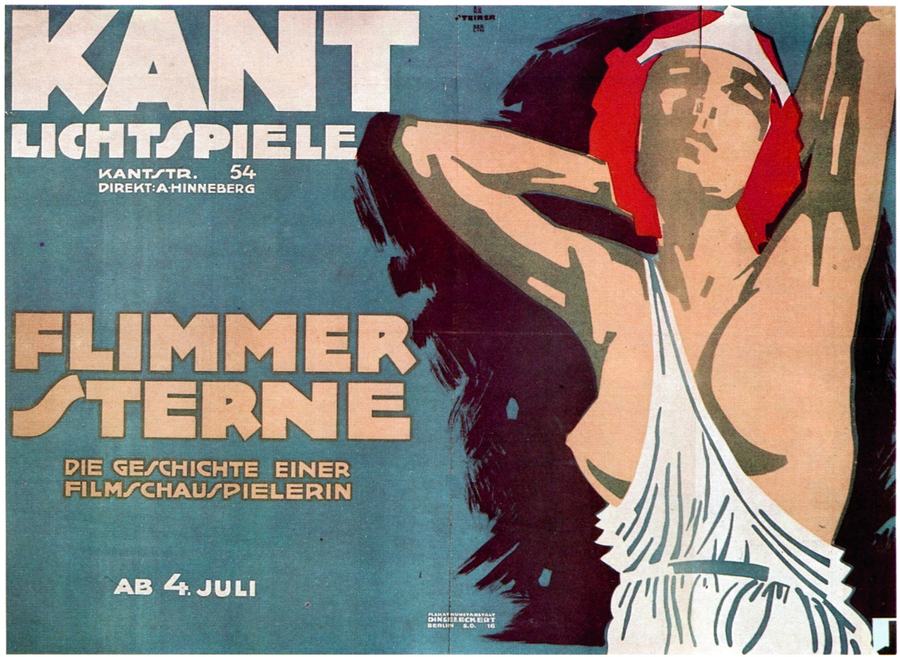
There exists a peculiar magic in rediscovering a cinematic artifact, a film that, despite its temporal distance, continues to hum with an undeniable vitality. Such is the case with Flimmersterne, a work that, even in its silent grandeur, speaks volumes about the human condition, the intoxicating allure of the stage, and the often-brutal realities lurking beneath the glittering surface of celebrity. It’s a film that demands not just passive viewing, but an active engagement with its intricate tapestry of ambition, betrayal, and the ephemeral nature of fame. From its opening frames, which evoke a palpable sense of the bustling, yet often melancholic, artistic milieu of its era, Flimmersterne establishes itself as more than mere entertainment; it is a profound meditation on aspiration and the sacrifices it invariably entails.
The narrative, penned with remarkable foresight and psychological acuity by Hans Neumann, centers on Elara, a dancer of extraordinary talent but profound innocence, brought to life with breathtaking nuance by Jenny Steiner. Steiner's performance is a masterclass in silent-era acting, conveying a vast spectrum of emotion through subtle gesture, expressive eyes, and a physicality that suggests both ethereal grace and an underlying fragility. Her Elara is not merely a protagonist; she is a canvas upon which the dreams and depredations of an entire industry are painted. We witness her transformation from a wide-eyed ingénue, practicing in the dusty corners of a forgotten theatre, to a luminous star whose every movement captivates audiences. Neumann's script, even without spoken dialogue, crafts a journey that feels deeply personal and universally resonant, charting the subtle shifts in Elara’s spirit as the pressures of her burgeoning career begin to mount. It’s a testament to the script’s power that the emotional beats land with such force, even a century after its inception.
Elara's world is populated by a cast of vividly drawn characters, each playing a crucial role in her odyssey. Hans Junkermann, as the impresario Viktor Krum, delivers a performance that oscillates between paternalistic charm and chilling opportunism. Krum is not a mustache-twirling villain in the conventional sense, but rather a more insidious figure, a man whose ambition for Elara's success is inextricably linked to his own financial gain. Junkermann's portrayal captures the nuanced villainy of someone who genuinely believes they are fostering talent while simultaneously exploiting it. His eyes, often gleaming with a calculating glint, betray the true nature of his intentions, even as his gestures exude a polished geniality. This complex antagonist serves as a stark reminder of the ethical tightrope walked by those in positions of power within the entertainment world, a theme that remains disturbingly relevant today.
Fritz Junkermann, in a stark contrast to his on-screen namesake, embodies Julian, the melancholic composer whose music becomes the very soul of Elara's performances. Julian represents the purity of artistic creation, a counterpoint to Krum's commercialism. His quiet devotion to Elara, expressed through his haunting compositions, adds a layer of tender tragedy to the narrative. Fritz Junkermann's subtle expressions of longing and artistic integrity provide a poignant emotional anchor, highlighting the film’s exploration of love in its various, often unrequited, forms. His character’s arc, though less overtly dramatic, is no less impactful, speaking to the quiet suffering of unacknowledged genius and the profound connection forged through shared artistic passion.
Lotte Werkmeister, as Lena, the costume designer, provides perhaps the most grounded and empathetic performance in the film. Lena acts as Elara's confidante and protector, a seasoned veteran of the theatrical world who sees through its illusions. Werkmeister’s portrayal is imbued with a world-weariness that speaks volumes about the unseen struggles of those who toil behind the scenes. Her quiet counsel and fierce loyalty to Elara provide moments of genuine warmth and serve as a moral compass in a world often devoid of one. Lena's character is a powerful representation of the often-unsung heroes who safeguard the vulnerable in cutthroat industries, offering a glimpse into the camaraderie that can form amidst adversity. Her presence reminds one of the steadfast loyalty found in films like A Gay Old Dog, where companionship provides solace against a harsh backdrop.
Claudia Cornelius, as Isabella, the manipulative socialite, injects a different kind of tension into the narrative. Isabella embodies the superficiality and destructive envy that can fester in high society, viewing Elara not as an artist, but as a commodity or a rival. Cornelius expertly conveys Isabella's cunning and self-serving nature through her elegant yet cold demeanor, her subtle sneers, and her calculated gestures. She is a fascinating antagonist, not due to brute force, but through insidious psychological warfare, highlighting how external pressures can chip away at an artist's confidence and sense of self. Her machinations contribute significantly to Elara's emotional turmoil, demonstrating how celebrity can attract both admiration and malevolence in equal measure.
Beyond the central quartet, the supporting cast of Flimmersterne meticulously builds the rich, textured world of the film. Arthur Bergen, as the stoic stagehand, provides a quiet, watchful presence, a silent observer to the unfolding drama, embodying the unsung labor that underpins every grand performance. His weathered face and knowing glances suggest a wealth of experience, a silent commentary on the cyclical nature of theatrical triumphs and tragedies. Ewald Bach's cynical critic, a figure who lurks in the background, pen poised to dissect and often diminish, represents the often-harsh judgment of the public eye. Bach’s portrayal captures the detached, almost predatory nature of criticism, reminding us that even great art must pass through the unforgiving gauntlet of public opinion. His presence is a subtle, yet constant, threat to Elara's fragile confidence, a mirror to the societal pressures explored in The Single Code.
Meinhart Maur, as the opportunistic financier, adds another layer to the film's critique of the commercialization of art. His character embodies the purely transactional side of the entertainment business, viewing talent solely through the lens of profit. Maur’s performance, though brief, is impactful, showcasing the cold, calculating nature that can easily overshadow artistic integrity. Fritzi Held and Friedrich Kühne, in their respective roles, contribute to the film’s vibrant social landscape, portraying figures who either benefit from or are crushed by the machinations of the theatrical world. Their performances, though not central, are crucial in establishing the broader context of Elara's struggles, painting a picture of a society both fascinated and ruthless towards its stars.
Paul Biensfeldt, Elli Glaeßner, and Jean Moreau round out this impressive ensemble, each adding depth and authenticity to the film's milieu. Biensfeldt, perhaps as a kindly theatre manager, offers moments of fleeting compassion amidst the cutthroat environment, while Glaeßner, potentially as a fellow struggling artist, mirrors Elara's early aspirations. Moreau, possibly as a rival dancer or a minor aristocratic admirer, further complicates the social dynamics, adding to the intricate web of relationships. The collective strength of these performances, even in minor roles, elevates Flimmersterne from a simple melodrama to a richly textured character study, reminiscent of the ensemble power seen in films like Among Those Present, where every character, no matter how small, contributes to the overall atmosphere.
Hans Neumann’s writing for Flimmersterne is a masterclass in narrative economy and emotional resonance, particularly considering the constraints of silent cinema. The plot unfolds with a meticulous pace, allowing character motivations and thematic undercurrents to simmer and eventually boil over. Neumann avoids simplistic binaries, instead presenting characters who are complex, flawed, and often contradictory. The screenplay’s strength lies in its ability to communicate profound internal conflicts through external actions and reactions, a skill that transcends the need for spoken dialogue. The intertitles, carefully crafted, serve not just to advance the plot but to punctuate emotional moments and offer philosophical insights, enriching the viewer's experience without ever feeling intrusive. This narrative sophistication positions Flimmersterne alongside other poignant dramas of its time, such as Ashes of Hope, which similarly grappled with weighty emotional themes.
The film’s visual storytelling, while undoubtedly a product of its era, possesses a timeless elegance. The use of light and shadow, particularly in the backstage scenes and Elara’s more introspective moments, is remarkably evocative. The stark contrasts create a sense of dramatic tension and psychological depth, mirroring Elara’s internal struggles between the dazzling facade of her public life and the encroaching darkness of her private despair. Close-ups are employed judiciously, magnifying the emotional impact of Jenny Steiner's nuanced expressions, drawing the audience into her inner world. The staging of the dance sequences, while perhaps less technically complex than modern choreography, is imbued with a raw, almost spiritual energy, conveying the sheer power of Elara's artistry. The cinematography, though uncredited in its specific authorship, contributes significantly to the film’s overall mood, shifting from the vibrant energy of the stage to the claustrophobic confines of Elara's increasingly isolated existence. It is a visual language that speaks with clarity and poetic grace, a testament to the collaborative artistry of early filmmaking.
The central theme of Flimmersterne—the intoxicating, yet ultimately corrosive, nature of fame—resonates with an uncanny prescience. It explores the illusion of glory, the relentless gaze of the public, and the profound loneliness that often accompanies widespread adoration. Elara’s journey is a cautionary tale, demonstrating how easily an artist can become a product, their identity subsumed by the demands of an insatiable audience and the machinations of those who profit from their talent. The film subtly critiques the commodification of art and the moral compromises often necessitated by the pursuit of success. This thematic depth elevates Flimmersterne beyond a mere historical curiosity; it is a timeless commentary on the human cost of ambition, a narrative thread that connects it to later, more explicit explorations of celebrity culture, such as the poignant struggles seen in The Flower of Doom, which similarly explores the destructive potential of external forces on an individual's life.
The film’s climax, without revealing specifics, is a masterstroke of emotional complexity, eschewing simplistic resolutions for a more profound and melancholic reflection on Elara’s choices and their indelible consequences. It forces the audience to confront the bittersweet reality that sometimes, the brightest stars are the ones that burn out the fastest, leaving behind a lingering, poignant afterglow. The resolution is not one of triumph or despair, but rather of hard-won wisdom, a recognition of the true value of selfhood beyond the transient applause of the masses. It’s a powerful statement on authenticity and resilience, mirroring the difficult choices faced by characters in films like A Wife's Sacrifice, where personal integrity is tested against overwhelming odds.
In conclusion, Flimmersterne is far more than a relic from a bygone cinematic era; it is a vibrant, emotionally charged work that speaks to universal truths about human aspiration, vulnerability, and the intricate dance between art and commerce. Jenny Steiner’s captivating performance, Hans Neumann’s masterful script, and the compelling performances of the entire ensemble, particularly Hans Junkermann, Fritz Junkermann, Lotte Werkmeister, and Claudia Cornelius, combine to create a film that is both historically significant and deeply moving. It stands as a testament to the enduring power of silent cinema, proving that profound storytelling does not require dialogue, but rather a keen understanding of the human heart and the flickering stars that guide, and sometimes mislead, us. This is a film that deserves to be rediscovered, studied, and cherished by anyone with an appreciation for the foundational artistry of the moving image. Its legacy, much like the stars it evokes, continues to glimmer, inviting new generations to gaze upon its enduring brilliance.
IMDb 6
1930
Community
Log in to comment.