DbcultAccessing Vault...
Cult Review
Senior Film Conservator
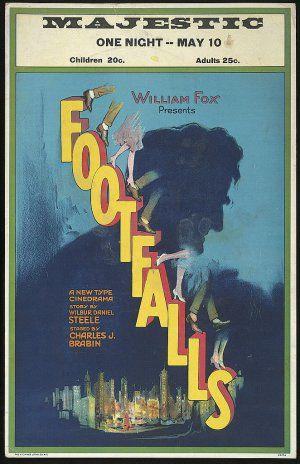
In the annals of early cinema, where the nascent language of visual storytelling was still finding its voice, certain films emerged with a singular resonance, transcending their technological limitations to probe the depths of human perception and the labyrinthine pathways of justice. Charles Brabin's 1921 silent drama, Footfalls, stands as a testament to this era's capacity for profound narrative, delivering a taut psychological thriller that hinges on a most extraordinary human faculty. It is a film that, even a century later, compels us to consider the myriad ways in which truth can be obscured by superficial appearances and unveiled by the most unexpected of senses.
At the heart of Footfalls is Hiram Scudder, portrayed with an almost preternatural gravitas by Tyrone Power Sr. Hiram is a blind cobbler, a figure often relegated to the margins of society, yet in this narrative, his affliction becomes his greatest asset. His world, devoid of visual input, is instead a rich tapestry woven from sound, particularly the intricate symphony of human movement. He discerns identities, moods, and intentions not through sight, but through the subtle nuances of footsteps – the weight, the rhythm, the distinctive shuffle or stride of each villager. This unique premise, adapted from Wilbur Daniel Steele's compelling story, immediately elevates the film beyond a simple crime drama, infusing it with an almost mythical quality. It asks us to consider what we truly 'see' and how much we overlook in our reliance on the dominant sense.
The film masterfully establishes Hiram's unique ability early on, not through exposition dumps, but through subtle, repeated demonstrations. We witness his uncanny accuracy, his quiet certainty, which initially endears him to the community but later becomes a source of their dismissal. This narrative device is incredibly potent, laying the groundwork for the tragic misunderstanding that will unfold and ultimately setting the stage for Hiram’s singular quest for justice. It's a prime example of how silent cinema, stripped of dialogue, often leaned into visual — or in this case, conceptual — metaphors to convey complex ideas. Much like how La tempesta in un cranio, though perhaps more overtly symbolic, explored internal psychological landscapes, Footfalls delves into an internal sensory world that defines its protagonist's reality.
The human element, the raw emotional core, is brought to life through Hiram's son, Tommy (Tom Douglas), a young man whose aspirations are inextricably linked to the affections of Peggy Hawthorne (Estelle Taylor), the village belle. Peggy, a woman of practical sensibilities, sets a condition for their union: Tommy must secure a stable job and make a name for himself. This seemingly innocuous demand becomes the catalyst for a chain of events that spirals into tragedy. It speaks to the societal pressures of the era, where a man's worth was often measured by his economic standing and perceived ambition. Douglas portrays Tommy with a blend of youthful idealism and simmering insecurity, making his subsequent descent into jealousy feel both understandable and regrettable.
Enter Alec Campbell (Gladden James), an engineer whose professional success and burgeoning interest in Peggy ignite a fierce, possessive jealousy in Tommy. Campbell, living conveniently above Hiram’s shop, becomes the unwitting rival. The film cleverly uses proximity to heighten the tension, setting the stage for an inevitable confrontation. This love triangle, a common trope in early cinema, is handled here with a degree of psychological realism that lends weight to the ensuing violence. It's a reminder that even in the most seemingly idyllic settings, the potent forces of desire and envy can shatter the peace, much like the dramatic interpersonal conflicts explored in films such as The Jay Bird or A Splendid Hazard, which often hinged on romantic complications leading to dire consequences.
The narrative's fulcrum arrives with the violent confrontation between Tommy and Campbell in the latter's upstairs room. Hiram, hearing the struggle, attempts to intervene, his blindness ironically making him both vulnerable and a crucial, albeit unreliable, witness. He is violently thrown back down the stairs, suffering a broken leg – an injury that physically incapacitates him but paradoxically sharpens his resolve and focuses his unique sensory gifts. The ensuing fire, sparked by an overturned lamp, is a scene of chaotic destruction, a visual metaphor for the unraveling of order and truth. The flames consume evidence, charring a body beyond recognition, leaving behind a grim tableau of death and ambiguity.
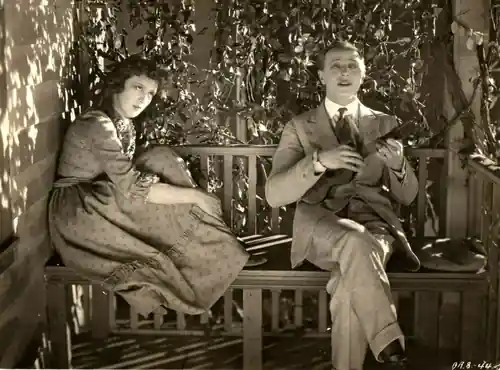
The immediate aftermath is crucial: a survivor, clutching a satchel of money, creeps downstairs. Hiram, despite his injury, instinctively grabs the man's hand, a fleeting touch that imprints a sensory memory. He is beaten off with a wrench, and the money is hastily hidden behind a wall before the culprit flees. This sequence is a masterclass in silent film suspense, relying on rapid cuts, expressive acting, and the sheer terror of the situation. The discovery of Campbell's clothes and watch amongst the charred remains leads to the inevitable, yet tragically incorrect, conclusion: the body is Campbell's, and Tommy, having been seen struggling with him, is the prime suspect, now wanted for murder. This wrongful accusation, a familiar trope in crime narratives, gains particular poignancy here due to Hiram's unique perspective. Films like De Luxe Annie, with its intricate plot of mistaken identity and criminal deception, share a thematic thread, but Footfalls imbues its central mystery with a profound sensory dimension.
With Tommy a fugitive and presumed murderer, the village's perception of Hiram shifts dramatically. His insistence that the body is not Campbell's, that the true killer is still at large, is met with skepticism, then pity, and finally, outright dismissal. They deem him insane, a man broken by grief and injury, his extraordinary sensory abilities now viewed as delusions. This societal rejection is a poignant commentary on how readily we discredit those who perceive reality outside our conventional frameworks. Hiram becomes an isolated figure, his unwavering conviction a beacon in a sea of communal misunderstanding. His solitary vigil, listening for the distinctive footfalls of the killer, transforms him into a tragic, yet heroic, figure. He is a man against the world, armed only with his acute hearing and an unshakeable belief in his own truth.
Tyrone Power Sr.'s performance during this extended period of waiting is remarkable. He conveys Hiram's inner turmoil, his relentless hope, and his profound loneliness with subtle gestures and facial expressions that speak volumes without a single intertitle. The audience is invited to share in Hiram's sensory world, to listen with him, to feel the weight of his certainty against the tide of public opinion. This segment of the film is a testament to the power of silent acting, where the absence of dialogue forces a deeper engagement with the visual and emotional cues. It echoes the quiet, internal struggles depicted in other early dramatic works, where the internal world of characters, often misunderstood, drives the narrative forward.
The narrative builds towards its inevitable climax as Hiram's patience is finally rewarded. One night, the familiar, distinctive footsteps he has been meticulously cataloging in his mind echo once more. The killer, drawn back by the irresistible lure of the hidden money, returns to retrieve his ill-gotten gains. The tension in this scene is palpable, expertly constructed through pacing and visual cues. Hiram, no longer frail or dismissed, confronts the intruder. The ensuing struggle is raw and visceral, a desperate fight for truth and vengeance. Hiram, guided by his unparalleled hearing and the memory of that fateful touch, grapples with the man, choking him in a desperate bid for revelation.
The moment of truth is shattering: the intruder is revealed to be none other than Alec Campbell himself, alive and well, his death merely a cunning ruse to escape justice and claim his stolen fortune. The revelation is a powerful twist, executed with precision and dramatic impact. It not only clears Tommy's name posthumously but also vindicates Hiram, proving the veracity of his unique perception against the superficial judgments of the sighted world. This kind of shocking reveal, where a presumed victim is actually the perpetrator, was a potent narrative device in early thrillers, creating a sense of dramatic irony and audience engagement. It's a plot point that relies on misdirection, a common technique in suspenseful narratives like Inside the Lines, where identities and loyalties are constantly in question.
The strength of Footfalls lies not just in its ingenious plot but also in its compelling performances and Charles Brabin's astute direction. Tyrone Power Sr. delivers a tour-de-force performance as Hiram. His portrayal transcends mere physical acting; he conveys a profound internal life, a man whose blindness has endowed him with a different, perhaps deeper, understanding of the world. His expressions of grief, determination, and eventual triumph are nuanced and deeply affecting. Estelle Taylor as Peggy and Tom Douglas as Tommy also contribute solid performances, embodying the youthful passions and anxieties that fuel the initial conflict. Gladden James as Campbell effectively portrays the duplicity required for the twist ending.
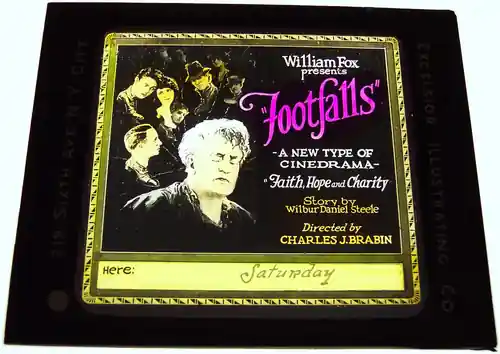
Brabin's direction is taut and efficient. He understands the power of visual storytelling in the silent era, using close-ups to emphasize Hiram's listening, careful editing to build suspense during the fire and the final confrontation, and evocative cinematography to establish the mood. The film's pacing is excellent, allowing moments of quiet reflection to underscore the intensity of the dramatic beats. The visual language is clear, concise, and emotionally resonant. While not as grand in scale as some of the epic productions of the time, Footfalls demonstrates that a compelling story, well-acted and thoughtfully directed, can achieve significant impact with more intimate settings. Comparisons to other dramas of the period, such as Confession or Cold Steel, reveal a shared emphasis on character-driven conflict and moral dilemmas, but Footfalls distinguishes itself with its unique sensory premise.
Beyond its thrilling plot, Footfalls explores several profound themes that resonate even today. The most prominent is the nature of perception versus reality. Hiram's blindness forces him to develop an alternative sensory framework, one that ultimately proves more accurate than the sight-based judgments of the community. This challenges the audience to question their own reliance on conventional senses and to consider the biases inherent in what we 'see.' It's a powerful argument for looking – or listening – beyond the obvious.
The film also delves into themes of justice and redemption. Tommy's posthumous clearing of his name is a poignant moment, a testament to the enduring power of truth, even when it is hard-won. Hiram's relentless pursuit of justice, despite personal injury and societal scorn, elevates him to a heroic status, embodying the resilience of the human spirit in the face of overwhelming adversity. The film critiques societal prejudice, showing how quickly a community can ostracize and dismiss those who do not conform to their understanding of the world. Hiram's journey from respected elder to perceived madman and back to vindicated truth-sayer is a compelling arc.
Furthermore, the film subtly touches on class and ambition. Tommy's desire to 'make a name for himself' speaks to the pressures of upward mobility and the anxieties surrounding economic status in the early 20th century. His jealousy of Campbell, a successful engineer, is rooted in these societal expectations. This adds a layer of social commentary to the personal drama, grounding the fantastical element of Hiram’s ability in relatable human struggles. The very idea of an engineer living above a cobbler's shop suggests a subtle class distinction that fuels the initial friction. The film's exploration of these universal human emotions and societal dynamics ensures its continued relevance, even for modern audiences accustomed to vastly different cinematic techniques.
Footfalls, like many silent films, experienced periods of obscurity, yet its rediscovery and restoration have allowed it to claim its rightful place as a significant work of early American cinema. It's a film that showcases the inventive storytelling that characterized the era, proving that compelling narratives did not require spoken dialogue to captivate and move an audience. Its unique premise, strong performances, and thematic depth make it a fascinating study for film historians and an engaging experience for anyone interested in the roots of the psychological thriller genre.
In an age where cinematic spectacle often overshadows narrative ingenuity, Footfalls reminds us of the power of a simple, yet profound, idea. It's a potent demonstration of how sensory deprivation can paradoxically lead to a heightened form of perception, and how unwavering belief in one's unique truth can ultimately pierce through layers of deception and conventional wisdom. It stands as a compelling argument for the richness and complexity of silent cinema, a genre too often dismissed as primitive. By allowing us to 'listen' alongside Hiram Scudder, the film offers a unique vantage point into a world where the unseen holds the key to the most profound truths. Its legacy is not just as a well-crafted thriller, but as a meditation on the very nature of human understanding and the extraordinary capacities that lie dormant within us, waiting to be awakened. It’s a film that continues to echo, much like those titular footfalls, in the corridors of cinematic history.
IMDb 7.4
1930
Community
Log in to comment.