DbcultAccessing Vault...
Cult Review
Senior Film Conservator
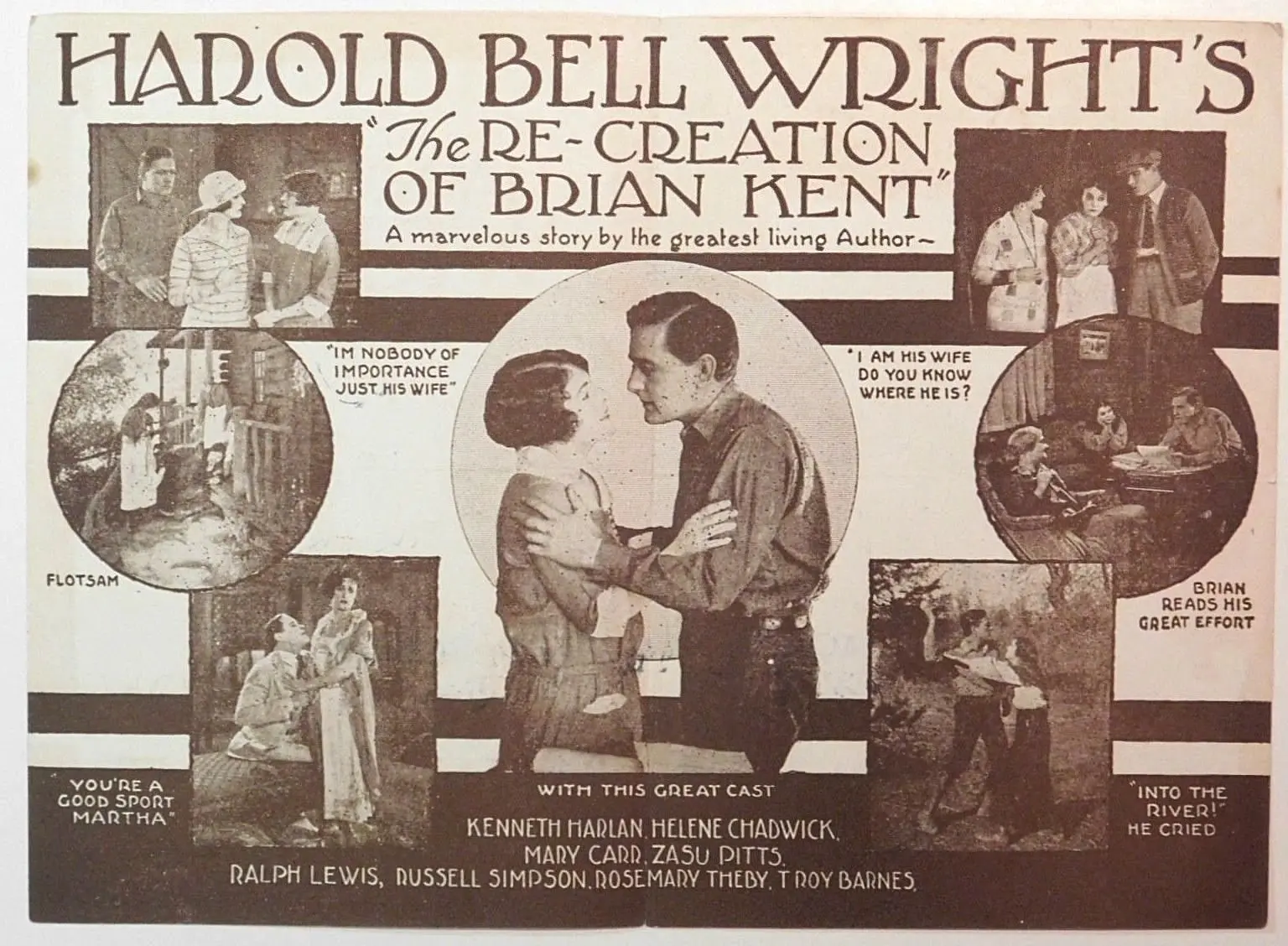
The silent era often functioned as a secular pulpit, and few films exemplify this homiletic grandeur as vividly as The Re-Creation of Brian Kent. Adapted from the prose of Harold Bell Wright—a man whose popularity in the early 1900s rivaled the most celebrated literati—this 1925 production is far more than a simplistic morality play. It is a visual exploration of the American obsession with the 'second act.' In an era where the frontier had closed but the internal landscape of the psyche remained largely unmapped, the film posits that a man can indeed be born again, provided he is willing to drown his former self in the literal and metaphorical waters of the wild.
The film opens not with a bang, but with the quiet, corrosive pressure of domestic expectation. Kenneth Harlan portrays Brian Kent with a nuanced fragility that avoids the histrionics often associated with silent cinema. His Kent is a man eroded by the parsimonious demands of his wife, a character played with icy detachment by Rosemary Theby. The embezzlement is presented not as a grand heist, but as a desperate gasp for air by a man drowning in debt and social obligation. When Kent flees and attempts suicide by casting himself adrift on a turbulent river, the cinematography captures the terrifying indifference of nature—a theme we see echoed in works like La Destinée de Jean Morénas, where the individual is dwarfed by the weight of their fate.
The sequence where Kent’s boat is ensnared by willows is a masterstroke of symbolic staging. The willows act as the fingers of destiny, pulling him back from the brink of the void and depositing him into the care of Judy, the maidservant, and her employer, Auntie Sue. Here, the film shifts its palette from the cold, urban grays of the bank to the warm, sepia-toned bucolicism of the countryside. This transition is vital; it suggests that the city is a site of moral decay, while the rural landscape offers a font of purification.
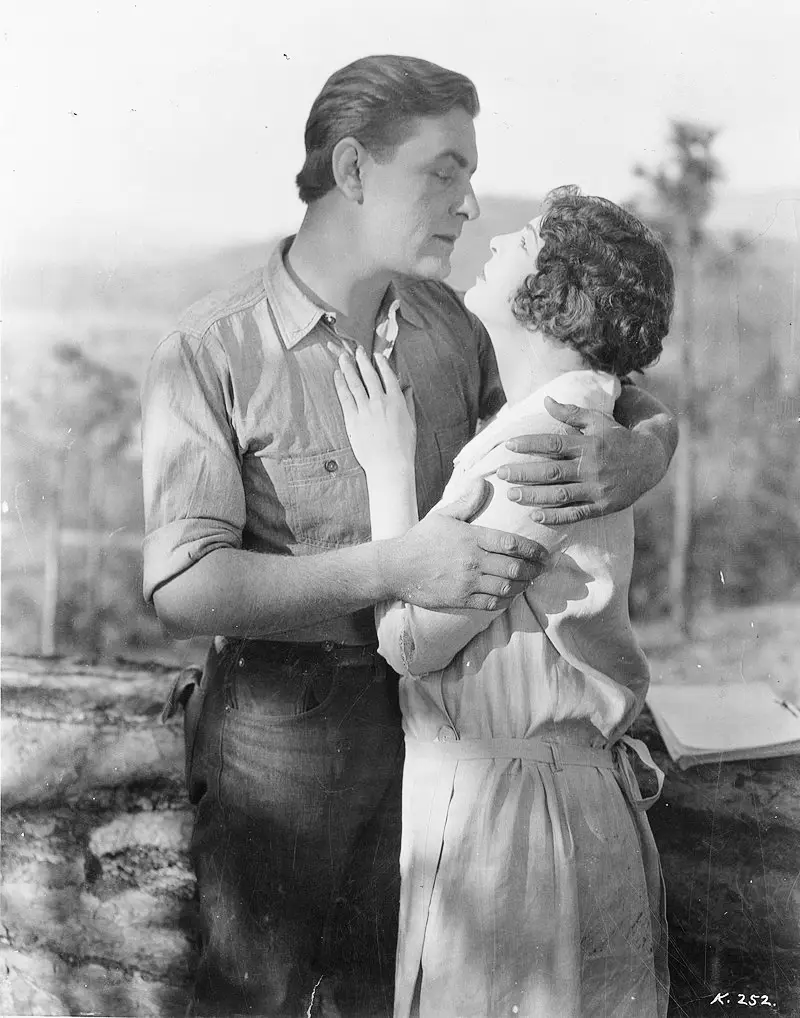
Mary Carr’s portrayal of Auntie Sue is the emotional fulcrum of the entire narrative. As a schoolteacher, she represents the civilizing force of the intellect tempered by the compassion of the heart. She does not merely provide Kent with a roof; she provides him with a mirror. Under her gaze, Kent’s 're-creation' begins. This is not a passive recovery but an active, creative labor. Kent begins to write, transforming his internal turmoil into a manuscript. This meta-narrative element—the act of writing one's way out of a moral debt—is a sophisticated touch that elevates the film above the standard melodramas of the time, such as A Prince in a Pawnshop, which deals with similar themes of redemption through a more commercial lens.
"The river takes what is broken and, if the current is kind, leaves it upon a shore where the soul might be glued back together piece by agonizing piece."
However, the path to righteousness is never a straight line. The introduction of Betty Jo (Helene Chadwick) creates a romantic tension that triggers the jealousy of Judy, played by the incomparable Zasu Pitts. Pitts, often relegated to comedic roles, displays a startling range here. Her Judy is a creature of stunted emotions and sharp edges. Her betrayal—informing her father of Kent's criminal past—introduces a thriller element that reminds the viewer of the high stakes involved. The past is never truly buried; it is merely waiting for a shovel.
The resolution of The Re-Creation of Brian Kent hinges on two pivotal events: a confrontation at the bank and a tragic accident on the water. The scene where Auntie Sue confronts the bank president—a former pupil—is a powerful testament to the long-term impact of moral education. It suggests that the bonds of human connection and the debt of gratitude are more potent than the rigid structures of the law. This stands in stark contrast to the more cynical resolutions found in modern noir or even contemporary silent dramas like Bag Filmens Kulisser.
The death of Kent's estranged wife by drowning is perhaps the film's most controversial narrative choice. To a modern audience, it may seem like a 'deus ex machina' designed to conveniently clear the path for Kent’s happiness with Betty Jo. However, within the context of the 1920s moral universe, this is a form of poetic justice. The water that gave Kent life takes the life of the woman who represented his moral death. It is a symmetrical closing of the circle. While films like Till We Meet Again offer a more traditional romantic resolution, Wright’s story insists on a cosmic balancing of the scales.
Directorially, the film utilizes light and shadow to articulate Kent’s psychological state. The early scenes are cluttered, filled with the claustrophobia of domestic strife. As Kent moves toward redemption, the frames become more open, utilizing the natural light of the outdoors to signify his burgeoning clarity. The editing pace is deliberate, allowing the emotional beats to resonate without the frantic cutting seen in action-oriented silents like Tempest Cody Turns the Tables or the high-speed thrills of The Lucky Devil.
The supporting cast deserves significant praise. Russell Simpson as Judy's father provides a grounded, if somewhat menacing, presence that serves as a necessary obstacle to Kent’s peace. The production design, particularly the interior of Auntie Sue’s cottage, feels lived-in and authentic, avoiding the staginess that plagued many lower-budget productions of the era. It rivals the atmospheric depth of The Carpet from Bagdad, though it trades exoticism for an earnest Americana.
To watch The Re-Creation of Brian Kent today is to step into a world where the concepts of honor, shame, and rebirth were handled with a sincerity that might seem alien to our cynical age. It lacks the irony of An Amateur Devil or the lightheartedness of The Gypsy Trail. Instead, it offers a somber, deeply felt meditation on the possibility of change. It acknowledges that while we cannot erase our transgressions, we can use the wreckage of our past to build a more resilient future.
The film’s legacy lies in its refusal to offer a cheap redemption. Brian Kent has to work for his soul. He has to face the river, the pen, and the judgment of his peers. In an era of cinematic ephemera, this film stands as a sturdy monument to the enduring power of the human spirit to re-invent itself. It is a essential viewing for anyone interested in the evolution of the American narrative, standing alongside works like No Woman Knows as a profound study of character under pressure. Whether you are a scholar of the silent era or a casual viewer seeking a story with actual moral weight, Brian Kent’s journey from the depths of the river to the heights of literary and personal success is a voyage worth taking.
IMDb —
1927
Community
Log in to comment.