DbcultAccessing Vault...
6.3/10
Senior Film Conservator
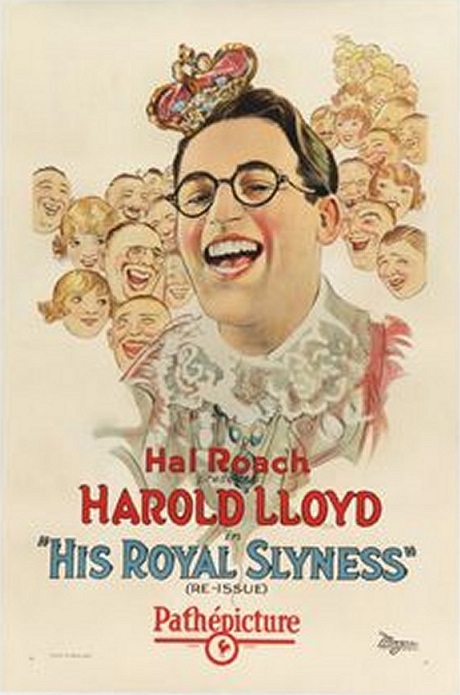
A definitive 6.3/10 rating for a film that redefined the boundaries of cult cinema. His Royal Slyness remains a cornerstone of transgressive art.
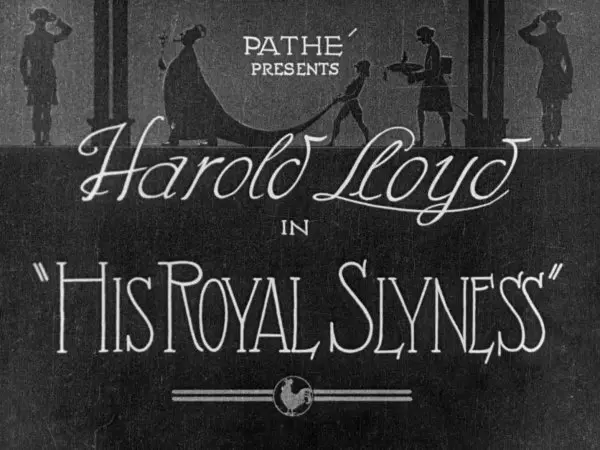
The first time we glimpse Harold Lloyd’s nervous energy in His Royal Slyness, he is perched atop a stepladder in a cramped Ohio bookshop, polishing a volume of Rousseau with the reverence of a pilgrim. The ladder buckles; the tome sails through the air; the camera—nimble as pickpocket fingers—catches the exact instant when Enlightenment philosophy smacks a portrait of King George. Prophecy disguised as slapstick. Within minutes, Lloyd will be shipped across the Atlantic to Thermosa, a postage-stamp kingdom whose geography is sketched somewhere between Lubitsch’s mythical realms and the Marx Brothers’ Freedonia, but whose emotional weather is pure Midwestern wish-fulfillment.
Director Fred C. Newmeyer, working from a sardonic scenario by H.M. Walker, stages the deception like a carnival shell-game. The camera glides past phalanxes of courtiers whose powdered wigs resemble dandelions gone to seed. Each bow is a semaphore of servitude; each flourish of trumpets a reminder that legitimacy here is nothing more than acoustics. Into this sonic cathedral wanders Lloyd in a borrowed cadet’s jacket, his grin a crack in the imperial façade. The joke is not merely that he looks like the missing prince—the joke is that nobody in Thermosa can any longer articulate what authenticity might taste like.
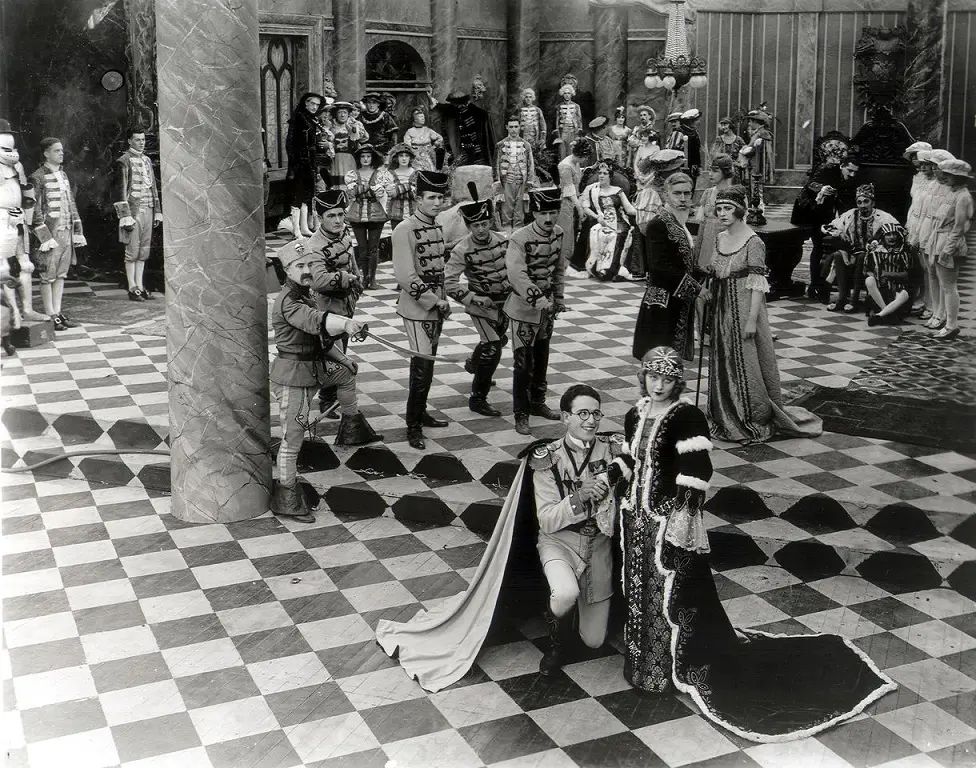
Watch how the film weaponizes symmetry: when the impostor rehearses a royal wave, the mirrors in the antechamber reproduce him into infinity, an ouroboros of self-creation. Meanwhile, in the village square, peasants choreograph their own spectacle—pitchforks become flag-poles; turnips become cannonballs. The montage ricochets between high-vaulted palace corridors and low-arched taverns, between gilt thrones and tavern benches scarred by tankards. The cutting rhythm anticipates Eisenstein by at least half a decade, yet it pirouettes rather than pole-axes, preserving the buoyant tenor of Lloyd’s comedic universe.
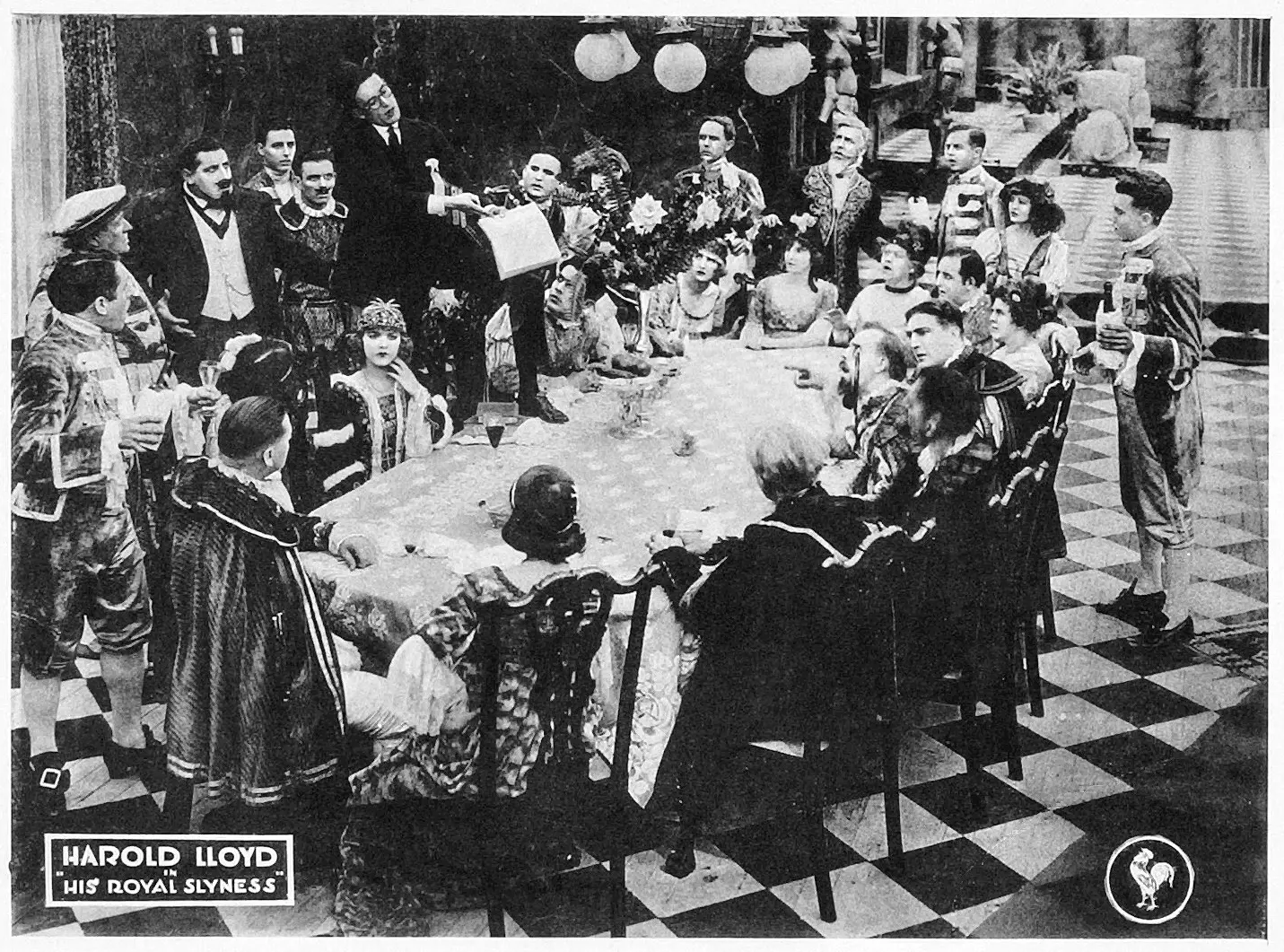
Lloyd’s physical vocabulary here is less daredevil than semaphore. He communicates with elbows that jut like exclamation marks, with knees that buckle into question arcs. There is a sublime sequence inside the royal banquet hall where he must carve a roasted swan while diplomats scrutinize his etiquette; every mis-slice of the blade sends a confetti of meat into the powdered cleavage of a countess. The gag crescendos when the swan’s bronze skeleton—an armature worthy of a medieval astrolabe—catapults off the platter and lands on the head of a Prussian envoy. Diplomatic protocol disintegrates into a food fight that feels like Caligula reimagined by a Sunday-school class.
Enter Mildred Davis as Princess Louise, a flapper ahead of her epoch, eyes sparkling with the skepticism of someone who has already read the final chapter. Her court gown is a meringue of tulle, but underneath she sports the gait of a tennis champion. Davis gifts the picture its emotional ballast: when she discovers the impostor’s identity, her laugh is not scornful but conspiratorial, as though monarchy itself were a bedroom farce she’s willing to pirouette through. Their courtship transpires in a moonlit maze whose hedges have been trimmed into the shapes of heraldic beasts; the two lovers trade one-liners over the snout of a topiary griffin. The scene glows with that delicate sea-blue (#0E7490) tint reserved for nocturnal reveries in silent cinema, a chromatic whisper that says: all this will soon dissolve into dawn.
The revolution, when it erupts, is not a thunderclap but a sustained tremolo. Cinematographer Walter Lundin cranks the camera at a slightly slower speed during the riot sequences, so that when the footage is projected at standard frame-rate the peasants surge like lava—too fast for comfort, too slow for escape. A child hurls a bouquet of flamingo feathers that morph into a Molotov cocktail mid-air. A gramophone, still playing a Strauss waltz, is hoisted onto a barricade; its brass horn becomes a megaphone for manifestos. The film is savvy enough to let the crowd’s wit outgun their fury: one placard reads “Off with their heads—seasonally adjusted.”
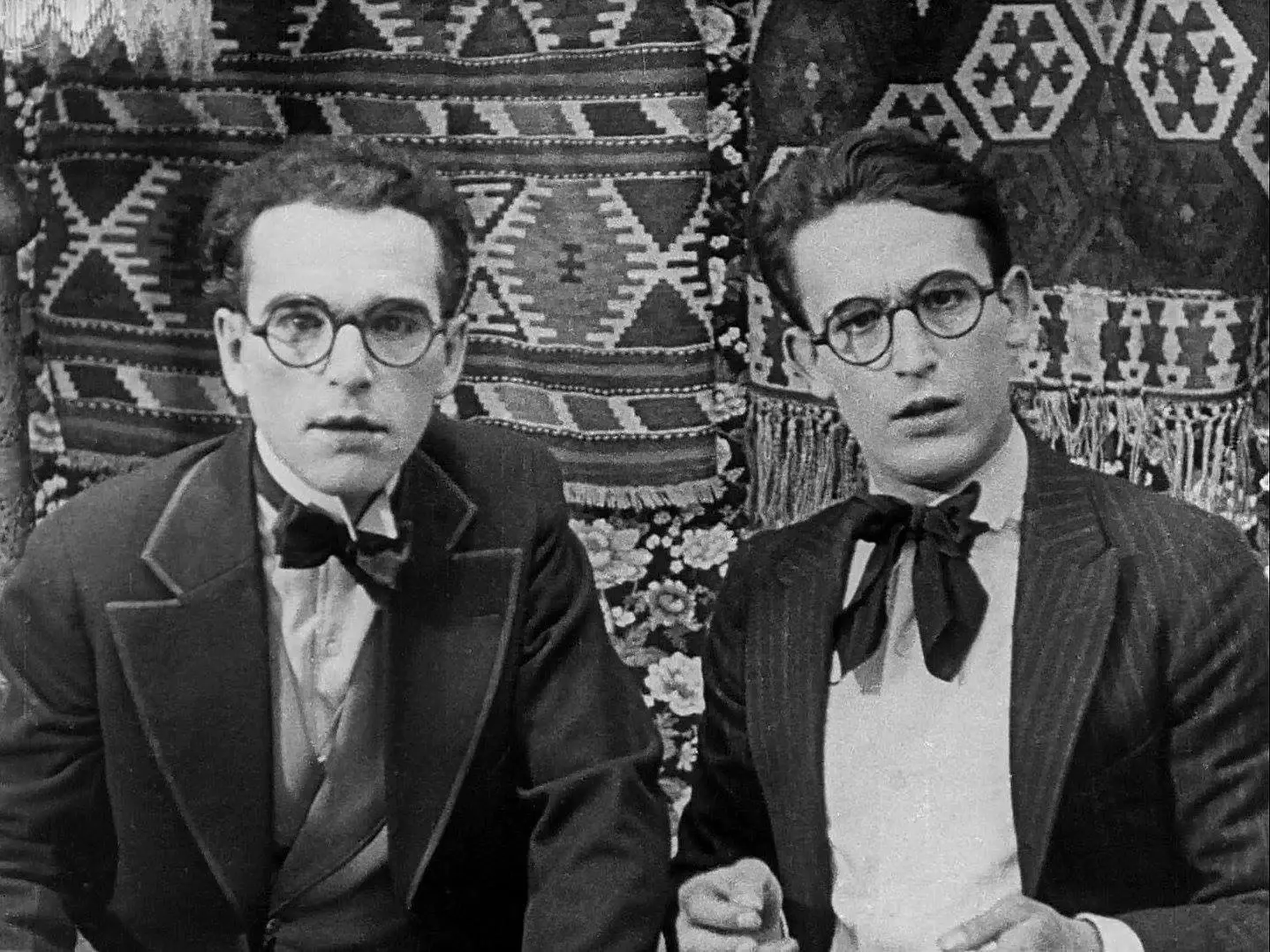
And then the double arrives: the bona-fide Prince Roederick, played by Charles Stevenson with the lacquered smugness of a man who has never opened a door for himself. Stevenson’s performance is a masterclass in unlikability—he twirls a monocle as though stirring arsenic into tea. The film stages their confrontation inside the palace’s Hall of Mirrors, a deliberate echo of Versailles; the two doppelgängers circle each other like rival magicians. Lloyd’s everyman squares his shoulders, suddenly aware that the only thing standing between a republic and restoration is his own improvisatory moxie. The duel is fought not with rapiers but with scepters that unscrew to reveal fountain-pens; ink splatters across the looking-glasses, blotting out reflections until identity itself becomes a palimpsest.
What makes His Royal Slyness resonate a century later is its prescient suspicion that legitimacy is merely a consensus hallucination. When the provisional assembly votes to abolish the monarchy, the ballot is a battered top-hat into which each citizen drops a pebble. The stones clink like distant artillery. The American, still wearing his prince-regent epaulets, is hoisted onto the shoulders of carpenters and laundresses. Yet the final shot withholds triumph: Newmeyer frames Lloyd against a tattered flag whipping in the wind, its stripes sewn from mismatched rags. The new president’s grin is tentative, a man who has just realized that tomorrow’s headlines will demand competence, not mere charm.
Compare this denouement to the finales of other 1920s royalist send-ups. In Baronin Kammerjungfer, nobility is lampooned yet ultimately reaffirmed; the status quo pirouettes back into place like a revolving door. His Royal Slyness, by contrast, allows the revolution to stick—an audacious narrative gamble that prefigures the democratic upheavals of the decade to come. Even Anniversary of the Revolution, with its agitprop fervor, cannot match the breeziness with which Lloyd’s film topples thrones while still delivering pratfalls.
The print quality on current restorations is a miracle: nitrate damage has been digitally cauterized, yet the sea-blue tint of moonlit sequences retains its cyanotic shimmer, while the amber glow of torch-lit crowds pulses like embers. The Mont Alto Motion Picture Orchestra’s new score interpolates klezmer clarinet with martial snare, underscoring the film’s tonal whiplash between courtly pomp and revolutionary rag. Listen for the moment when the orchestra quotes “Yankee Doodle” in a minor key—it coincides with Lloyd doffing his crown, a sly nod to American exceptionalism inverted.
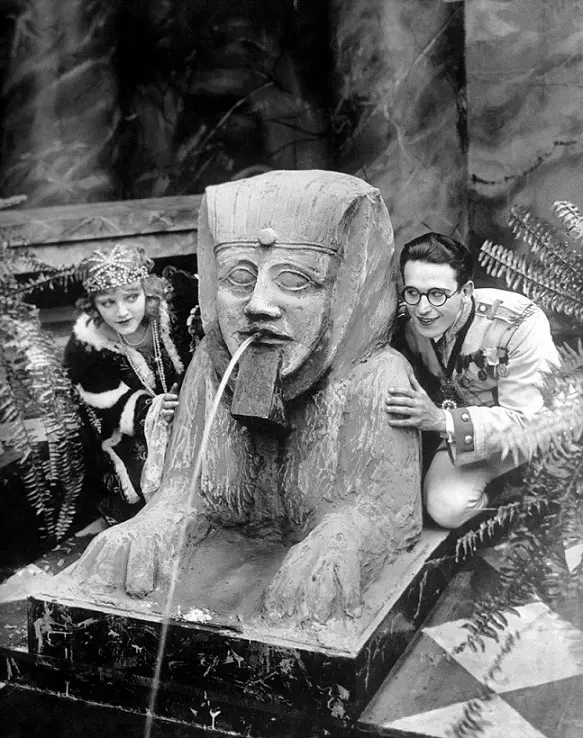
Scholars often pigeonhole Lloyd as the optimist foil to Chaplin’s tramp and Keaton’s stone-face, yet His Royal Slyness reveals his darker flirtation with chaos. His book salesman is not a naïve ingénue but a quickstudy in situational ethics; he peddles not literature but possibility. When he signs a royal decree with the flourish of a cartoonist, the ink blob morphs into a doodle of a cat wearing a liberty cap. It is this graffiti insouciance that endears him to the Thermosan masses, who have spent centuries curtsying to calligraphy.
In the cyclone of 1920 releases—Under the Top’s surreal trench humor, The Waif’s melodramatic lachrymosity—His Royal Slyness occupies a unique interstice: a historical burlesque that refuses to retreat into pastoral nostalgia. It is a cinematic sneeze in the face of hereditary privilege, delivered with the velocity of a custard pie. Yet its aftertaste is curiously bittersweet; the final iris-in closes on Lloyd’s eyes, where exhilaration and terror perform an unresolved duet.
Criterion’s forthcoming Blu-ray supplements include a commentary by silent-film scholar Shelley Stamp, who notes that the palace interiors were shot inside the abandoned Laughlin Park mansion, once owned by a railroad baron who bankrupted himself throwing Gilded-Age orgies. The ghosts of those soirées seem to haunt the celluloid: every chandelier glints with the desperation of someone keeping up appearances. Also included is a 1919 short, Lost on Dress Parade, whose subplot of mistaken rank anticipates the feature’s DNA.
To watch His Royal Slyness today is to eavesdrop on the moment when American cinema first flirted with the idea that identity is drag, that governance is improv, that a republic can be founded on nothing sturdier than a consensus of giggles. Lloyd, ever the Horatio Alger striver, leaves us with a question mark shaped like a constitution. The peasants have stormed the palace; the chandeliers are looted; the guillotine stands idle, repurposed as a printing press. And somewhere off-screen, a book salesman is autographing the first edition of a brand-new country, his pencil poised, his grin a zipper between eras.
IMDb 6.1
1932
Community
Log in to comment.