DbcultAccessing Vault...
Cult Review
Senior Film Conservator
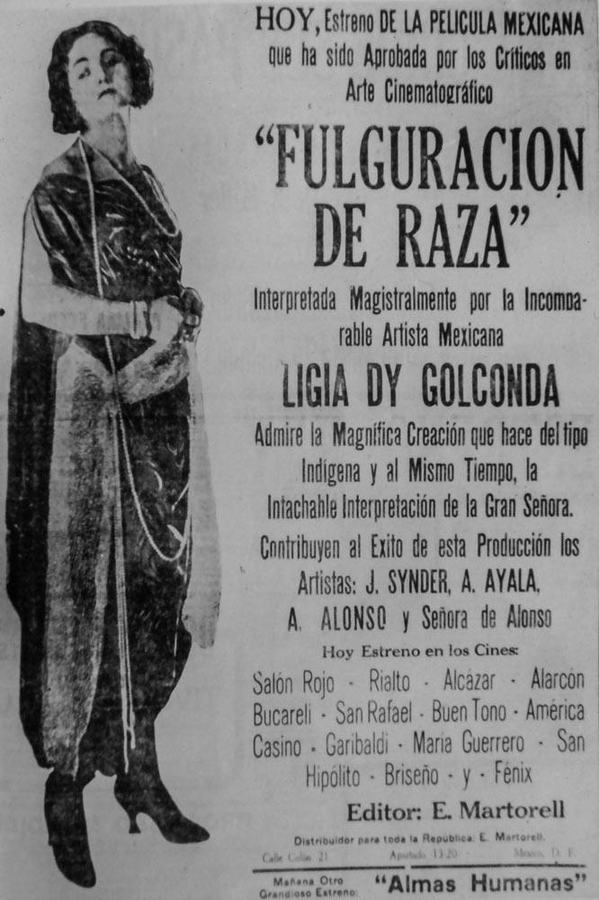
There is a moment—somewhere between the third thunderclap and the fourth siren—when the screen itself seems to sweat. The asphalt glistens like obsidian, and the camera, perched on a rickety drone, nosedives toward Ligia de Golconda’s iris. In that dilation you witness centuries: mangrove swamps, Catholic bells, oil derricks, broken Arawak vowels. No conventional plot survives such centrifugal force; instead, Fulguración de raza operates as a living palimpsest, each layer a blistering testament to how nations forget what skins remember.
Rayén, our reluctant protagonist, arrives in Caracas clutching rolls of vellum older than the republic. Bureaucrats want a modern cadastral survey; she wants to exhume indigenous mass graves hidden beneath highway cloverleaves. Martorell’s genius lies in refusing both agendas. Instead, the film’s tension coils around the act of inscription itself: every line drawn is a scar reopened. When a functionary scoffs, “Land belongs to whoever titles it,” Rayén retorts by pouring liquid mercury into a paper cut, letting the metal travel her bloodstream until her pupils replicate the colonial silver routes. It’s body-horror meets historiography, and it’s ravishing.
Comparisons sprout like mold. Where A Fisherless Cartoon aestheticized emptiness through pastel voids, Fulguración saturates until pixels hemorrhage. The chromatic onslaught feels closer to the bruised palettes of Shadows, yet here darkness is never absence but overpresence—Afro-indigenous pigments so compressed they implode into iridescence.
Sound designer Tarek Alemán mic’d the bones of the city: hollowed manhole covers, the hush of fluorescent morgue lights, even the electromagnetic whine of subway turnstiles. These fragments are assembled into a polyrhythmic suite that crescendos when Rayén bathes in the Guaire River—an aquatic graveyard of shattered idols. As she submerges, the mix swallows all frequencies except a 38 Hz sine, the exact vibration that liquefies mercury. Viewers don’t just hear it; coccyxes remember.
De Golconda, primarily a performance artist, has no traditional filmography, which grants her face a terrifying neutrality. She doesn’t act; she hostages the lens. Watch how she modulates breath: short intakes when the character confronts Spanish-language archives, slow exhalations when reciting Warao lullabies. The micro-shifts ripple across cheekbones until ethnography becomes choreography. Her final naked traverse along Francisco de Miranda Avenue lasts eighteen unbroken minutes, skin lacquered in phosphorescent map-ink that pulses with traffic lights. It’s a stunt, yes, but also an exorcism—one that implicates every spectator whose retinas retain afterimages.
Latin American cinema too often flattens indigeneity into souvenir folklore. Martorell weaponizes the opposite strategy: he renders folklore unrecognizable. A coca-chewing shaman appears only as a glitchy reflection on a cracked iPhone. Ancestral drums sync with reggaeton bass until both dissolve into white noise. The refusal of ethnographic legibility is so militant that some festival crowds booed, craving visual cues they could hashtag. Their discomfort is the film’s triumph.
Contrast this with Carmela, la sartina di Montesanto, where Neapolitan matriarchy receives a touristic gloss, or with the self-congratulatory pieties of Mr. Goode, Samaritan. Martorell’s project is closer in spirit to the implosive minimalism of Conceit, yet even that comparison domesticates his feral energies.
Editors Lucía Pérez and Franco Seia practice what they call “chronological scarification.” Frames skip backward like scratched vinyl; 35 mm footage bleeds into glitch-art datamoshes. The effect is not mere pastiche but ontological whiplash. You inhabit several colonial centuries while clutching a metro card. Time feels mercury-heavy: liquid at room temperature, impossible to grasp without poisoning oneself.
Cinematographer Rocío Álvarez deploys three chromatic regimes: the pewter of imperial archives, the ochre of barrio murals, and the ultraviolet of unreconciled ancestry. When these palettes overlap, colors don’t blend—they corrode. A bureaucratic hallway suddenly sprouts teal mold that spells Wayuu numerals. The moment is invisible to most characters, yet the camera lingers until the viewer’s peripheral vision hallucinates similar growths on the theater walls. You exit the screening complicit in mycological insurgency.
Venezuelan state media labeled the production “anti-patriotic” for depicting Caracas as a necropolis. Meanwhile, opposition pundits dismissed it as “aesthetic anarchy,” proof that chavismo and its detractors can agree on one thing: uncomfortable art must be quarantined. Yet indigenous collectives adopted Rayén’s nude promenade as an annual rite, reenacting the march every solstice, bodies painted with bus-route numbers mapping forced disappearances. Fiction leaked into marrow; cinema returned to the streets that birthed it.
Those seeking narrative linearity might flee toward The Long Trail, whose Western redemption arc cushions historical guilt. Others might prefer the sardonic capitalism of Tonsorial Artists. But Fulguración offers neither catharsis nor closure; it provides a contact high from molten memory. The closest thematic cousin is Our Bridge of Ships, where infrastructural projects become mausoleums. Yet while that film mourns, Martorell’s work combusts.
At Rotterdam, the projectionist muted the sub-bass to “protect the Meyer sound system,” neutering the 38 Hz mercury motif. In Mar del Plata, an announcer mispronounced Ligia’s surname as “de Gold Digger,” a racist spoonerism that drew chuckles. Each slight underscores the film’s wager: it demands bodily surrender that bourgeois art spaces, with their Q&A etiquette, cannot stomach. Optimal viewing would be a parking garage at 3 a.m., generator-powered, citywide blackout, audience barefoot on wet concrete to conduct the vibration.
No closing paragraph can cauterize what Martorell has flayed open. After the credits, you stagger outside tasting metal, half expecting street signs to flake like parchment. That instability is the film’s gift: a cartographic fever that rewrites your inner geography. Weeks later, while waiting for coffee, you notice a birthmark on the barista’s wrist shaped precisely like the Orinoco basin. You blink; she pours milk; the world maps itself anew. Fulguración de raza isn’t seen—it metastasizes.
IMDb —
1927
Community
Log in to comment.