DbcultAccessing Vault...
Cult Review
Senior Film Conservator
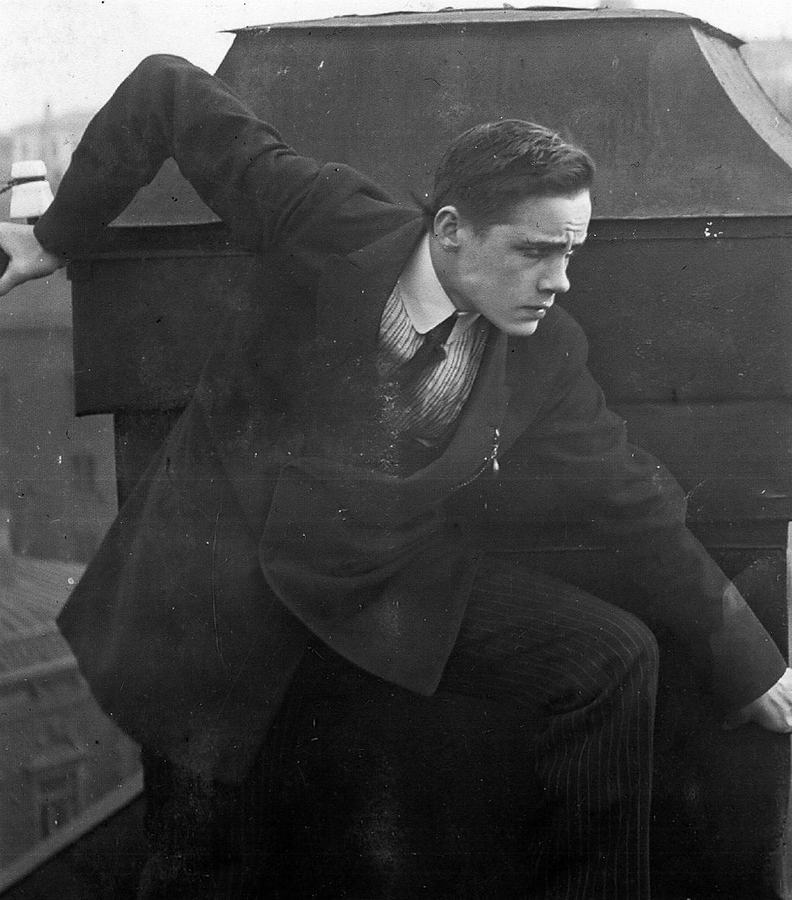
Picture a black-and-white snowscape so crisp you can almost taste the metallic tang of frostbitten coins—this is the canvas on which Salainen perintömääräys (English: The Secret Will) brushes its brisk 38-minute morality tale. Director Asser Pohjanheimo, moonlighting as co-writer, crams more kinetic swagger into this 1914 Finnish one-reeler than some contemporary prestige mini-series manage in eight hours. The plot, deceptively simple—two dissolute heirs pilfer their sister’s rightful will—mutates into a breathless relay of locomotive smoke, clenched jawlines, and snowflakes the size of communion wafers.
The film’s very first intertitle arrives like a slap: “Veljekset eivät odota perintöä—he ottavat sen.” (“The brothers do not wait for inheritance—they seize it.”) Already we’re primed for a world where blood ties fray faster than wet paper. Cinematographer William Rölling favors low-key lighting that carves cheekbones into cliff edges and turns parlors into Rembrandt caverns. Notice how the pilfered parchment itself is shot: a macro-like insert glistening under kerosene glow, as though the celluloid were caressing the texture of injustice.
Enter Helinä Svensson’s Uljas Railio—yes, a female PI in 1914, trench coat collar popped, eyes sharper than skate blades. Svensson plays Railio with a cool detachment that predates American hardboiled tropes by a decade. She saunters into the manor not to reassure the bereaved sister but to interrogate the furniture: a tilt of mirror, the dustless rectangle where the will once lay. Every cutaway to Railio’s gloved fingers drumming against her holster feels like a metronome ticking toward doom.
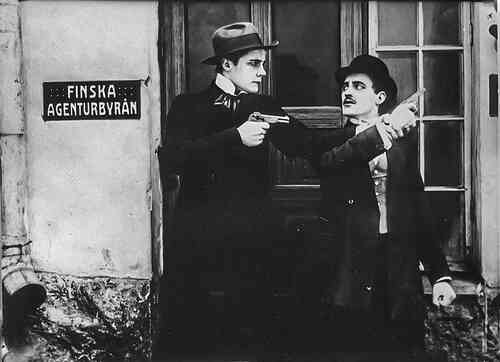
Finnish critics of the era hailed her as “miesmäisesti vakaa”—manfully steady—yet modern eyes will see a gender-fluid prototype, a rebuke to the damsel archetype still clogging global screens.
Railio’s pursuit weaponizes geography itself. One minute she’s skiing across a lake’s skinned-ice surface; the next she’s clinging to the undercarriage of a mail train while soot cakes her cheekbones like war-paint. The stunts are practical, perilous, and devoid of under-cranked slapstick—each bruise feels purchased with genuine Finnish sisu. When her sled overturns, the camera lingers on her cracked goggles, a spider-web fissure echoing the fractured family trust.
Birger and Hilarius Pohjanheimo—real-life siblings cast as the scheming brothers—ooze a louche magnetism. Their costuming is a master-class in silent-era semiotics: cravats loosened like nooses, pocket watches dangling as if time itself were negotiable. In one tavern set lit by a single petroleum lamp, the elder brother’s shadow swells to ogre proportions on the timber wall, hinting that guilt, not conscience, will be their ultimate pursuer.
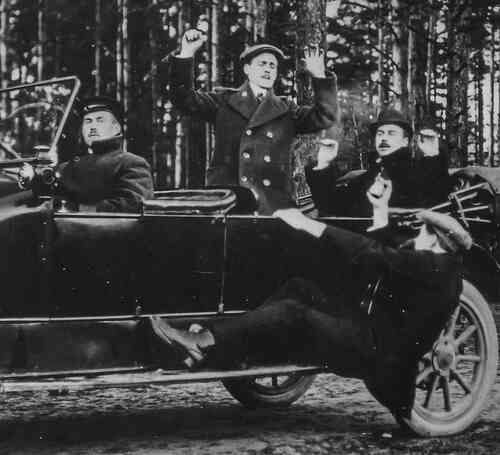
Watch how they guffaw at the roulette wheel—each cackle a nickel-plated echo of their later comeuppance.
The screenplay refuses to caricature them as mere parasites. Flash-intertitles (a proto-montage device) reveal childhood winters when all three siblings shared a single pair of skates, trading off every half-lap. That glint of shared memory complicates our schadenfreude; we sense the theft is less about lucre than about a frantic grab for narrative control—an attempt to rewrite the past by forging the future.
Hilma Liiman, as the disinherited sister Aino, carries herself with the brittle poise of a porcelain figurine aware of its own cracks. She utters no dialogue—this is 1914—but her eyes perform soliloquies. In a church pew scene, the camera dollies until her profile fills the frame, the stained-glass halo behind her mocking any hope of divine intervention. She hires Railio not for vengeance but for confirmation: that documents matter, that the world can still be governed by ink rather than knuckles.
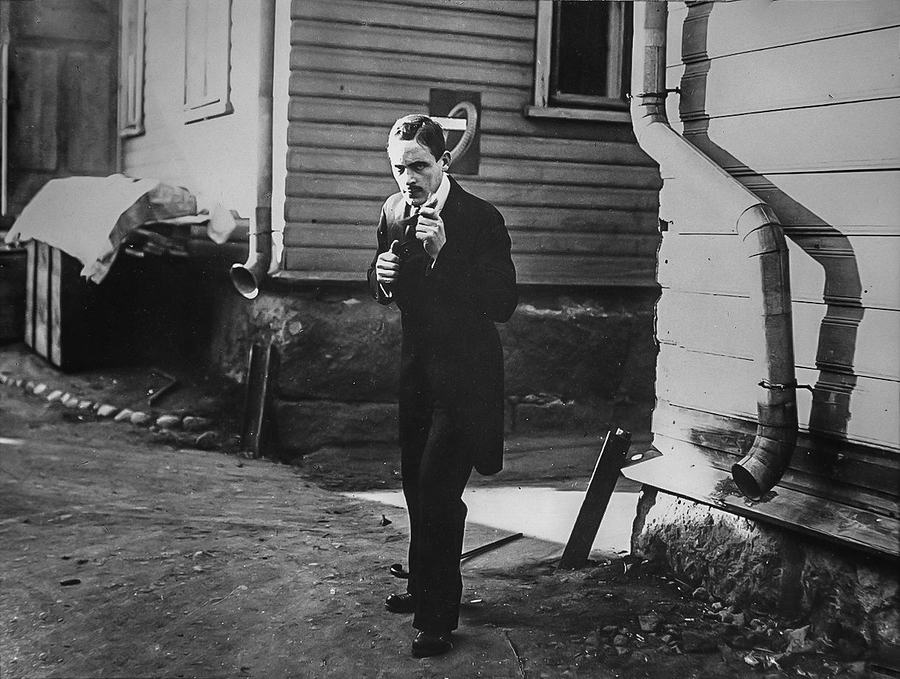
Aino’s eventual reclamation of the will is shot in a single take: she walks down a courthouse aisle, the parchment fluttering like a captured dove, while the brothers recede into a background of out-of-focus ignominy. No cheers, no swelling orchestra—just the creak of floorboards and the soft rustle of justice fitting into place.
Compare the film’s chase syntax to contemporaries like ’Neath Austral Skies or For the Queen’s Honor—those overseas adventures treat landscape as postcard. Pohjanheimo weaponizes it: snow becomes quicksand; frozen waterfalls morph into vertical battlefields. The camera tilts upward to dwarf protagonists against spruce colonnades, evoking a pantheistic dread absent from studio-bound European fare.
Moreover, the film experiments with negative space. A pivotal shot frames Railio’s silhouette inside a hollow log—her pistol’s nickel glint the lone point of luminescence—prefiguring film-noir chiaroscuro by three decades. Cinephiles will spy DNA strands that later spiral into Der Hund von Baskerville or even Lang’s Dr. Mabuse gambits.
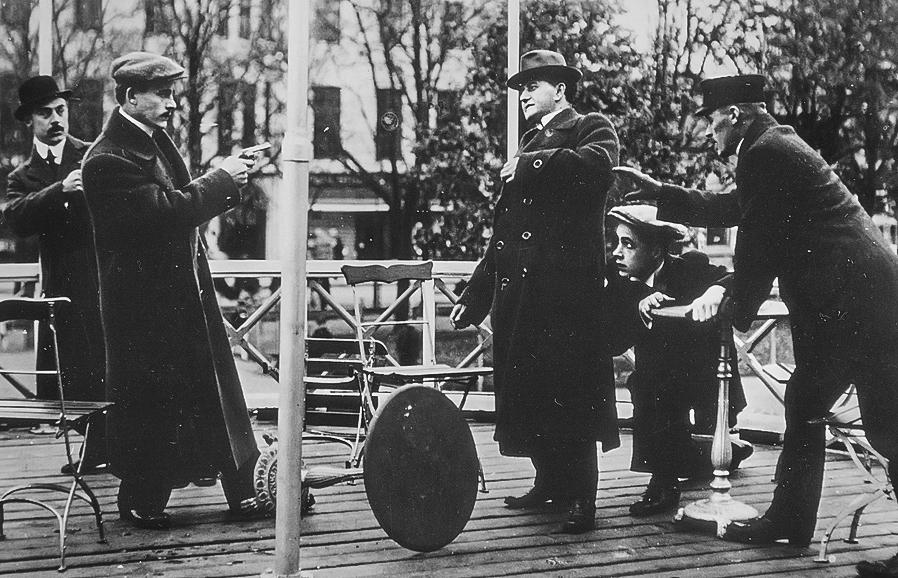
Modern festival screenings often commission live accompaniment, but the original 1914 rollout featured a single pianist instructed to alternate between Sibelian minor chords and gallop rhythms. Without that score today, the absence itself becomes music: the hush amplifies every creak of leather, every hiss of sled runners. You become hyper-aware of your own pulse—a metronome syncing with Railio’s footfalls.
Try watching on a projector with the heating off; the room’s chill merges with the film’s verisimilitude until you feel snowmelt in your socks.
Finland in 1914 was a Grand Duchy under Russian control, its suffrage movement cresting. That a female detective occupies the moral center feels subversive yet historically grounded. The film doesn’t grandstand; Railio’s competence is assumed, not defended. Contrast this with Satyavan Savitri where mythic duty chains women to sacrificial arcs, or Du Barry where femininity is spectacle. Here, it’s utility—quietly revolutionary.

The 2021 4K restoration by Kavi Finland returned the original tinting—amber interiors, cobalt night scenes—revealing details smothered by decades of dupes. Grain remains intact, thank heavens; anything smoother would sandblast the film’s sinew. Streaming platforms append a scholarly commentary track; subtitles translate not just the intertitles but also the handwritten marginalia visible on Railio’s casebook—tiny Nordic noir easter eggs.
Salainen perintömääräys is less a relic than a gauntlet hurled across a century. It dares modern filmmakers to stage chases without GPS drone shots, to conjure tension sans Hans Zimmeresque stings, to let snow speak louder than CGI squalls. At 38 minutes it’s a shot of akvavit—burns, clarifies, leaves you walking into the night hearing phantom sleigh bells. If you emerge unshaken, check your pulse—you may already be as frozen as that pilfered parchment.
Rating: 9.2/10 — a frostbitten masterpiece that crackles louder the colder it gets.
IMDb —
1918
Community
Log in to comment.