DbcultAccessing Vault...
Cult Review
Senior Film Conservator
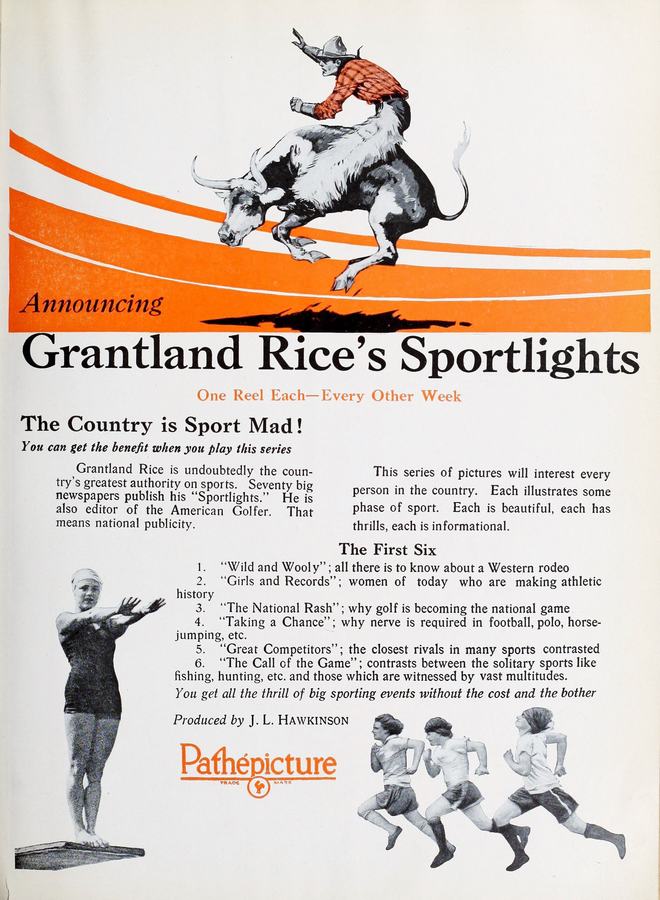
In the vast tapestry of early cinema, where novelty and observation often took precedence over complex narrative, certain shorts emerge as surprisingly potent historical documents. 'Girls and Records' is precisely one such film, a seemingly simple juxtaposition that, upon closer inspection, reveals layers of societal commentary, gender evolution, and the subtle power of visual rhetoric. This isn't merely a quaint comparison; it's a cinematic thesis on the seismic shifts in women's roles, encapsulated within a few fleeting moments on screen.
The brilliance of 'Girls and Records' lies in its stark, almost academic presentation of contrast. We are not led by a narrator; rather, the images themselves speak volumes, charting a course from the restrictive elegance of the past to the burgeoning liberation of the present. It's a dialogue between eras, conducted not through words, but through the language of movement, attire, and activity. The 'hoop-skirted sisters of yesterday' are not just figures from a fashion plate; they are embodiments of a deeply entrenched cultural paradigm, where a woman’s public existence was largely ornamental, her physical activities circumscribed by both social expectation and literal sartorial constraints.
Consider the hoop skirt itself. More than just a trend, it was an architectural marvel of restriction, designed to create a specific silhouette that spoke of leisure, status, and a deliberate detachment from manual labor. A woman in a hoop skirt was, by definition, confined. Her movements were graceful, yes, but also fundamentally limited. Running, jumping, or engaging in strenuous physical activity was not only impractical but often impossible. The 'sports' available to her were, therefore, inherently decorative: a gentle stroll, a measured game of croquet, perhaps a delicate archery pose, as seen in other period pieces that romanticize such activities. These were not pursuits designed for strength or speed, but for display, for the cultivation of a refined image. The film, in its quiet observation, highlights this performative aspect, suggesting that even in moments of recreation, the woman of yesteryear was perpetually on stage, her every gesture governed by an unseen script of decorum.
This isn't to say that women of the past lacked agency or inner strength, but rather that their outward expression of it was severely curtailed. The film, without explicit judgment, simply presents the visual evidence. It invites us to ponder the sheer physical effort involved in merely existing within such garments, let alone attempting any form of 'sport.' The very act of sitting, standing, or navigating a doorway became an exercise in careful management, a constant reminder of one's prescribed role. It’s a subtle but powerful insight into the material culture of an era, where clothing was not just adornment but a profound statement about identity and societal position.
Then, with a refreshing visual cut, we are thrust into the 'today' of the film's making – a 'today' that, from our contemporary vantage point, is itself a fascinating historical moment. Here, we encounter the 'athletic girls,' their attire practical, their movements unencumbered. While the specific activities aren't detailed in the plot, one can imagine a range of burgeoning sports: cycling, tennis, perhaps even early forms of track and field or swimming. These women move with a newfound freedom, their bodies celebrated for their capability rather than merely their aesthetic presentation. This shift is monumental, signaling a profound change in how society, and women themselves, viewed the female form. It’s a transition from the decorative to the functional, from the ornamental to the empowered.
The rise of the 'New Woman' at the turn of the 20th century was intrinsically linked to physical liberation. Bicycle riding, for instance, became a symbol of independence, allowing women to travel unchaperoned and experience a freedom of movement previously unimaginable. Films like A Sporting Chance, though perhaps more narrative, might have touched upon similar themes of women engaging in physical pursuits, even if framed differently. 'Girls and Records' strips away the narrative, offering pure, unadulterated visual evidence of this cultural evolution. The confidence emanating from these athletic girls is palpable, a direct counterpoint to the more reserved demeanor of their predecessors. Their engagement with sports is not merely a leisure activity; it's a declaration of autonomy, a reclaiming of the body as an instrument of personal will and achievement.
What 'Girls and Records' implicitly critiques is the historical emphasis on the female body as an object of the male gaze, primarily valued for its beauty and its capacity to embody domesticity or social status. The hoop-skirted woman, for all her elegance, was largely defined by how she appeared to others. Her 'sports' were extensions of this public performance. The athletic girl, however, begins to redefine this paradigm. Her body is for herself – for her strength, her health, her enjoyment. While societal pressures and the male gaze certainly didn't vanish overnight, the film captures a pivotal moment where women began to carve out spaces where their physical prowess and personal satisfaction took precedence over mere aesthetic presentation.
This subtle shift is mirrored in other films that, in their own ways, explored changing gender dynamics. A film like Modern Marriage, for instance, might delve into the evolving expectations within domestic partnerships, but 'Girls and Records' tackles the broader public sphere, specifically the physical manifestation of female agency. It’s a testament to the power of the moving image to condense complex social transformations into easily digestible, yet profoundly resonant, visual arguments. The film doesn't preach; it shows. And in showing, it allows us to draw our own conclusions about the progress, and indeed the lingering challenges, of female emancipation.
The brevity of 'Girls and Records' is, paradoxically, one of its greatest strengths. It distills a vast social narrative into its purest visual essence. There is no need for character development or intricate plot points; the message is conveyed through the sheer power of juxtaposition and the implicit commentary on historical change. The filmmakers, whoever they were, understood the evocative potential of contrast, allowing the audience to fill in the historical and social context based on their own lived experience and understanding of the past. This makes the short incredibly efficient in its communication, a masterclass in cinematic economy.
Even today, 'Girls and Records' holds a surprising resonance. While hoop skirts are long gone, and women's participation in sports is commonplace, the underlying themes of bodily autonomy, freedom of expression, and the ongoing struggle against restrictive societal expectations remain acutely relevant. We still grapple with issues of appearance versus capability, the pressures on women's bodies, and the persistent, albeit evolved, forms of sartorial and social constraint. Watching this film, one can't help but reflect on how far we've come, and perhaps, how far we still have to go. It prompts us to consider other forms of 'hoop skirts' – invisible, perhaps, but no less restrictive – that continue to shape women's lives. Films like Wild Women, though perhaps more overtly dramatic, might explore the spirit of defiance in a different context, but 'Girls and Records' offers a historical anchor to such narratives.
The absence of spoken dialogue in this silent-era short further amplifies its universal appeal. The visual language transcends linguistic barriers, allowing the core message to resonate with anyone who observes the stark differences presented. The film stands as a testament to the power of early cinema not just as entertainment, but as a crucial mirror reflecting the societal currents of its time. It captures a moment of transition, a quiet revolution unfolding in plain sight, demonstrating how the seemingly trivial details of fashion and leisure activities can be profound indicators of deeper cultural shifts.
Ultimately, 'Girls and Records' is far more than a historical curiosity. It's a poignant, subtly feminist document, celebrating the burgeoning physical freedom of women while implicitly critiquing the confines of their past. It’s a silent overture to a century of progress, a visual record that continues to speak volumes about the evolving journey of women towards self-determination and unapologetic athleticism. This little film, unassuming in its premise, leaves an indelible mark, reminding us that sometimes the most profound statements are made without uttering a single word, purely through the discerning eye of the camera and the thoughtful arrangement of its subjects.
In its elegant simplicity, 'Girls and Records' manages to encapsulate a monumental shift in human history. It's a vivid snapshot of emancipation, not through grand political statements, but through the everyday realities of movement, clothing, and leisure. The film invites us to appreciate the hard-won freedoms that are often taken for granted today, reminding us that the path to equality is paved not just with legislative changes, but with fundamental transformations in how we perceive and inhabit our own bodies. It’s a truly compelling piece of early cinema, offering a window into the past that continues to illuminate our present.
IMDb —
1920
Community
Log in to comment.