DbcultAccessing Vault...
6.2/10
Senior Film Conservator
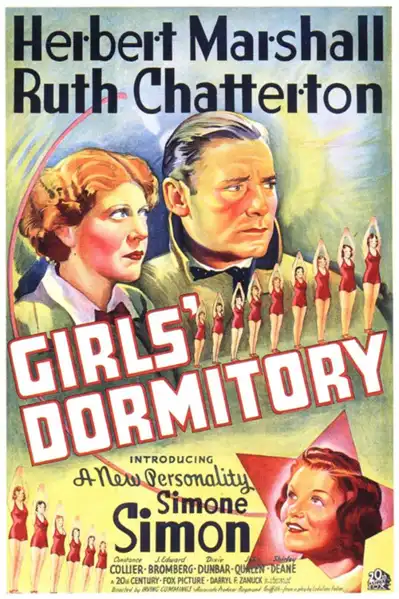
A definitive 6.2/10 rating for a film that redefined the boundaries of cult cinema. Girls' Dormitory remains a cornerstone of transgressive art.
"Girls' Dormitory" from way back in 1936? Yeah, it's a bit of a dusty one. If you're into old school Hollywood dramas, especially those little scandals in a boarding school setting, then maybe give it a shot. But if you need fast pacing or something with high stakes, you'll probably find yourself checking your watch. 🕰️ It’s more for folks who appreciate a gentle, sometimes naive, peek into past social anxieties. If you're looking for something action-packed or super intense, this isn't it.
So, we're at this girls' finishing school, all proper and strict. One of the teachers, a real busybody named Miss Brace (played by Constance Collier, who really commits to being annoying), finds a love letter. It's from one of the girls to some secret guy. Oh, the drama! 😲
This letter, it's a massive deal for Miss Brace. She sees a scandal brewing, and honestly, the way she holds that letter, it's like she's clutching a ticking bomb. The student involved is Marie Claudel (Simone Simon), who has this quiet, almost haunted look about her. She’s definitely got secrets she'd rather keep buried.
Then there’s the headmaster, Professor Walter Rodman (Herbert Marshall). He's trying to keep things calm, but you can tell he's already a little tired of everyone's nonsense. He’s got that weary academic vibe down, like he’s just waiting for summer break.
The whole school just *buzzes* with whispers. You can almost feel the girls craning their necks trying to figure out who wrote what to whom. It’s that familiar, almost childish, energy of a secret spreading through a small community. One scene where a group of girls are huddled together, their heads almost touching, is just perfectly framed. 🤫 You can practically hear the hushed gossip.
Simone Simon's character, Marie, she mostly just looks sad and a bit distant through much of the film. You want to know her story, even if the movie doesn't always give it to you straight away. There's this moment when she's sketching in her room, and her focus is so intense, it really sells her as someone lost in her own world, trying to escape.
And then, *the man*. Robert Hammond (Tyrone Power). He shows up, handsome as ever, and suddenly the stakes feel a tiny bit higher. His scenes with Marie have this quiet, understated tension. They don't need a lot of big speeches or grand gestures. A glance, a slight hesitation, that's enough to convey a lot. Their chemistry is subtle, but it's there.
One thing that kinda threw me off was how quickly the "scandal" escalated in the school's mind, but also how quaint it felt by today's standards. A love letter! Imagine the fuss over that. The movie really wants you to believe this is serious business, life-altering stuff.
There's a scene with Miss Brace practically doing a victory lap after she thinks she's caught Marie red-handed. Her smug face is honestly a highlight. It's not subtle acting, but it's effective for what it is. 😂 You just want to roll your eyes at her.
The movie has a slow, deliberate pace. It really takes its time letting these little moments of suspicion and romance play out. Sometimes it feels like it takes *too* much time, especially in the middle section. You get used to it, though, and it kinda fits the period.
I kept thinking about the dorm rooms themselves. All these little beds, so uniform and neat, but each girl has her own small space, her own corner. It's a nice visual metaphor, I guess, for the individual dramas happening in a very structured, controlled world. The uniformity is almost unsettling.
The lighting in some of those interior shots is quite dark, especially in the hallways. Adds to the mood, sure, a bit mysterious. But sometimes you just wanna see their faces a bit clearer, you know? It's not a *bad* thing, just something that kinda stood out to me. A slight stylistic choice.
You know, I noticed one of the background extras in the dining hall scene seemed to be having a really intense conversation with herself, nodding vigorously. Just a little thing, but it sticks with ya, makes you wonder what her deal was. They prob’ly didn't even notice.
The ending, without giving anything away, felt a little neat. *Too* neat, maybe. Like, all that fuss for a slightly too-easy resolution. It wraps things up a bit too cleanly. But hey, it’s a 1930s picture. They liked their happy, tidy endings after all the drama. It’s what people expected, I guess.
This isn't a film that will change your life or anything. It's a curiosity, a snapshot of a different time and different worries. It shows how much (and how little) certain anxieties about youth and reputation have shifted over the decades. It's a quiet afternoon movie.
IMDb 7.2
1934
Community
Log in to comment.