DbcultAccessing Vault...
Cult Review
Senior Film Conservator
Stepping back into the flickering shadows of early cinema, one occasionally unearths a gem that, despite its age and the technical limitations of its era, resonates with an astonishingly modern sensibility. Such is the case with 'The Wild Woman', a film that, even a century after its initial release, continues to provoke thought on themes as old as humanity itself: the perennial clash between nature and nurture, the suffocating embrace of societal norms, and the indomitable spirit of individual freedom. This isn't just a historical curiosity; it's a vibrant, often unsettling, cinematic experience that demands a fresh appraisal.
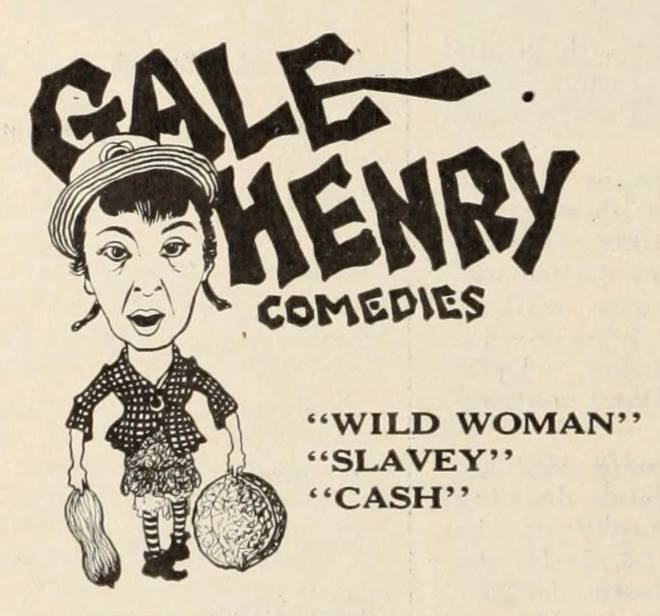
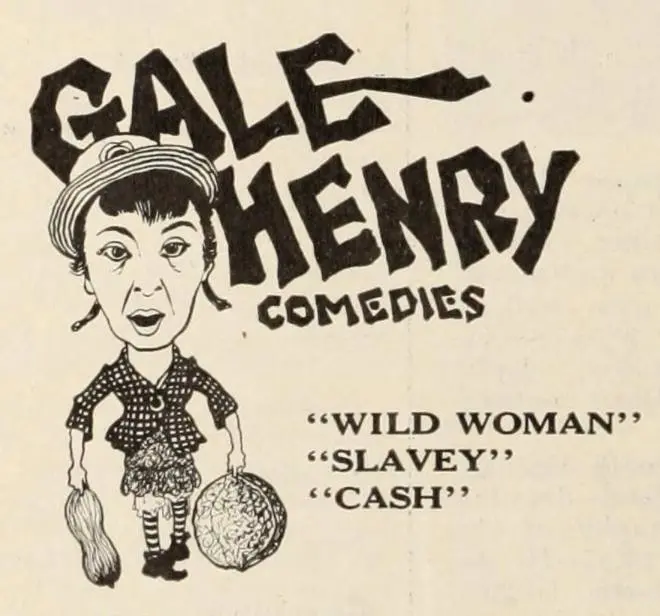
At its core, 'The Wild Woman' is an allegorical journey, a narrative steeped in the romanticism of the 'noble savage' trope, yet executed with a nuance that elevates it beyond mere exoticism. The story centers on Lyra, a young woman discovered in the depths of an uncharted wilderness, a being utterly unburdened by the trappings of civilization. Her initial appearance on screen is nothing short of magnetic – a whirlwind of untamed hair, piercing eyes, and movements as fluid and unpredictable as the forest itself. Gale Henry's portrayal of Lyra is, quite frankly, a masterclass in silent film acting. Without a single spoken word, she conveys a spectrum of emotions ranging from primal fear and fierce independence to burgeoning curiosity and profound disillusionment. Her physicality is extraordinary, communicating more about Lyra's inner world through a twitch of a muscle or the angle of her head than pages of dialogue ever could. It's a performance that truly grounds the film's ambitious themes, making Lyra not just a symbol, but a tangible, struggling soul.
The catalyst for Lyra's entry into the 'civilized' world is Professor Eldridge, played with a blend of academic zeal and paternalistic condescension by Milburn Morante. Morante, often known for his more boisterous or villainous roles, here offers a more restrained, yet equally impactful performance. Eldridge is not a villain in the traditional sense; he genuinely believes he is 'saving' Lyra, bringing her into the light of progress. Yet, his actions are imbued with an inherent arrogance, a colonialist mindset that sees anything outside his cultural paradigm as inherently 'lesser' and in need of 'refinement'. His attempts to teach Lyra table manners, to dress her in restrictive garments, and to indoctrinate her into the rigid social etiquette of the day are depicted with a tragicomic irony. The film cleverly highlights the absurdity of these conventions through Lyra's unadulterated reactions – her discomfort with shoes, her disdain for restrictive clothing, her instinctive rejection of polite hypocrisy. It's a powerful critique of the artificiality that often underpins societal structures.
The narrative gains further complexity with the introduction of Reginald, a suitor for Lyra's affections, portrayed by Hap Ward. Ward brings a certain charm to Reginald, but it's a charm tinged with a possessive, almost proprietorial air. Reginald sees Lyra not as an equal, but as a fascinating project, a beautiful anomaly to be tamed and displayed. His 'love' is conditional, dependent on her transformation into the woman he desires, a reflection of societal expectations. This dynamic adds another layer to Lyra's burgeoning internal conflict. Does she surrender to the comfort and security offered by Reginald, sacrificing her true self in the process? Or does she risk ostracization and an uncertain future by clinging to her wild heart? This dilemma resonates deeply, especially for audiences grappling with questions of authenticity and societal pressure, making the film's themes remarkably timeless.
The visual storytelling in 'The Wild Woman' is particularly noteworthy. The contrast between the lush, expansive wilderness and the cramped, ornate interiors of Eldridge's home is stark and effective. The cinematography, though rudimentary by today's standards, masterfully captures the grandeur of nature and the suffocating opulence of civilization. Close-ups of Lyra's face, conveying her raw emotions, are particularly potent, drawing the viewer into her psychological journey. The editing, while perhaps less frenetic than modern cinema, allows for moments of quiet contemplation, letting the emotional weight of each scene settle. The film's pacing builds steadily, mirroring Lyra's growing unease and eventual rebellion.
Comparisons to other films of the era reveal 'The Wild Woman''s unique position. While films like Outcast explored themes of social ostracization and the struggle for acceptance, Lyra's journey is distinct in its focus on a character who actively resists assimilation rather than yearning for it. Similarly, while The City depicted the corrupting influence of urban life, 'The Wild Woman' frames civilization itself as a form of gilded cage, irrespective of specific moral failings. The film's exploration of female agency, while not as overtly feminist as some later works, subtly challenges patriarchal assumptions through Lyra's unwavering spirit. Her resistance to being 'owned' or 'tamed' echoes the burgeoning suffragette movements of the time, making her character a quiet, yet powerful, symbol of independence.
The screenplay, though uncredited in many historical accounts, displays a remarkable understanding of dramatic structure and character development. It avoids simplistic good-versus-evil dichotomies, instead presenting complex motivations and the unintended consequences of well-meaning actions. The writers, whoever they were, crafted a narrative that, despite its fantastical premise, feels deeply human and relatable. The film's strength lies in its refusal to offer easy answers. It doesn't condemn civilization outright, nor does it romanticize the wild to an unrealistic degree. Instead, it posits a fundamental tension, an inherent conflict between the structured world humans build and the primal urges that still reside within. This nuanced approach prevents the film from devolving into mere melodrama, elevating it to a more profound commentary on the human condition.
The climax of 'The Wild Woman' is particularly poignant. Lyra, having experienced the 'benefits' of civilization firsthand, is faced with a profound choice. The allure of comfort and acceptance beckons, but the call of the wild, the memory of her true self, is even stronger. The final scenes are a powerful testament to the enduring power of self-identity and the yearning for genuine freedom. Without spoiling the resolution, suffice it to say that the film delivers a conclusion that is both emotionally satisfying and intellectually stimulating, leaving the audience to ponder the true meaning of happiness and belonging.
From a technical perspective, the film, like many from the period, likely utilized available light to a great extent, contributing to its often stark and naturalistic aesthetic in the wilderness scenes. The reliance on intertitles to convey dialogue and exposition is, of course, a hallmark of the silent era, and in 'The Wild Woman', they are used effectively, never overstaying their welcome and always serving to advance the plot or deepen character understanding. The absence of synchronized sound forces the viewer to engage more deeply with the visual language, to interpret emotions from subtle gestures and facial expressions, a skill that modern audiences, accustomed to constant auditory stimulation, sometimes forget.
Considering the broader cinematic landscape of the time, 'The Wild Woman' stands out for its thematic ambition. While many films focused on simpler narratives of romance, adventure, or morality plays, this film dared to delve into philosophical territory. It asks fundamental questions about what it means to be human, what constitutes 'progress,' and whether civilization truly enriches or merely encumbers the spirit. In an era where cinema was still finding its voice, such depth was remarkable. Films like Più forte del destino might have explored grand romantic fates, and Suspense pushed boundaries with narrative tension, but 'The Wild Woman' offered a more introspective, almost anthropological, gaze at the human condition. It's a film that perhaps foreshadowed the more complex character studies that would emerge in later decades.
The performances by Milburn Morante, Gale Henry, and Hap Ward are collectively a testament to the power of silent acting. Henry's raw, untamed energy is perfectly counterbalanced by Morante's scholarly gravitas and Ward's earnest, if misguided, romanticism. Each actor brings a distinct flavor to their role, creating a dynamic ensemble that elevates the material. Henry, in particular, carries the film on her shoulders, her expressive face and athletic movements captivating the viewer from start to finish. Her portrayal avoids caricature, making Lyra a figure of genuine empathy rather than a mere curiosity. This level of nuanced performance was not always guaranteed in silent films, making her achievement all the more notable.
The enduring relevance of 'The Wild Woman' lies in its universal themes. In an age increasingly dominated by technology and societal pressures, the film's central question – what do we lose when we gain 'civilization'? – remains as pertinent as ever. It's a reminder to question norms, to value authenticity, and to listen to the quieter, wilder parts of ourselves that society often tries to suppress. The film serves as a powerful antidote to conformity, a cinematic call to embrace one's true nature, even if it means standing apart. Its message echoes through the decades, reminding us that true freedom often lies not in what we accumulate, but in what we refuse to surrender.
While Brewster's Millions might have offered a comedic take on societal pressures through the lens of wealth, 'The Wild Woman' delves into the much deeper, more existential pressures of identity and belonging. It's less about external circumstances and more about internal conflict. Even films like A Mother's Confession, which explored moral dilemmas, did so within established social frameworks. Lyra's struggle transcends these frameworks, challenging the very foundation upon which they are built. This makes 'The Wild Woman' a more radical and thought-provoking piece of cinema than many of its contemporaries.
In conclusion, 'The Wild Woman' is far more than a relic from the silent era. It is a vibrant, compelling narrative that speaks volumes about the human spirit's yearning for freedom and authenticity. Through stellar performances, particularly Gale Henry's unforgettable portrayal of Lyra, and a surprisingly profound script, the film manages to transcend its historical context to deliver a message that is both timeless and deeply resonant. It's a film that deserves to be rediscovered, analyzed, and celebrated for its courage to challenge conventions and explore the untamed corners of the human heart. For anyone with an appreciation for the foundational artistry of cinema and a desire to engage with enduring philosophical questions, 'The Wild Woman' is an absolute must-see, a powerful testament to the enduring power of silent storytelling.
IMDb 6.5
1932
Community
Log in to comment.