DbcultAccessing Vault...
5.9/10
Senior Film Conservator
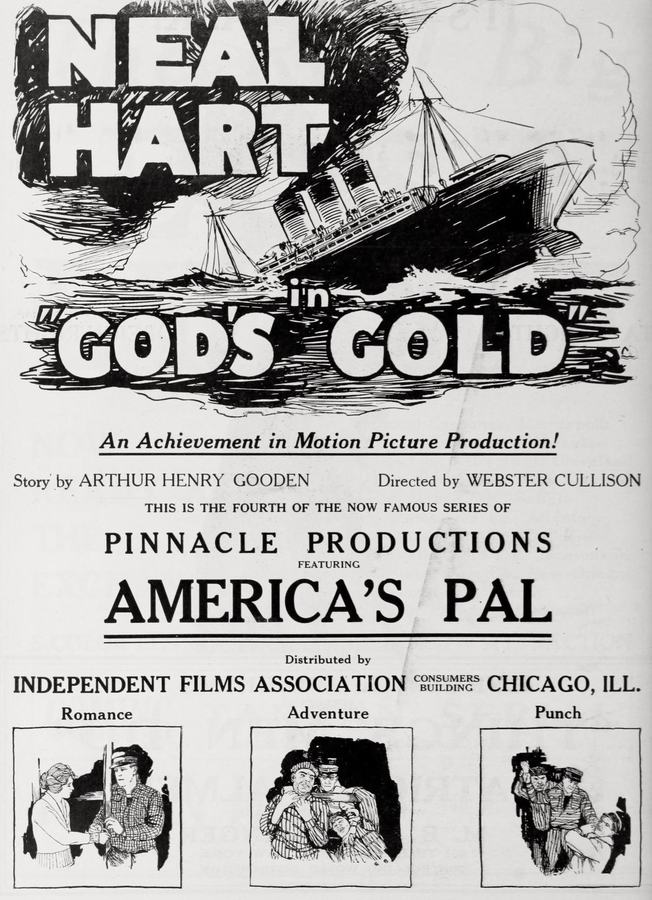
A definitive 5.9/10 rating for a film that redefined the boundaries of cult cinema. God's Gold remains a cornerstone of transgressive art.
The year is 1926, and the silver screen is still in its infancy, yet already, the world is hungry for spectacle. God’s Gold, a film that straddles the line between dime-store melodrama and proto-musical grandeur, emerges as a curious artifact of its era. Directed with a mix of bravado and budgetary restraint by Arthur Henry Gooden, the film is a curious blend of swashbuckling adventure, moral allegory, and the lurid fascination with the 'noble savage.' It is a film that, while indebted to the tropes of its time, occasionally transcends them through its audacity in both narrative and visual experimentation.
At its core, God’s Gold is the story of Jack Cameron (Jacob Abrams), a charismatic yet morally ambiguous treasure hunter whose quest for a legendary Spanish gold hoard becomes a crucible for his soul. The treasure, hidden on a remote South Sea island, is not merely a prize but a symbol of the colonial imagination—a gilded mirage that promises redemption for the worthy and ruin for the wicked. Alongside Jack are his loyal crew, a rogues’ gallery of mutineers and opportunists, and the enigmatic Audrey Lefevre (Audrey Chapman), a woman whose dual role as both romantic interest and moral arbiter complicates the film’s otherwise straightforward narrative. The island itself, rendered in stark black-and-white contrasts, becomes a character in its own right, a labyrinth of shifting allegiances and primal instincts.
Gooden’s direction is at once indebted to the silent film era and forward-looking in its use of montage. The mutiny scenes, for instance, are staged with a frenetic energy that recalls Fritz Lang’s later works, though the pacing often falters under the weight of expository intertitles. The film’s most daring sequence—the sinking of Captain Varnell’s ship—exemplifies this duality. The sinking is depicted with a stark realism that borders on anti-climactic, the crew’s final moments reduced to a cacophony of bubbles and collapsing wood. Yet this jarring realism is juxtaposed with the subsequent dreamlike sequence of Jack’s fevered hallucinations, rendered in a palette of swirling shadows and chiaroscuro lighting that prefigures the chiaroscuro techniques of film noir.
Audrey Chapman’s performance as Audrey Lefevre is a masterclass in underplayed intensity. Her character is the film’s moral axis, a figure caught between the competing forces of Jack’s ambition and the island’s enigmatic allure. In a film where most characters are archetypes—Jack as the tormented hero, Varnell (Charles Holly) as the Machiavellian antagonist—Chapman’s Audrey is refreshingly ambiguous. Her interactions with Jack are charged with a quiet tension, their dialogue laced with subtext that speaks to the film’s deeper themes of colonial guilt and personal redemption. The love triangle, while predictable in its setup, gains unexpected poignancy through Chapman’s subtle physicality; her eyes, often wide and unblinking, convey a sense of foreboding that haunts the film’s second act.
The film’s treatment of the South Sea islanders is a double-edged sword. On one hand, they are portrayed with a reverence that acknowledges their cultural richness, their rituals and dances depicted with an almost ethnographic precision. On the other hand, their agency is frequently undermined by the narrative’s colonial framing. The islanders are both saviors and obstacles, their presence a constant reminder of the moral cost of Jack’s quest. This tension is most palpable in the film’s climax, where the islanders’ intervention—though ostensibly to protect their land—is framed as a last-minute deus ex machina that allows Jack to claim the treasure. The irony is not lost that the film’s protagonist, who begins as a self-serving adventurer, is ultimately redeemed by the very people his actions have exploited.
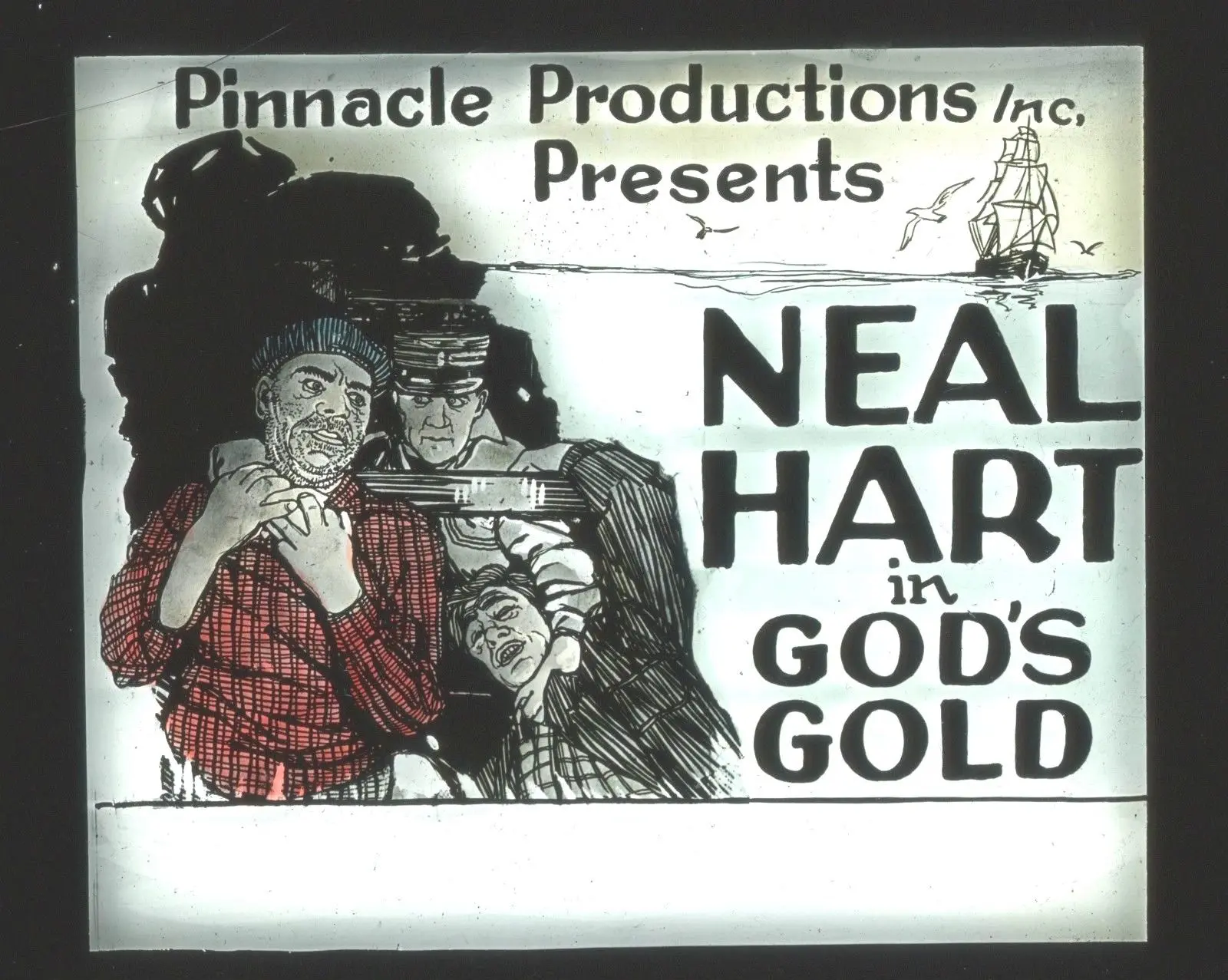
Comparisons to other films of the era are instructive. Like Jealousy, God’s Gold uses romantic entanglements to explore the fragility of human relationships, though it lacks the psychological depth of that earlier work. The film’s visual style, particularly its use of stark lighting and dramatic angles, owes much to The Virtuous Thief, though Gooden’s approach is more overtly theatrical. The island setting, meanwhile, echoes the exoticism of Back to God’s Country, but with a darker, more unsettling undercurrent.
Technically, God’s Gold is a mixed bag. The editing is often abrupt, the transitions between scenes jarring in a way that suggests either a lack of funds or a deliberate stylistic choice. The use of intertitles is particularly noteworthy; rather than merely conveying dialogue, they serve as narrative devices, their placement and typography adding a layer of visual rhythm to the film. The sound design, when it exists, is sparse and effective, with the creaking of ships and the roar of waves amplified to almost mythic proportions.
What elevates God’s Gold beyond its many flaws is its unapologetic ambition. It is a film that dares to mix genres—adventure, romance, moral fable—without concern for modern sensibilities. Its characters are larger than life, its plot a tangle of coincidences and contrivances, but there is a sincerity in its execution that is difficult to dismiss. The film’s final act, in which Jack renounces the treasure to save Audrey, is a masterstroke of emotional manipulation, its sincerity undercut by the knowledge that this is a narrative necessity rather than a character-driven choice.
In the pantheon of early adventure films, God’s Gold occupies a peculiar niche. It is neither a classic nor a failure, but a curious artifact of its time—a film that reflects the hopes, anxieties, and contradictions of a world on the cusp of modernity. For those willing to look beyond its many shortcomings, it offers a glimpse into the raw, unpolished energy of early cinema, a time when stories were told with bold strokes and unapologetic ambition.
If you’re a fan of Who’s Your Brother? or The Judgment House, you’ll find much to appreciate in God’s Gold, though its lack of subtlety may test the patience of modern viewers. It is a film best experienced in the context of its era, a reminder of how far cinema has come—and how much it has lost in the process.
IMDb 5.9
1935
Community
Log in to comment.