DbcultAccessing Vault...
5.5/10
Senior Film Conservator
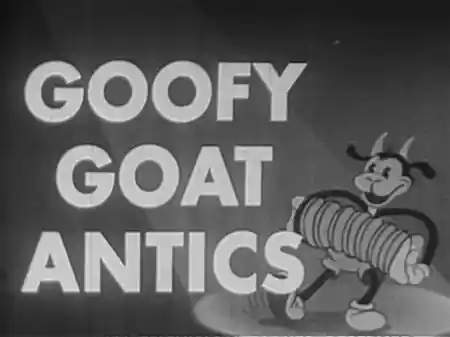
A definitive 5.5/10 rating for a film that redefined the boundaries of cult cinema. Goofy Goat remains a cornerstone of transgressive art.
If you have about eight minutes and a high tolerance for 1930s fever dreams, Goofy Goat is a weird little trip worth taking. It is perfect for anyone who misses that jittery, hand-drawn energy where the laws of physics are just suggestions. People who need a plot that makes logical sense will probably hate this immediately.
The whole thing is basically a road rage incident that turns into a musical performance. Our hero is a goat who is very stressed about getting to a glee club meeting.
He is carrying an accordion, which is a brave choice for a protagonist in any era. The animation has that classic rubber-hose style where every single object—even the trees and the houses—seems to be vibrating for no reason.
It gives the movie this nervous, caffeinated energy that you just don't see in modern stuff. The "road hog" is a literal pig driving a car, and he is a total jerk. He keeps cutting the goat off and laughing in this way that feels slightly threatening if you look at it too long.
I noticed that the pig's car has exhaust pipes that puff out these perfect little smoke rings. It is a small detail, but it shows someone was actually having fun drawing this. The goat doesn't really look like a goat to me; he looks more like a dog with horns and a tiny hat.
There is a moment during the car chase where the vehicles start to behave like they are made of jelly. They stretch and squash so much that they barely look like cars anymore. It reminded me of the physical chaos you see in Pay Day, just with more animals.
The backgrounds are pretty simple, but they loop in a way that is almost hypnotic. You see the same three hills and two fences over and over again while they drive. It’s a bit distracting if you’re looking for it, but it adds to the dream-like vibe of the whole thing.
Ted Eshbaugh, the guy who made this, clearly didn't care about making things look realistic. He just wanted things to move. When the goat finally makes it to the glee club, the movie shifts gears into a talent show.
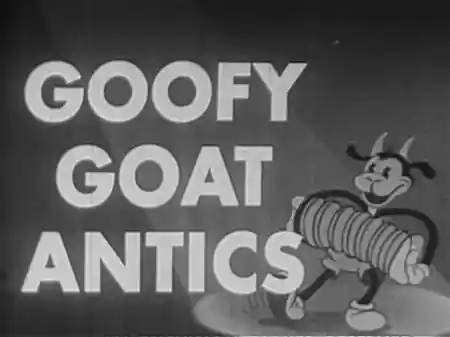
The accordion solo is... a lot. It is loud and the animation of the instrument stretching out is honestly pretty impressive for 1931. The goat’s arms have to get about four feet long just to keep up with the music.
The crowd of animals watching him is a bit creepy, to be honest. They all have these wide, unblinking eyes that stay fixed on the goat the entire time. It lacks the warmth of something like Noisy Neighbors, but it makes up for it with sheer weirdness.
One reaction shot of a bird in the audience lingers for about three seconds too long. It feels like the movie forgot to cut away. There is a strange silence in a few spots where you expect a sound effect, but nothing happens.
It makes the world feel empty in a way that’s hard to describe. Like the characters are performing in a void. Still, the energy never really drops until the very last frame.
I think I enjoyed the car chase part more than the actual musical ending. The way the goat's car wheels spin in circles within circles was a cool visual trick. It’s much more lively than some of the stuffy live-action films from the same time, like The Dark Star.
There isn't really a message or a moral here. The goat wins, the pig is gone, and the music happens. It's just a raw burst of early animation creativity. 🐐
If you’re into the history of cartoons, you can see how they were still figuring out the rules. Sometimes the goat’s face looks a little lopsided, or his hat disappears for a second. It’s not perfect, and that’s why it’s fun to watch.
It’s the kind of thing you’d find on a dusty VHS tape at the back of a library. It’s short, loud, and leaves you feeling a little bit confused. Which is exactly what a good 1930s cartoon should do.
IMDb 5.8
1933
Community
Log in to comment.