DbcultAccessing Vault...
6.2/10
Senior Film Conservator
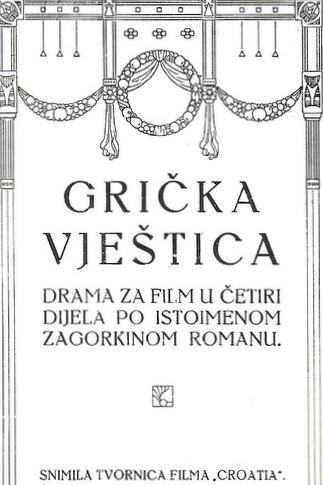
A definitive 6.2/10 rating for a film that redefined the boundaries of cult cinema. Gricka vjestica remains a cornerstone of transgressive art.
Stepping into the world of 'Gricka Vjestica' (The Witch of Gric) is akin to peeling back the layers of a forgotten epoch, revealing the raw, often brutal, underbelly of human nature when fear and superstition hold sway. This isn't merely a historical drama; it's a psychological thriller wrapped in period costume, a searing indictment of prejudice and the weaponization of belief. Based on the seminal work by Marija Juric-Zagorka, the film transports us to a time when a woman's intellect or independence could be her gravest sin, a period where the whispers of a malevolent judge could ignite an inferno of public hysteria. It's a narrative that resonates with an uncomfortable familiarity, even in our ostensibly enlightened age, reminding us just how fragile truth can be when confronted by the relentless tide of manufactured outrage.
At the heart of 'Gricka Vjestica' lies the formidable Countess Nera Keglevic, a character brought to life with compelling nuance by Renata Miletic. Nera is a beacon of enlightenment, a woman whose rational mind and progressive ideals stand in stark contrast to the deeply entrenched superstitions of her era. Her refusal to passively accept the prevailing belief in witches and witchcraft isn't just a personal stance; it’s a courageous act of defiance in a society where such skepticism could be construed as heresy. The conflict ignites when Judge Krajacic, portrayed with chilling conviction by Stjepan Bojnicic, enters the fray. His motivations are not born of genuine belief, but of a venomous, deeply personal vendetta, seeking to exploit the societal paranoia for his own nefarious ends. Krajacic’s calculated malevolence transforms the judicial process into a cruel spectacle, systematically dismantling Nera’s reputation and threatening her very life.
The film masterfully explores the terrifying ease with which mass delusion can be cultivated and manipulated. Nera’s struggle isn't just against Krajacic, but against the collective psyche of a town steeped in fear, a populace easily swayed by the pronouncements of authority figures. It's a poignant examination of how easily justice can be perverted, how swiftly an individual can be isolated and demonized when societal anxieties are inflamed. The narrative’s strength lies in its meticulous portrayal of this descent into madness, showing us the psychological toll on Nera as she grapples with an accusation that defies logic and reason. This thematic depth, exploring the battle between reason and irrationality, individual integrity versus mob mentality, makes 'Gricka Vjestica' a timeless cautionary tale. One might draw parallels to the enduring fight for personal autonomy seen in films like Her Own Way, where a protagonist challenges rigid societal expectations, or even the subtle societal critiques embedded within The Lesson, though 'Gricka Vjestica' paints its themes with a far darker, more urgent brushstroke.
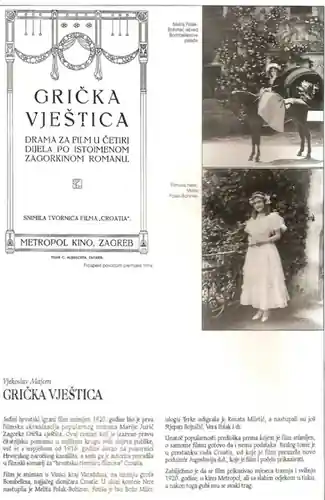
The power of 'Gricka Vjestica' is significantly amplified by its exceptional cast, each member contributing to the film's rich tapestry of human emotion and moral complexity. Renata Miletic's portrayal of Countess Nera Keglevic is nothing short of captivating. She imbues Nera with a quiet strength, a fierce intelligence that burns beneath a veneer of aristocratic composure. Miletic conveys Nera’s mounting terror and defiance without resorting to melodrama, making her struggle deeply empathetic. We witness her journey from a confident, principled woman to one battling despair, yet never relinquishing her core belief in justice and truth. It's a performance that anchors the entire film, providing a compelling human core to the abstract battle against superstition.
Opposite her, Stjepan Bojnicic as Judge Krajacic delivers a performance that is both terrifying and utterly believable. His Krajacic is not a caricature of evil, but a man consumed by personal grievance, leveraging his power with chilling precision. Bojnicic's nuanced depiction of a villain driven by revenge, rather than genuine conviction, adds layers of complexity to the narrative, highlighting the insidious nature of personal vendettas disguised as public service. His cold, calculating demeanor is a stark contrast to Nera's impassioned pleas, creating a palpable tension that permeates every scene they share. The supporting cast, including Bozo Miller, Vera Polak, and Melita Bohinec, further enriches the film's emotional landscape. Miller's portrayal of individuals caught in the crossfire of the witch hunt, Polak's embodiment of societal fear, and Bohinec's nuanced representation of those who either succumb to or resist the collective madness, all contribute significantly to the film’s immersive atmosphere. Each actor, in their respective roles, brings a sense of authenticity to the period, making the audience feel the weight of the historical context and the immediate peril faced by the characters.
The cinematic treatment of 'Gricka Vjestica' is as compelling as its narrative. The direction is meticulous, crafting an atmosphere that is both historically authentic and psychologically tense. The visual storytelling effectively conveys the oppressive mood of the era, where shadows of suspicion loomed large over everyday life. The cinematography, with its careful use of light and shadow, often creates a chiaroscuro effect that mirrors the moral ambiguities at play. Dark, confined spaces emphasize Nera’s increasing entrapment, while wide shots of the town square underscore the public spectacle of her trial, making the audience feel the weight of societal judgment. The film’s aesthetic choices are never gratuitous; they always serve to enhance the narrative and deepen the thematic resonance.
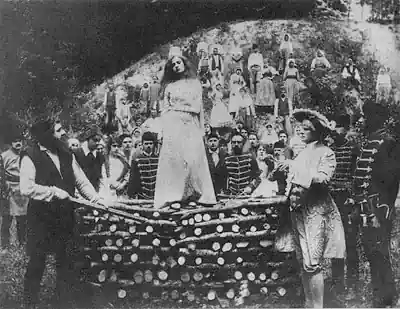
Costume design and set decoration are equally impressive, transporting viewers directly into 18th-century Zagreb. Every detail, from the intricate lace of Nera's gowns to the rustic austerity of the courtroom, speaks volumes about the social stratification and cultural norms of the time. This attention to historical accuracy not only enhances the film's visual appeal but also grounds the fantastical elements of witchcraft accusations in a tangible, believable reality. The pacing, too, is expertly handled, building suspense gradually, allowing the tension to simmer before erupting into dramatic confrontations. This deliberate rhythm ensures that the emotional impact of Nera's plight is fully absorbed by the viewer. The overall production design creates a cohesive, immersive world that feels both distant in time and eerily contemporary in its exploration of human folly. One could argue that the film's immersive historical setting and the detailed recreation of an oppressive atmosphere share a certain kinship with the world-building seen in classics like The Kingdom of Love, albeit with a much darker focus on the corrupting influence of power and fear.
It is impossible to discuss 'Gricka Vjestica' without acknowledging the monumental influence of its literary progenitor, Marija Juric-Zagorka. As one of Croatia's most prolific and beloved writers, Zagorka's original novel was a groundbreaking work, celebrated for its historical detail, compelling characters, and its fearless critique of societal injustices. She was a pioneer, not just in literature, but as a trailblazing female journalist and activist who often used her historical romances to subtly, yet powerfully, comment on contemporary issues of gender, power, and social reform. The film adaptation captures the essence of her vision, translating her intricate plot and vivid characterizations to the screen with remarkable fidelity.
Zagorka's Nera Keglevic is a quintessential example of her strong, independent female protagonists, characters who defy the patriarchal norms of their time and fight for their beliefs. The film ensures that this spirit of defiance and intellectual courage remains central. Her narrative doesn't just entertain; it educates, shedding light on a dark chapter of history while celebrating the resilience of the human spirit. The adaptation’s success lies in its ability to honor Zagorka's intricate world-building and her profound thematic concerns, making the historical drama accessible and relevant to new generations. It underscores the enduring power of literature to transcend its original medium and find new life in cinematic interpretation, preserving the core message of challenging ingrained prejudice and fighting for truth against overwhelming odds. The film serves as a powerful testament to Zagorka's lasting impact on Croatian culture and beyond, demonstrating how her stories continue to inspire and provoke thought, much like the enduring appeal of profound narratives such as The Siren's Song might resonate with themes of captivating, yet misunderstood, female power.
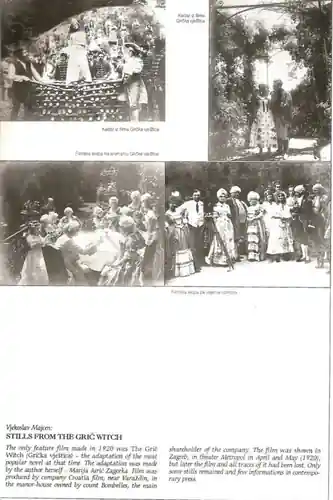
What makes 'Gricka Vjestica' truly enduring is its uncanny relevance to contemporary societal issues. While the specific threat of witch hunts has largely receded, the underlying mechanisms of fear, prejudice, and the weaponization of false accusations persist. In an age of misinformation and cancel culture, the film serves as a stark reminder of how easily public opinion can be swayed, how swiftly reputations can be destroyed, and how challenging it is for an individual to stand against a tide of collective condemnation. Nera's fight for her innocence, against a judge fueled by personal spite and a populace blinded by superstition, mirrors many modern struggles against injustice and societal ostracization.
The film's exploration of power dynamics, the abuse of authority, and the vulnerability of the individual in the face of institutionalized malice resonates deeply. It compels us to question our own susceptibility to sensationalism and our readiness to believe accusations without critical examination. In this sense, 'Gricka Vjestica' transcends its historical setting to become a universal narrative about truth, justice, and resilience. Its themes are as pertinent today as they were in the 18th century. Comparing it to other cinematic works, one might find thematic echoes in the struggle for individual purity against a corrupt system, reminiscent of certain aspects within The Water Lily, or the fight for a voice against an oppressive backdrop, as perhaps hinted at in The Barker, where public spectacle plays a significant role. The film's enduring power lies in its ability to provoke thought and encourage introspection about the nature of humanity, both its capacity for cruelty and its potential for unwavering courage.
'Gricka Vjestica' is more than just a film; it's a vital piece of cultural heritage, a cinematic adaptation that honors its literary roots while carving its own powerful identity. It's a visually stunning, emotionally resonant, and intellectually stimulating experience that demands attention. The performances are compelling, the direction is artful, and the thematic depth is profound. It’s a film that lingers long after the credits roll, prompting reflection on the timeless battle between enlightenment and ignorance, justice and vengeance. For anyone interested in historical dramas that offer more than just period spectacle, but rather a keen insight into the human condition and the persistent challenges to truth, 'Gricka Vjestica' is an absolute must-see. It stands as a powerful testament to the courage of those who dare to question, to defy, and to fight for what is right, even when the world seems determined to brand them as an outcast. This Croatian gem is a resonant masterpiece, a chilling reminder of history's lessons, and a celebration of an enduring spirit that refuses to be silenced by the shadows of superstition. It truly embodies the spirit of resilience that echoes through tales of courage and conviction, making it an essential watch for any discerning film enthusiast.
IMDb 6.2
1926
Community
Log in to comment.