DbcultAccessing Vault...
Cult Review
Senior Film Conservator
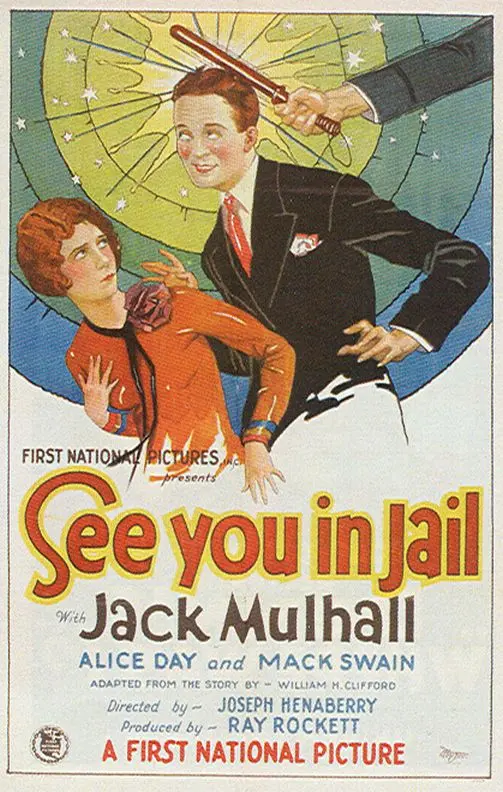
Is 'See You in Jail' worth watching today? Short answer: absolutely, but with significant caveats. This early cinematic effort, a fascinating relic from a bygone era, offers a unique window into the storytelling sensibilities of its time, though it demands a particular kind of patience and appreciation from its audience. It’s a film that will undoubtedly resonate deeply with ardent silent film aficionados and those with a keen interest in the evolution of cinematic narrative, offering rich ground for academic study and historical appreciation.
However, for the casual modern viewer accustomed to rapid pacing, complex dialogue, and sophisticated visual effects, 'See You in Jail' will likely feel like a challenging, perhaps even frustrating, experience. Its narrative rhythms, while compelling for its period, can seem ponderous, and its reliance on visual storytelling without spoken dialogue requires an active, engaged interpretation that not all contemporary audiences are prepared to give. It is decidedly not for those seeking instant gratification or a conventional blockbuster experience.
William H. Clifford and Gerald C. Duffy, the scribes behind 'See You in Jail,' craft a surprisingly resonant tale of one man's struggle against an unfair system. While the plot seems deceptively simple on its surface—a man framed for a petty crime—the film's strength lies in its meticulous portrayal of character and societal dynamics, rather than intricate twists. It's a testament to the power of visual storytelling that even without spoken words, the audience feels the weight of Silas Grumbles' predicament.
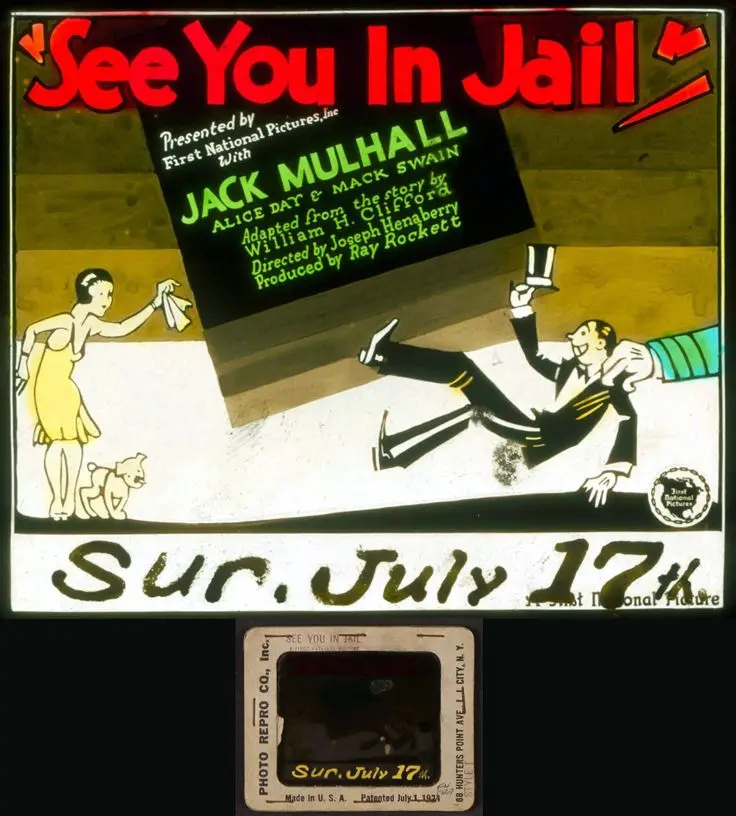
The film works because of its surprisingly nuanced character portrayals, particularly Burr McIntosh’s turn as the perpetually flustered Silas Grumbles, whose every gesture speaks volumes without uttering a single word. It captures a specific societal anxiety—the fear of public humiliation and unjust accusation—with an earnestness that transcends its silent medium.
This film fails because its pacing, while deliberate, occasionally verges on dilatory, stretching certain sequences beyond their dramatic necessity. The narrative, while charming, lacks the intricate subplots or character arcs that would fully satisfy a contemporary audience's expectation for depth, often relying on broad strokes where finer details might have elevated its impact.
You should watch it if you possess a genuine curiosity for the origins of cinematic storytelling, appreciate the artistry of silent film performance, or are engaged in a study of early 20th-century social commentary through the lens of popular entertainment. It’s a historical document as much as it is a piece of art.
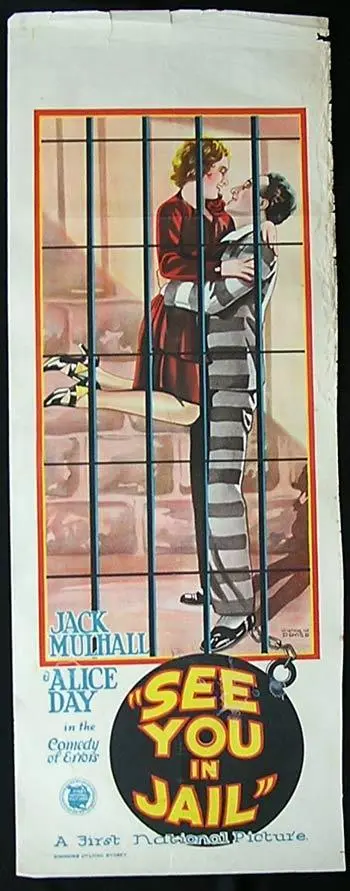
The ensemble cast of 'See You in Jail' carries the film's emotional weight almost entirely through physical expression and facial contortion, a hallmark of the silent era. Burr McIntosh, as Silas Grumbles, is the undeniable heart of the picture. His performance is a masterclass in conveying distress, confusion, and a burgeoning sense of injustice without ever uttering a syllable. Observe the scene where Silas is first accused during the town raffle: McIntosh’s eyes widen in disbelief, his hands flutter nervously, and his posture slumps, perfectly illustrating a man whose world is crumbling before him. It's a performance that, surprisingly, feels less melodramatic than many of its contemporaries, hinting at a more grounded approach to silent acting.
Opposite McIntosh, Mack Swain, likely cast as the nefarious Bartholomew Blackwood, brings a delightful, almost cartoonish villainy to the screen. Swain's broad gestures and menacing glares are perfectly calibrated for the larger-than-life antagonist required to drive Silas's torment. His sneering smile as Silas is led away by the bumbling constables is a particularly memorable moment, a perfect encapsulation of silent film villainy that manages to be both comical and genuinely unsettling.
The supporting cast, while not given as much screen time, contributes significantly to the film's atmosphere. Alice Day, perhaps as a sympathetic bystander or love interest, offers moments of poignant concern, her expressive face a beacon of human kindness amidst the town's collective judgment. Her subtle head shakes and worried glances directed at Silas are small but impactful details that ground the narrative in emotional realism. George Fawcett and Charles Clary, likely portraying figures of authority or other townsfolk, embody the rigid, often unthinking, nature of local justice. Their stern, unyielding expressions reinforce Silas's isolation, making his struggle feel all the more desperate.
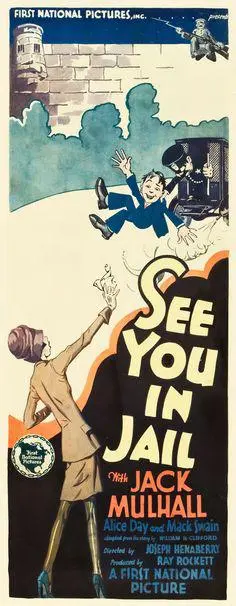
Direction in 'See You in Jail,' while uncredited, demonstrates a clear understanding of the silent film vernacular. The use of close-ups is particularly effective in drawing the audience into the characters’ emotional states, a technique still evolving during this period. For instance, the director frequently cuts to a tight shot of Silas’s face during moments of distress, allowing McIntosh’s nuanced expressions to fully register. This avoids the often-criticized theatricality of earlier silent films, favoring a more intimate connection with the protagonist.
The establishing shots of the quaint small town, likely utilizing early matte paintings or impressive set design, effectively set the stage for the narrative. The contrast between the idyllic setting and the dark events unfolding within it is a clever visual commentary. The cinematography, while constrained by the technology of the era, makes judicious use of available light, creating stark shadows in the jailhouse scenes that visually reinforce Silas's despair. One particular shot, an iris effect slowly closing on Silas's face as he contemplates his fate in his cell, is surprisingly powerful, compressing his world into a single, isolated point.
The editing, though not always seamless by modern standards, serves the story well. There are moments of rapid cutting during the chaotic accusation scene, creating a palpable sense of panic and confusion, effectively mirroring Silas's own disoriented state. Conversely, scenes depicting Silas's solitary confinement are given longer takes, allowing the emotional weight of his situation to sink in. This variation in pacing, while sometimes uneven, showcases an experimental spirit in early filmmaking.
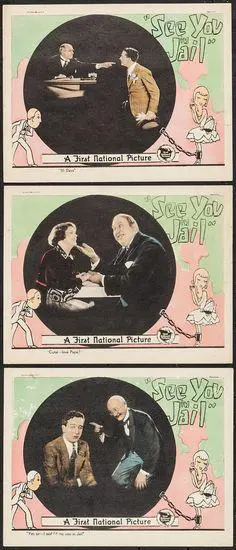
The pacing of 'See You in Jail' is a fascinating study in early cinematic rhythm. It oscillates between moments of brisk narrative progression, particularly during the initial setup and the frantic accusation, and more deliberate, almost languid stretches. The latter can be challenging for contemporary viewers, as the film often lingers on character reactions or environmental details for extended periods. This was common for the era, allowing audiences to fully absorb the visual information and emotional beats without the aid of dialogue. However, there are instances where a more judicious trim could have tightened the overall impact, particularly in the sequences leading up to Silas’s trial.
The tone is a compelling blend of melodrama and unexpected moments of dark comedy. While Silas’s plight is genuinely tragic, there’s an underlying absurdity to the small-town justice system and the exaggerated villainy of Blackwood that injects a subtle humor. The bumbling constables, for instance, provide much-needed comic relief, their antics preventing the film from descending into unremitting gloom. This tonal tightrope walk is one of the film’s most distinctive, and perhaps most debatable, qualities. Some might find the shifts jarring, but I argue it adds a layer of realism to the often-unpredictable nature of life itself.
“The film’s greatest strength might just be its unflinching, yet surprisingly gentle, portrayal of human vulnerability in the face of institutional indifference.”
One surprising observation about 'See You in Jail' is its subtle, almost subversive, commentary on mob mentality and the fragility of reputation. In an era often characterized by clear-cut heroes and villains, this film dares to explore the gray areas of public perception. Silas, despite his obvious innocence, is quickly condemned by his community, highlighting a timeless societal flaw that feels shockingly relevant even today. It’s a bold choice for a film of its time, refusing to simply portray a clear victory of good over evil but rather a harrowing journey through the depths of unjust suspicion.
The film's impact, though perhaps not as widely recognized as some of its contemporaries, lies in its contribution to the development of character-driven silent drama. It prioritizes emotional authenticity over spectacle, a trend that would grow in importance as the silent era matured. Comparing it to something like The Bluffer, which leaned heavily into comedic misunderstandings, 'See You in Jail' ventures into more serious territory while still retaining elements of levity. It’s a fascinating precursor to later, more complex silent melodramas, hinting at the depth the medium was capable of achieving.
Yes. But it’s flawed. This film is absolutely worth watching if you are a serious student of film history, a silent film enthusiast, or simply curious about the roots of cinematic storytelling. It offers a unique glimpse into the narrative techniques and acting styles of the early 20th century. However, it requires a significant adjustment of expectations for modern viewers. Its deliberate pacing and reliance on visual cues will be challenging for those accustomed to contemporary cinema. It’s a valuable historical document, but not necessarily a universally entertaining one for today’s casual audience.
'See You in Jail' is more than just a historical curiosity; it’s a compelling, if imperfect, piece of early cinema that offers a fascinating look at the art of silent storytelling. Its strengths lie in its earnest performances, particularly that of Burr McIntosh, and its surprisingly poignant exploration of injustice. While its pacing and some of its broader characterizations may test the patience of a modern viewer, its historical value and the sheer artistry of its visual narrative make it a worthwhile watch for dedicated film enthusiasts.
It’s a film that asks you to step back in time, to appreciate a different rhythm of storytelling, and to engage your imagination in ways that contemporary cinema rarely demands. For those willing to make that journey, 'See You in Jail' offers a rewarding, if sometimes somber, experience. It’s a testament to the enduring power of human struggle portrayed on screen, and for that alone, it deserves to be seen.

IMDb 6.8
1914
Community
Log in to comment.