DbcultAccessing Vault...
Cult Review
Senior Film Conservator
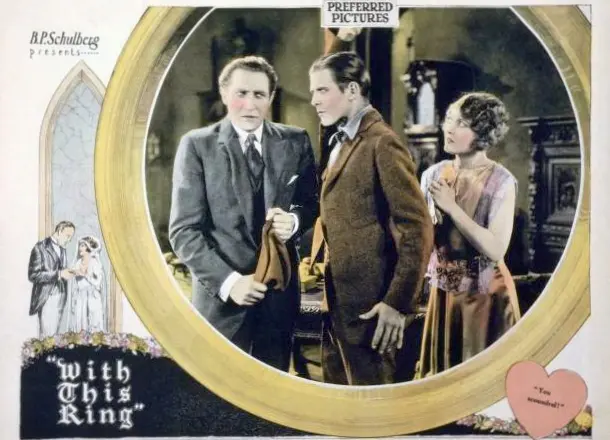
Stepping back into the cinematic landscape of 1925, one encounters a fascinating tapestry of storytelling, where the dramatic flourishes of the silent era reached their zenith. Among these, Douglas Z. Doty’s adaptation of Fanny Heaslip Lea’s narrative, 'With This Ring', emerges as a compelling exemplar of the period's profound melodramatic sensibilities. This is not merely a film; it is a grand, sweeping saga of love forged in adversity, brutally tested by fate, and ultimately redeemed through an almost mythical persistence of spirit. It’s a testament to the power of visual storytelling, where every gesture, every lingering gaze, and every dramatic tableau had to convey the emotional weight that dialogue would later carry.
The film plunges us headfirst into peril, bypassing leisurely introductions for the raw immediacy of a shipwreck. Here, on the tempest-tossed waves, the paths of Donald and Cecilie converge, not in the genteel drawing rooms of high society, but in the elemental crucible of survival. Their shared ordeal on a desolate island, a stark, unforgiving canvas, becomes the unlikely birthplace of their love. Stripped of societal artifice, their connection is primal and pure, culminating in an impromptu marriage performed under the vast, indifferent sky, witnessed only by the crashing waves and, as they believe, by God himself. This initial sequence is crucial, establishing a bond of such profound authenticity that it must withstand every subsequent trial. Alyce Mills, as Cecilie, imbues this early portrayal with a remarkable blend of vulnerability and nascent strength, while Donald Keith’s Donald projects an earnestness that makes their immediate connection believable, despite the accelerated timeline of their romance.
The idyllic, if precarious, sanctuary of their island existence is shattered by a brutal act of violence. Donald is set upon by a deranged Portuguese assailant, a random, senseless act that leaves him unconscious and, to Cecilie’s horror, seemingly lifeless. The arrival of a rescue party, a beacon of hope in the vast expanse of the ocean, becomes a double-edged sword. Faced with the agonizing choice between remaining with her presumed dead husband or seizing the opportunity for survival, Cecilie makes the heart-wrenching decision to depart. This moment, fraught with unimaginable grief and the crushing weight of perceived loss, is a pivotal turning point, propelling the narrative into its next tumultuous chapter. It’s a masterclass in silent film performance, as Mills conveys a whirlwind of despair, duty, and desperate hope without uttering a single word, her expressive eyes and body language speaking volumes about her inner turmoil. Such nuanced portrayals were the bedrock of emotional engagement in an era before synchronized sound.
Returning to the United States, Cecilie, now a widow in all but official recognition, is confronted by an even more formidable antagonist: Donald's wealthy and imperious family. The Van Burens, a formidable symbol of aristocratic entitlement, embody the rigid class structures of the era. They refuse to acknowledge her as Donald’s wife, seeing her as an inconvenient interloper threatening their carefully constructed social order. Even more cruelly, they deny the legitimacy of her infant child, effectively disinheriting him and casting a shadow of shame upon Cecilie. This narrative thread, exploring the profound chasm between love and societal acceptance, resonates with similar themes found in other silent era dramas where class often dictated destiny, such as The Italian, which also explored the injustices faced by those outside the established elite, albeit through a different lens. The Van Burens, particularly Forrest Stanley as Donald’s unscrupulous brother, epitomize the callous indifference of privilege, their every interaction with Cecilie a deliberate act of emotional and social violence.
The brother’s attempts to first seduce, then bribe, Cecilie into relinquishing her claims are particularly odious, highlighting the moral bankruptcy lurking beneath the veneer of respectability. His machinations are a stark contrast to Cecilie’s unwavering integrity, solidifying her position as the film’s moral compass. This struggle against a powerful, corrupt family unit is a classic melodramatic trope, but ‘With This Ring’ executes it with an intensity that keeps the audience deeply invested in Cecilie’s plight. Her refusal to compromise her dignity, despite overwhelming pressure and the precariousness of her situation, is a powerful statement on female resilience that, while perhaps idealized for dramatic effect, would have resonated strongly with audiences of the time.
Amidst this hostile environment, a glimmer of compassion emerges in the form of John Wendell, the family lawyer, portrayed with a compelling blend of integrity and weary wisdom by Lou Tellegen. Wendell, witnessing the egregious injustice perpetrated against Cecilie, offers her a lifeline: a marriage of convenience, in name only, to provide her and her child with the protection of his respectable name. This act of altruism is a crucial narrative device, offering a temporary reprieve from Cecilie’s relentless persecution and introducing a complex emotional dynamic. Tellegen’s performance here is understated yet powerful, conveying a man torn between his professional loyalties and his personal sense of justice. His willingness to defy the powerful Van Buren family, even subtly, speaks volumes about his character and provides a much-needed moral counterpoint to their villainy. This kind of protective, albeit platonic, alliance was a common, if sometimes controversial, plot device in silent films, allowing for a resolution to social dilemmas without immediate romantic entanglements, as seen in other films dealing with a woman’s social standing like Black Oxen, where societal conventions often dictated a woman's choices.
The narrative of ‘With This Ring’ is undeniably a product of its time, steeped in the grand traditions of early 20th-century melodrama. The plot twists are bold and sometimes extravagant, designed to elicit maximum emotional response from the audience. Yet, within this framework, the film manages to explore deeper themes: the arbitrary nature of class distinctions, the resilience of the human spirit in the face of overwhelming odds, and the enduring power of a love believed lost. Alyce Mills’ portrayal of Cecilie is central to the film’s success. She is not a passive victim, but a woman who, despite her profound grief and the relentless attacks on her character, fights for her rights and for the future of her child. Her journey is one of self-discovery, transforming from a shipwrecked survivor into a formidable opponent against a powerful, entrenched establishment. This active portrayal of a female protagonist was a significant element in many films of the era, pushing boundaries even within conventional narratives.
The visual language of the film, typical of the silent era, relies heavily on exaggerated expressions, dramatic lighting, and carefully composed frames to convey emotion and propel the plot. The contrast between the stark, natural beauty of the island and the opulent, yet morally corrupt, interiors of the Van Buren estate is visually striking and serves to underscore the film’s thematic concerns. Directors of this period were masters of non-verbal communication, using cinematic techniques to guide the audience’s emotional journey. The use of intertitles, while sometimes verbose by modern standards, provided crucial exposition and character insight, acting as the narrative’s internal monologue. The cinematography, though perhaps less technically sophisticated than later eras, was remarkably effective in establishing mood and atmosphere, from the terror of the shipwreck to the quiet despair of Cecilie's initial return.
The screenplay by Fanny Heaslip Lea and Douglas Z. Doty skillfully navigates the labyrinthine plot, ensuring that each twist and turn serves to heighten the dramatic tension. Lea, a prolific writer whose works often explored themes of love, social class, and female agency, brought a depth of character to Cecilie that elevates her beyond a mere damsel in distress. Doty, in his adaptation, managed to translate the emotional core of her story into a visually compelling narrative, understanding the unique demands of the silent screen. Their collaboration resulted in a story that, despite its fantastical elements, feels grounded in universal human emotions. The pacing, though deliberate, allows for the full impact of each dramatic revelation to settle, pulling the audience deeper into Cecilie’s harrowing experiences.
The resolution, while predictable in the context of classical melodrama, is nonetheless deeply satisfying. Donald, having miraculously survived his ordeal on the island—a testament to his own resilience and perhaps a touch of narrative convenience—is eventually rescued. His return sets the stage for the climactic reunion with Cecilie, a moment of profound emotional release for both the characters and the audience. This joyous convergence of paths, after so much suffering and misunderstanding, provides the catharsis that audiences craved from such tales. It’s a powerful affirmation of enduring love, suggesting that true bonds can withstand even the most extraordinary trials. The final scenes, devoid of dialogue, rely entirely on the actors' ability to convey overwhelming joy and relief, a skill that Alyce Mills and Donald Keith demonstrate admirably.
In comparing 'With This Ring' to other films of its era, one can see its place firmly within the tradition of romantic melodramas that captivated audiences. While it lacks the sheer spectacle of an epic like Dorothy Vernon of Haddon Hall or the gritty realism sometimes found in social dramas like The Black Stork, it excels in its focused, emotional intensity. It shares a thematic kinship with films that explore the trials of women navigating a patriarchal society, such as Always in the Way, which often depicted mothers fighting for their children against societal odds. However, ‘With This Ring’ distinguishes itself with its unique blend of survival adventure, class conflict, and ultimately, a triumphant reunion, making it a particularly engaging watch for those interested in the diverse narrative forms of silent cinema. The film's ability to maintain high stakes and emotional resonance throughout its runtime, despite the lack of spoken word, is a testament to the craftsmanship of its creators and performers.
The enduring appeal of 'With This Ring' lies not just in its dramatic plot, but in its exploration of fundamental human experiences: love, loss, resilience, and the relentless pursuit of justice. It reminds us that even in an era of silent pictures, stories could speak volumes, touching the deepest chords of the human heart. The performances, particularly from Alyce Mills, stand as a testament to the expressive power of silent acting, conveying a rich tapestry of emotions with remarkable clarity and intensity. It is a film that, despite its age, continues to resonate, offering a window into the narrative preferences and social anxieties of its time, while simultaneously delivering a timeless tale of love’s ultimate triumph over adversity. To truly appreciate the breadth of early cinema, one must engage with these melodramas, not as relics, but as vibrant examples of storytelling that laid the groundwork for everything that followed.
The ensemble cast of 'With This Ring' brought a vital energy to the screen, each actor contributing to the film’s rich emotional texture. Alyce Mills, as Cecilie, carries the film's emotional weight with grace and strength, her performance a compelling blend of vulnerability and fierce determination. Her expressive eyes and nuanced gestures were perfectly suited for the silent medium, allowing her to convey Cecilie’s profound internal struggles and triumphs without a single spoken word. Donald Keith, as Donald, delivers a portrayal that is both earnest and heroic, making his character’s initial charm and later resilience entirely believable. His chemistry with Mills is palpable, forming the emotional core of the film.
Lou Tellegen, a prominent figure in early cinema, brings a distinguished gravitas to the role of John Wendell, the empathetic lawyer. His performance provides a much-needed moral anchor, a beacon of integrity amidst the Van Buren family’s callousness. Tellegen’s ability to convey quiet strength and genuine compassion, even in a supporting role, highlights his considerable talent. Forrest Stanley, as Donald’s villainous brother, excels in portraying the insidious nature of privilege and greed. His smarmy attempts at manipulation and outright bribery are chillingly effective, making him a truly detestable antagonist and a perfect foil to Cecilie’s unwavering virtue. Eulalie Jensen and Martha Mattox, in their respective roles, contribute to the film’s portrayal of societal judgment and rigid class structures, their performances adding layers to the oppressive atmosphere Cecilie faces upon her return.
The creative forces behind the camera were equally instrumental in shaping 'With This Ring'. Fanny Heaslip Lea, whose original story formed the foundation of the film, was a celebrated writer of her time, known for her intricate plots and strong female characters. Her narrative vision provided the emotional depth and dramatic tension that screenwriter Douglas Z. Doty skillfully translated into a cinematic script. Doty, with his experience in adapting literary works for the screen, understood the nuances required to make a story resonate with silent film audiences, focusing on visual storytelling and impactful dramatic sequences. Together, Lea and Doty crafted a narrative that, while embracing the popular tropes of melodrama, also offered a compelling commentary on social class, justice, and the resilience of love. The meticulous attention to detail in their storytelling ensures that every plot development, no matter how grand, feels earned within the film’s dramatic universe.
IMDb 5.8
1929
Community
Log in to comment.