DbcultAccessing Vault...
Cult Review
Senior Film Conservator
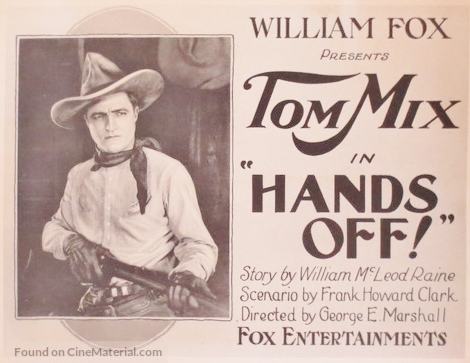
The silver screen of 1921, still largely a canvas of silent storytelling, presented audiences with a vibrant tapestry of narratives, none perhaps more emblematic of American mythology than the Western. Amidst this burgeoning cinematic landscape, Hands Off! emerged as a quintessential example, a film that, even a century later, continues to captivate with its straightforward heroism, unambiguous villainy, and the electrifying presence of its star, Tom Mix. Penned by the collaborative talents of Frank Howard Clark and William MacLeod Raine, this picture isn't merely a relic of a bygone era; it's a pulsating testament to the foundational elements that would define the genre for decades to come, an unvarnished look at the struggle for justice in a lawless land.
From the moment Tex Roberts, portrayed with an inimitable blend of rugged charm and quiet determination by Tom Mix, rides into that unnamed border town, the narrative pulses with an immediate sense of purpose. There's no lengthy preamble, no convoluted backstory to unravel; Roberts is simply a force for good, an embodiment of the wandering hero archetype. His arrival isn't happenstance but destiny, as he almost immediately finds himself intervening in the unsavory advances of Pete Dinsmore, a character brought to life with menacing conviction by Merrill McCormick, upon the innocent Ramona Wadley, played with a delicate strength by Pauline Curley. This initial confrontation sets the stage, establishing the moral dichotomy that will drive the entire plot. Dinsmore isn't just a lout; he's the leader of a nefarious gang of rustlers, a criminal enterprise that casts a long shadow over the community. Roberts's swift and decisive action here is more than just a rescue; it's a declaration of intent, a challenge laid down to the forces of disorder.
Mix, a legendary figure in early Hollywood, was renowned for performing his own stunts, and Hands Off! provides ample opportunity for his athleticism to shine. Shortly after his initial heroic act, Roberts once again proves his mettle, this time in a more spectacular fashion, by rescuing Ramona's sister from the chaotic peril of a stampede. This sequence, likely a thrilling spectacle for contemporary audiences, doesn't just showcase Mix's physical prowess; it cements Roberts's reputation as a man of action and integrity. These deeds earn him a well-deserved position on the Wadley ranch, integrating him into the very fabric of the community he's come to protect. It's a classic Western trope: the stranger rides in, proves his worth, and becomes an indispensable part of the landscape. However, this period of calm is merely the eye of a storm, for beneath the surface, a more insidious plot is brewing.
The narrative takes a darker turn with the introduction of Ford Wadley, the owner's son, played by Frank Clark. Ford, it is revealed, is secretly in league with the villainous Dinsmore, a betrayal that adds a layer of tragic complexity to an otherwise straightforward tale of good versus evil. When Ford is dispatched by his father to collect money, Dinsmore and his gang seize the opportunity to stage a fake holdup. The plan, however, goes horribly awry, culminating in Ford's accidental death. This pivotal event serves as a catalyst, plunging Roberts into a maelstrom of suspicion and injustice. Framed for a crime he didn't commit, Roberts is arrested, his reputation tarnished, and his future hanging precariously in the balance. This narrative device, the wrongful accusation of the hero, is a powerful engine for dramatic tension, forcing the protagonist to fight not only against external antagonists but also against the very system of justice he seeks to uphold. It’s a common, yet always effective, method of deepening the hero's struggle, forcing him to rely on his wits and courage even more.
The performances in Hands Off!, while adhering to the often broad, expressive style necessitated by silent film, are remarkably effective in conveying character and emotion. Tom Mix, as Tex Roberts, embodies the quintessential cowboy hero: honorable, skilled, and utterly unwavering in his pursuit of justice. His physical presence, combined with subtle facial expressions, communicated a depth of character that transcended the absence of dialogue. Pauline Curley’s Ramona is more than just a damsel in distress; she represents the vulnerability of the innocent and the potential for a better, more peaceful future, a beacon of hope for Roberts. Merrill McCormick’s Dinsmore is a study in cinematic villainy, his every gesture radiating malevolence, providing a stark contrast to Mix’s upright hero. The supporting cast, including Sid Jordan and Charles K. French, contribute to the film’s authentic frontier atmosphere, each playing their part in the intricate dance of loyalty and deception.
The pacing of Hands Off! is brisk, a hallmark of many silent Westerns that relied on action and visual storytelling to maintain audience engagement. The narrative moves efficiently from one dramatic incident to the next, building momentum towards the inevitable climax. This isn't a film that lingers on introspection; it’s a film that moves, much like its protagonist, with a clear and determined trajectory. The intertitles, sparse but impactful, effectively convey necessary dialogue and plot points, allowing the visual action to take center stage. For a film of its era, the cinematography is commendable, capturing the vastness of the Western landscape and the dynamic energy of horse chases and fight sequences. The use of natural light, combined with clever framing, adds a layer of authenticity that transports the viewer directly into the dusty, rugged world of the Old West.
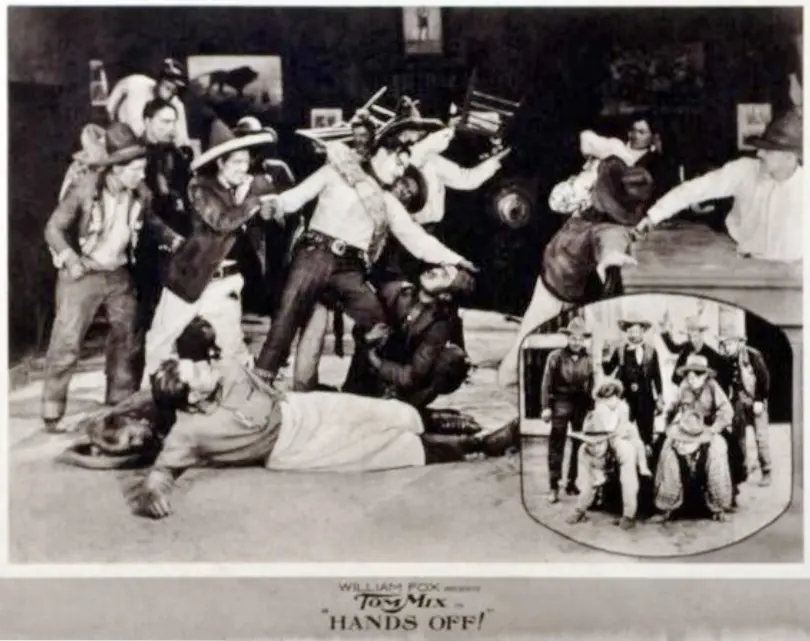
Roberts's journey from falsely accused prisoner to triumphant hero forms the core of the film's second half. His determination to clear his name is unwavering, and the audience is taken along on his quest for truth. This segment often involves clever detective work, daring escapes, and the gradual unraveling of Dinsmore's intricate web of lies. The narrative expertly weaves together elements of mystery and adventure, as Roberts pieces together the evidence that will ultimately expose the true culprits. The film cleverly uses the dramatic irony of the audience knowing Dinsmore's guilt while Roberts struggles against the odds, amplifying the tension and investment in his eventual vindication. This narrative arc, where the hero must overcome both physical and systemic obstacles, resonates deeply, tapping into a universal desire for justice.
The climax of Hands Off! culminates in a classic Western showdown, a confrontation between Roberts, Dinsmore, and his entire gang. This is where the film delivers on all its promises, providing a thrilling spectacle of action and resolution. The final battle, presumably a meticulously choreographed sequence of fisticuffs, gunplay, and daring horsemanship, serves as the ultimate catharsis. It's not just a fight; it's a symbolic cleansing of the community, an eradication of the evil that has plagued it. Roberts, in his unwavering resolve, embodies the spirit of frontier justice, where the law of the gun often preceded the law of the land. The defeat of Dinsmore and his gang signifies the restoration of order, the triumph of good over malevolence, and the establishment of a safer future for the Wadley ranch and the townspeople.
Viewing Hands Off! today offers a fascinating glimpse into the nascent stages of cinematic storytelling and the enduring power of the Western genre. While some elements might appear simplistic by modern standards, the film's core themes – justice, loyalty, betrayal, and the struggle for survival in a wild landscape – remain timeless. It’s a testament to the universal appeal of these narratives that they continue to resonate, even in their earliest, silent forms. The film, like many of its contemporaries, laid crucial groundwork for the Westerns that would follow, establishing character archetypes and narrative conventions that would become iconic.
When considering Hands Off!, it's useful to place it within the broader context of silent Westerns. For instance, films like The Savage (1917), while perhaps featuring a slightly different narrative focus, shared a similar commitment to portraying the untamed beauty and inherent dangers of the American frontier. Both films relied heavily on the charisma of their leading men and the spectacle of action sequences to drive their plots, demonstrating the early genre's emphasis on visual storytelling over complex dialogue. The simplicity of the moral code, the clear delineation between hero and villain, and the ultimate triumph of justice were common threads that bound these early narratives together, forging a powerful and enduring mythology. These films weren't just entertainment; they were cultural touchstones, reflecting and shaping the American identity of the time.
The work of writers Frank Howard Clark and William MacLeod Raine is particularly noteworthy. Raine, a prolific author of Western novels, brought a deep understanding of the genre's tropes and an authentic voice to the screenplay, while Clark, a seasoned screenwriter, translated these elements effectively for the silent screen. Their collaboration ensured that Hands Off! possessed both narrative coherence and dramatic impact, a crucial combination for engaging audiences without the aid of spoken words. Their ability to craft compelling stories through action and visual cues demonstrates a mastery of the silent film medium, a skill that is often underestimated in retrospect.
In conclusion, Hands Off! stands as a robust example of early silent Western cinema, propelled by the magnetic presence of Tom Mix and a storyline that, while archetypal, remains thoroughly engaging. It's a film that speaks volumes without uttering a single word, relying on the universal language of action, emotion, and the timeless struggle between right and wrong. For anyone interested in the foundational narratives of American cinema, or simply in enjoying a good old-fashioned tale of a cowboy hero saving the day, this 1921 classic is an indispensable watch, a vibrant snapshot of a genre in its formative, yet already powerful, years. It reminds us that even in the absence of sound, the power of a compelling story and a charismatic performer can transcend time, leaving an indelible mark on the landscape of film history.
IMDb —
1915
Community
Log in to comment.