DbcultAccessing Vault...
4.9/10
Senior Film Conservator
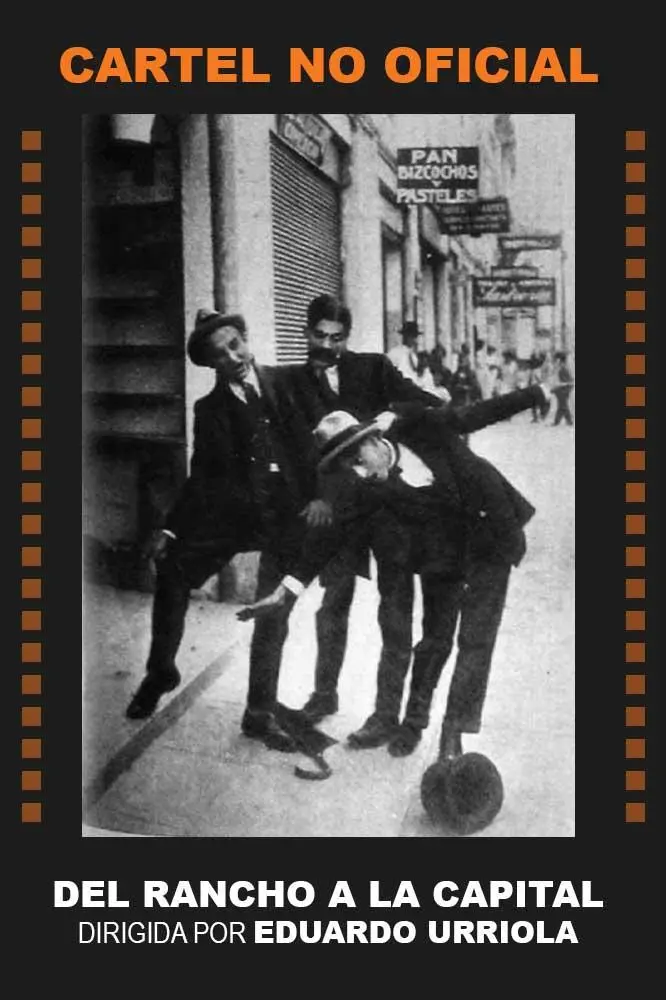
A definitive 4.9/10 rating for a film that redefined the boundaries of cult cinema. Del rancho a la capital remains a cornerstone of transgressive art.
Is Del rancho a la capital worth watching today? Short answer: Only if you are a dedicated film historian or a glutton for the unpolished artifacts of early Latin American cinema.
This film is specifically for those who want to see the DNA of Mexican melodrama before it was sanitized by the Golden Age; it is absolutely not for anyone who requires modern pacing, high-fidelity visuals, or a narrative that doesn't rely on heavy-handed moralizing.
1) This film works because it captures an authentic, unvarnished glimpse of 1920s Mexico City that feels more like a time capsule than a structured movie.
2) This film fails because its narrative structure is agonizingly episodic, often losing momentum during transition scenes that lack clear stakes.
3) You should watch it if you are fascinated by how early directors used the 'city vs. country' trope to process the trauma of national modernization.
To answer the question of value, one must look past the flickering frames and the occasionally static camera work. For a modern viewer, the experience is akin to reading a dusty diary. It is tedious. It is slow. But it is also undeniably real in a way that modern period pieces can never replicate. If you appreciate the technical evolution of the medium, seeing how Eduardo Urriola attempts to frame the bustling streets of the capital against the wide-open ranch vistas is worth the price of admission. However, if you are looking for entertainment in the traditional sense, you will likely find yourself checking your watch within the first twenty minutes.
The cinematography in Del rancho a la capital is a fascinating study in limitation. Unlike the relatively fluid camera work seen in American films of the same year, such as Winners of the Wilderness, Urriola’s camera often remains rooted to the spot. This creates a stage-like atmosphere that can feel claustrophobic. However, when the production moves outdoors into the actual streets of Mexico City, the film breathes. There is a specific shot of the family arriving at the train station—a moment of genuine chaos—where the camera seems to struggle to keep up with the movement of the crowd. It’s messy, but it’s alive.
In contrast to the rural scenes, which are shot with a flat, naturalistic light that emphasizes the harshness of the land, the urban interiors are draped in shadows. This isn't the sophisticated chiaroscuro of German Expressionism, but rather a primitive attempt to signal 'danger.' The city is presented as a place of dark corners and hidden intentions. When Dolores Garcia’s character enters a city parlor, the lighting is so dim it’s almost difficult to see the actors’ expressions, yet this accidental murkiness adds an unintended layer of dread to the proceedings.
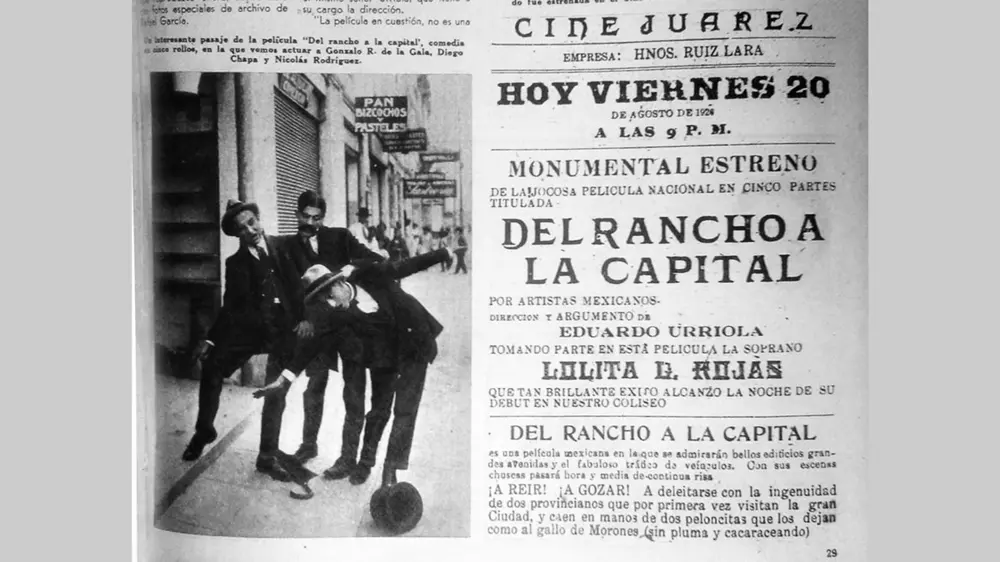
The performances in this era of Mexican cinema were still heavily indebted to the theater. Carmen Cabrera, as the emotional center of the film, delivers a performance that is all eyes and hands. Every realization is punctuated by a dramatic gasp or a clutch of the chest. To a modern audience, it’s over-the-top. To the audience of 1926, it was the necessary vocabulary of the silent screen. She carries the weight of the film's moral core, and while her performance lacks the nuance found in contemporary dramas like Kiss Me Again, there is a sincerity to her desperation that manages to pierce through the technical haze.
Diego Chapa and Nicolás Rodríguez provide the masculine counterpoints, representing the two paths available to the rural man in the city: the victim and the predator. Rodríguez, in particular, leans into the role of the urban sophisticate with a sneer that feels plucked straight from a Victorian stage play. It’s not subtle. It works. But it’s flawed. The lack of middle ground in these characterizations makes the film feel more like a parable than a character study. We see this same lack of nuance in other silent works like The Man Who Forgot, where characters are often symbols first and people second.
Let’s be honest: the pacing is glacial. Eduardo Urriola seems terrified of cutting away from a scene too early. There is a sequence involving a dinner party that feels like it happens in real-time. While this provides a wealth of detail for historians interested in 1920s Mexican social etiquette, it kills the narrative tension. The film lacks the snappy, investigative energy of something like Perils of Our Girl Reporters or the rhythmic editing found in Kaliya Mardan.
Every time the plot begins to thicken—usually around a debt or a romantic betrayal—the film pauses for a long, explanatory title card. These cards don't just provide dialogue; they provide moral instruction. They tell the audience exactly how to feel about the scene they just watched, which robs the viewer of any intellectual agency. It is a didactic style of filmmaking that has long since fallen out of favor, yet it remains a fascinating example of how early cinema was used as a tool for social education.
Pros:
Cons:
When compared to other rural dramas of the time, such as The Hoosier Schoolmaster, Del rancho a la capital feels much more cynical. While American films often found a way to bridge the gap between the old world and the new, Urriola seems to suggest that the capital is a soul-crushing machine that consumes everything it touches. This cynicism is a recurring theme in early Mexican art, reflecting a deep-seated anxiety about the loss of agrarian identity. Even in shorter, more comedic works like Pants, the clash of social classes is handled with more levity than the grim earnestness found here.
The film also lacks the mystery elements that made European imports like The Disappearance of Lady Frances Carfax so popular in Mexican theaters at the time. Urriola wasn't interested in suspense; he was interested in the social gospel. This makes the film a tougher sit than its contemporaries, but perhaps a more honest one in terms of its thematic intentions.
Del rancho a la capital is not a hidden masterpiece, but it is a vital one. It is a clunky, flickering, and often frustrating piece of cinema that nonetheless demands respect for what it attempted to do. It tried to speak to a people undergoing a massive identity shift, using a new medium to warn them about the dangers of losing their roots. While the technical execution is leagues behind the works of Murnau or Griffith, the heart of the film is undeniably Mexican. It is a relic that reminds us that cinema has always been a battleground for a nation's soul. Watch it for the history, endure it for the art, and appreciate it for the sheer audacity of its existence in 1926.
IMDb —
1917
Community
Log in to comment.