DbcultAccessing Vault...
7/10
Senior Film Conservator
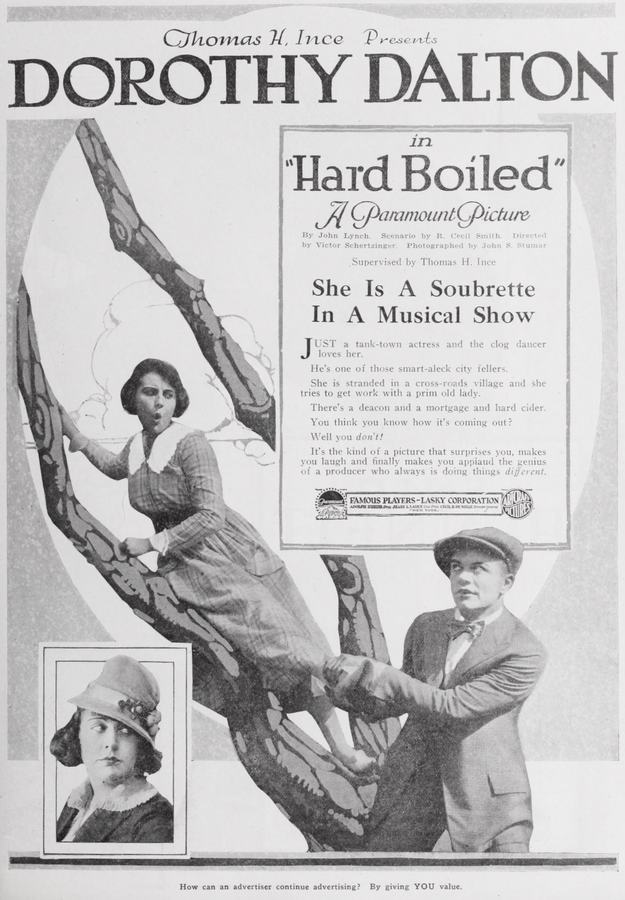
A definitive 7/10 rating for a film that redefined the boundaries of cult cinema. Hard Boiled remains a cornerstone of transgressive art.
Stepping back in time to the nascent days of cinema, one occasionally unearths a cinematic curio that, despite its age, still crackles with an unexpected vitality. Such is the case with Hard Boiled, a 1919 offering that, even without the benefit of synchronized sound, manages to convey the effervescent spirit of a musical-comedy and the gritty resolve of its protagonist. This isn't just a film; it's a window into an era, a testament to the ingenuity of early filmmakers, and a delightful surprise for those accustomed to more conventional silent fare. The title itself, 'Hard Boiled,' hints at a certain resilience, a toughness that belies the lighthearted theatrical world it initially portrays. It’s a fascinating juxtaposition that immediately sets the tone for a narrative far more intricate than a simple comedy of errors.
At its core, Hard Boiled is a tale of unexpected adversity and even more unexpected triumph, anchored by the formidable presence of Dorothy Dalton as Corinne Melrose. Dalton, a star of her time, imbues Corinne with a magnetic blend of theatrical flair and pragmatic street smarts. She is no demure damsel in distress; rather, she is a woman of agency, quick wit, and an unshakeable resolve that would make many a modern heroine proud. When her musical-comedy troupe finds itself unceremoniously abandoned in the dusty, unassuming Arizona town of Nilesburg, stripped of their manager and their funds, it is Corinne who steps forward, not with lamentations, but with a steely determination to navigate their predicament. This initial setup, a theatrical troupe stranded far from the bright lights of Broadway, immediately establishes a poignant contrast between the illusory world of performance and the harsh realities of financial precarity.
The script, penned by John Lynch and R. Cecil Smith, demonstrates a keen understanding of character development and narrative tension. Corinne's initial act of selflessness – spending her last cent to secure a train ticket for one of her girls – is not merely a plot device; it's a profound statement about her character, highlighting her loyalty and compassionate leadership. This act of sacrifice leads her, by chance, to Aunt Tiny Colvin, a kindly old woman whose own financial woes mirror the troupe's, albeit on a more personal scale. This mirroring of predicaments creates an immediate bond and deepens the stakes, intertwining Corinne's fate with that of the seemingly idyllic small town. The audience is drawn into a world where the lines between personal struggle and communal responsibility become increasingly blurred, a theme explored with nuanced grace in other early films grappling with social issues, though perhaps less overtly than in a dramatic piece like The Law of Blood.
The arrival of Deacon Simpson, the town's ostensibly pious moneylender, introduces the central conflict and truly gives the film its 'hard boiled' edge. Simpson, portrayed with a sinister blend of unctuousness and avarice by William Courtright, embodies the hypocritical moral authority often found in small-town narratives. His demand for immediate repayment of Aunt Tiny's $200 debt, a sum that seems paltry by today's standards but was significant then, casts a long shadow over their newfound sanctuary. The Deacon's subsequent, repellent advances towards Corinne are where the film truly showcases its progressive leanings. Instead of succumbing to victimhood, Corinne rises to the occasion with an extraordinary display of wit and courage. She doesn't just reject his advances; she masterfully turns his own moral failings against him, threatening to expose his illicit behavior to his wife and the scandal-hungry townsfolk. This scene is a powerful moment of female empowerment, a testament to Corinne's sharp intellect and her refusal to be exploited. It's a delightful subversion of the typical damsel-in-distress trope, prefiguring more assertive female characters seen in later films like The She Wolf, though with a distinct comedic twist rather than a tragic one.
The resolution of the Deacon Simpson conflict is both satisfying and indicative of the film's clever writing. His swift capitulation, driven by the fear of public humiliation rather than any genuine moral awakening, underscores the superficiality of his piety. Corinne's victory is not just personal; it's a victory for Aunt Tiny and, by extension, for the vulnerable members of the community. This narrative thread, dealing with financial desperation and moral compromise, resonates with themes explored in dramas like The Gamblers, where individuals are forced into difficult choices by dire circumstances. However, Hard Boiled injects this gravity with a theatrical lightness, ensuring the audience remains engaged rather than overwhelmed by the potential for bleakness.
One of the most intriguing aspects of Hard Boiled is its designation as a 'musical-comedy' despite being a silent film. Without spoken dialogue or recorded music, how does one convey such a genre? The answer lies in the visual language of silent cinema, the exaggerated gestures, the expressive performances, and the inherent theatricality of the characters. The film relies heavily on the audience's imagination, prompting them to conjure the songs and dances that would accompany the troupe's performances. The very presence of a 'prima donna' and a 'tenor' like Billy Penrose (Billy Mason) immediately informs the viewer of the world they inhabit. The characterizations themselves are broad enough to suggest comedic interactions, while the dramatic stakes provide the necessary counterpoint. It's a remarkable feat of storytelling, demonstrating that genre is as much about character and plot as it is about auditory elements. The visual storytelling techniques of the era, though different from today, were incredibly effective at conveying emotion and narrative, much like the compelling imagery used in early documentaries such as Temblor de 1911 en México, which relied solely on visual impact.
Billy Mason's portrayal of Billy Penrose, the tenor deeply smitten with Corinne, serves as a charming counterpoint to the town's more unsavory elements. His timely arrival with news of vaudeville openings in New York offers Corinne a clear path back to the life she seemingly lost. This moment presents a crucial juncture: the return to the familiar, glittering world of the stage, or an embrace of something entirely new. It's a classic cinematic dilemma, but Hard Boiled takes an unexpected turn. Corinne, having navigated the treacherous waters of Nilesburg and found a sense of purpose and community, is no longer solely defined by her theatrical career. She has been enchanted by the 'little town,' a place that, despite its initial challenges, offered her an opportunity to display her true strength and compassion. This pivot is beautifully executed, showcasing a character arc that moves beyond mere survival to a deeper understanding of contentment.
The decision to settle in Nilesburg with Billy, forsaking the beckoning call of New York's vaudeville scene, is a powerful statement about finding happiness in unexpected places. It's a narrative choice that elevates Hard Boiled beyond a simple comedic romp into something more profound. It suggests that true fulfillment isn't always found in grand stages or metropolitan glamour, but sometimes in the quiet dignity of a small-town life, forged through resilience and genuine connection. This theme of finding unexpected home and purpose in a rural setting echoes narratives found in films like Speedy Meade, where the protagonist also finds a new direction outside the hustle and bustle of more conventional paths. The film subtly argues that the 'hard boiled' exterior Corinne developed in the face of adversity ultimately led her to a softer, more authentic form of happiness.
The supporting cast, including Gertrude Claire as Aunt Tiny and Walter Hiers in an unspecified but likely comedic role, contribute significantly to the film's charm. Their performances, constrained by the conventions of silent film acting, are nevertheless expressive and effective in conveying their characters' emotions and motivations. The visual aesthetic of the film, typical of its era, relies on clear, functional cinematography that serves the story without unnecessary flourish. The direction, while not groundbreaking, is competent and ensures the narrative flows smoothly, keeping the audience engaged through title cards and visual cues. The pacing is brisk for a silent film, avoiding the languor that sometimes afflicts early cinema, a quality that makes it quite accessible to modern viewers.
In a broader cinematic context, Hard Boiled stands as an interesting example of genre blending in early Hollywood. It's not strictly a comedy, nor is it purely a drama. It weaves elements of both, with a strong undercurrent of social commentary and female empowerment. It shows how silent cinema, often underestimated in its narrative complexity, was capable of exploring nuanced themes and presenting characters with depth and agency. While it may not possess the grand scale of an epic like Boots and Saddles or the stark realism of Leben heisst kämpfen, its intimate narrative and compelling protagonist make it a memorable piece of film history. Its exploration of individual resilience against systemic greed and societal hypocrisy remains remarkably pertinent.
The film's title, 'Hard Boiled,' ultimately encapsulates Corinne's journey. She begins as a theatrical star, accustomed to a certain level of comfort and adoration. The crucible of Nilesburg, however, strips away the superficial layers, revealing a core of steel. She is 'hard boiled' not in a cynical sense, but in her unyielding determination, her sharp intellect, and her refusal to be a victim. This transformation, from a performer to a resourceful survivor and ultimately to a woman embracing a quieter, more authentic life, is the true heart of the story. It's a narrative that champions inner strength over external glamour, a message that resonates as powerfully today as it did a century ago. The nuanced portrayal of Corinne's character ensures that the film is more than just a historical artifact; it's a compelling story of human spirit.
In conclusion, Hard Boiled is a delightful discovery for anyone interested in the silent era, strong female protagonists, or simply a well-told story. Dorothy Dalton's performance is captivating, the script is surprisingly sharp, and the themes of resilience, integrity, and finding one's true path are timeless. It's a testament to the enduring power of cinema to entertain, provoke thought, and reveal the human condition, even without the benefit of a single spoken word. This film, far from being a mere relic, continues to offer a vibrant, engaging experience, proving that some stories, much like their 'hard boiled' heroines, are built to last. It’s a compelling argument for revisiting the often-overlooked treasures of early cinema, reminding us that innovation and compelling storytelling were alive and well long before the advent of sound.
IMDb —
1916
Community
Log in to comment.