DbcultAccessing Vault...
Cult Review
Senior Film Conservator
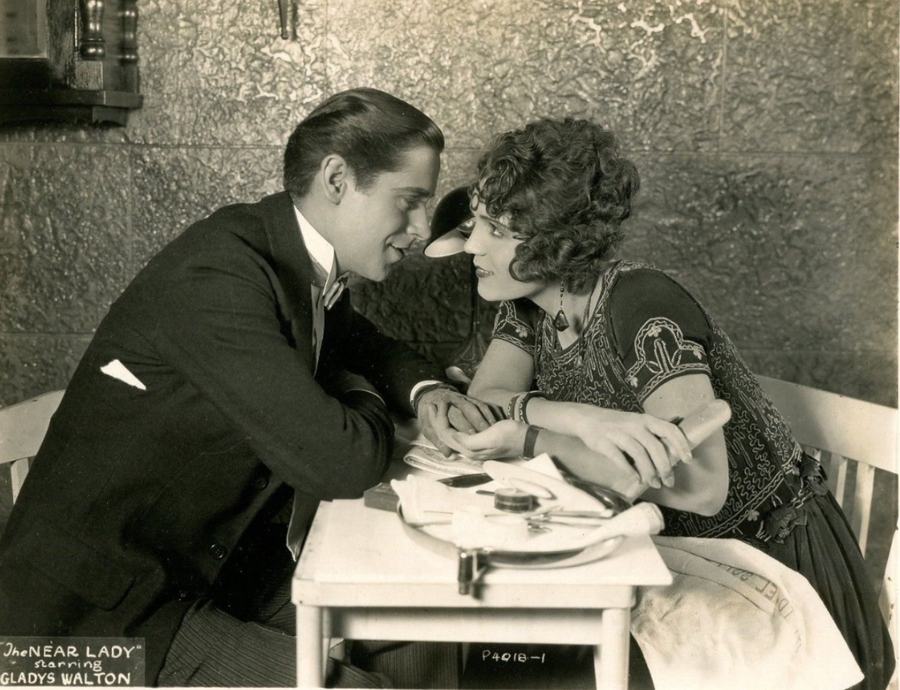
When the reels of The Near Lady begin to spin, the viewer is ushered into a world where social stratification is both a burden and a playground. The film, directed by the adept hands of Frank R. Adams and Hugh Hoffman, thrives on the paradox of pretense and authenticity, a theme that reverberates through every meticulously staged tableau. The narrative hinges on Basil Van Bibber (Jerry Gendron), a gentleman whose lineage is as polished as the silverware that graces his family’s dining room, and Nora Schultz (Gladys Walton), a spirited ingénue whose father’s mechanical ingenuity—an avant‑garde sausage‑making apparatus—has inadvertently secured the Van Bibbers’ newfound wealth.
From the opening scene, the audience is privy to a choreography of expectations. Basil’s father, portrayed with a gravitas befitting a patriarch of old money (Emmett King), insists upon a union that will cement the family’s social capital. Conversely, Nora’s mother (Kate Price) envisions a marriage that will elevate the modest Schultz household from the bustling meat‑packing district to the genteel avenues of the elite. The resulting pact—an affectation of love—serves as the film’s fulcrum, balancing comedy with a subtle critique of class mobility.
Jerry Gendron’s Basil is a study in restrained aristocracy; his eyes flicker with a mixture of duty and dawning curiosity, a silent eloquence that compensates for the absence of dialogue. Gladys Walton, as Nora, injects a vivacious spark into the narrative, her expressive eyebrows and deft gesticulation conveying a rebellious heart beneath a demure exterior. Otis Harlan, embodying the bemused butler (a role reminiscent of his turn in The Prospector's Vengeance), provides a comedic counterpoint, his timing impeccable despite the constraints of silent cinema.
Adams and Hoffman orchestrate a visual rhythm that mirrors the film’s thematic oscillation between farce and sincerity. The cinematography, though constrained by the era’s technology, employs chiaroscuro to accentuate the tension between light (the façade of love) and shadow (the underlying truth). Notably, the scene where Nora rushes to the courthouse to exonerate Basil is lit with a stark, high‑contrast palette, underscoring the urgency of her genuine affection.
The screenplay, penned by Adams and Hoffman, is a deft amalgam of slapstick and subtle satire. Intertitles are sparingly employed, each one a punchy capsule of humor or revelation, ensuring the visual narrative remains paramount. The recurring motif of the sausage‑making contraption—an emblem of industrial progress—serves as both a plot device and a metaphor for the mechanized nature of social contracts.
When placed alongside contemporaneous works such as The Toreador or Broadway Buckaroo, The Near Lady distinguishes itself through its incisive commentary on class fluidity. While the former lean heavily on physical comedy, this film weaves a richer tapestry of emotional stakes, akin to the nuanced storytelling found in The Rise of Susan.
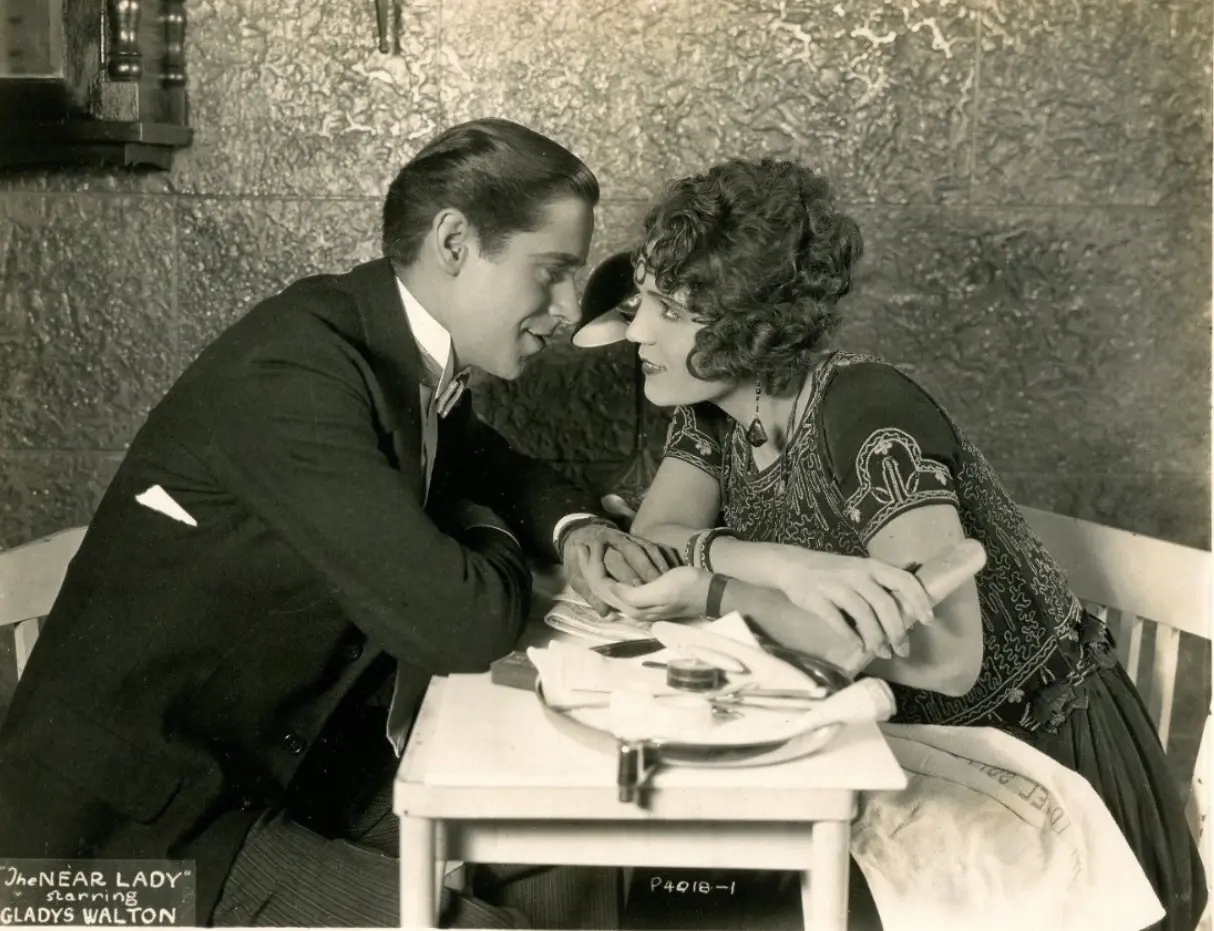
At its core, the narrative interrogates the thin line separating performance from authenticity. Basil’s reckless‑driving charge—an almost comical legal entanglement—acts as a catalyst, propelling Nora from a role player to a protector. This pivot is emblematic of the broader societal shift of the 1920s, where traditional hierarchies were increasingly questioned.
The set design juxtaposes opulent manor interiors with the gritty, steam‑filled workshop where Nora’s father perfects his invention. This visual dichotomy reinforces the film’s central tension: the allure of aristocratic refinement versus the raw ingenuity of the working class. The costume design further delineates class distinctions, with Basil’s tailored suits rendered in muted greys, while Nora’s attire incorporates vibrant hues that foreshadow her burgeoning agency.
Though silent, the film’s accompaniment—often performed live in theatres—employs a ragtime piano motif that oscillates between jaunty and plaintive, mirroring the protagonist’s emotional journey. Modern restorations have paired the original score with subtle ambient effects, enhancing the viewing experience without detracting from the period authenticity.
In an era where streaming platforms resurrect forgotten gems, The Near Lady offers contemporary audiences a window into the silent era’s capacity for sophisticated storytelling. Its exploration of performative relationships anticipates modern narratives found in romantic comedies such as Oh, Mabel Behave, proving that the tension between duty and desire is timeless.
Overall, The Near Lady stands as a testament to the silent medium’s ability to convey depth without utterance. The chemistry between Gendron and Walton transcends the film’s modest budget, while the direction ensures that each frame is imbued with purpose. For scholars of early cinema, the film offers a fertile ground for examining class dynamics, gender roles, and the evolution of comedic timing. For the casual viewer, it delivers a charming, laugh‑laden romance that feels surprisingly contemporary.
In sum, the movie not only entertains but also invites reflection on the performative nature of societal expectations—a lesson as relevant in 1928 as it is in 2026.
IMDb 4.2
1926
Community
Log in to comment.