DbcultAccessing Vault...
Cult Review
Senior Film Conservator
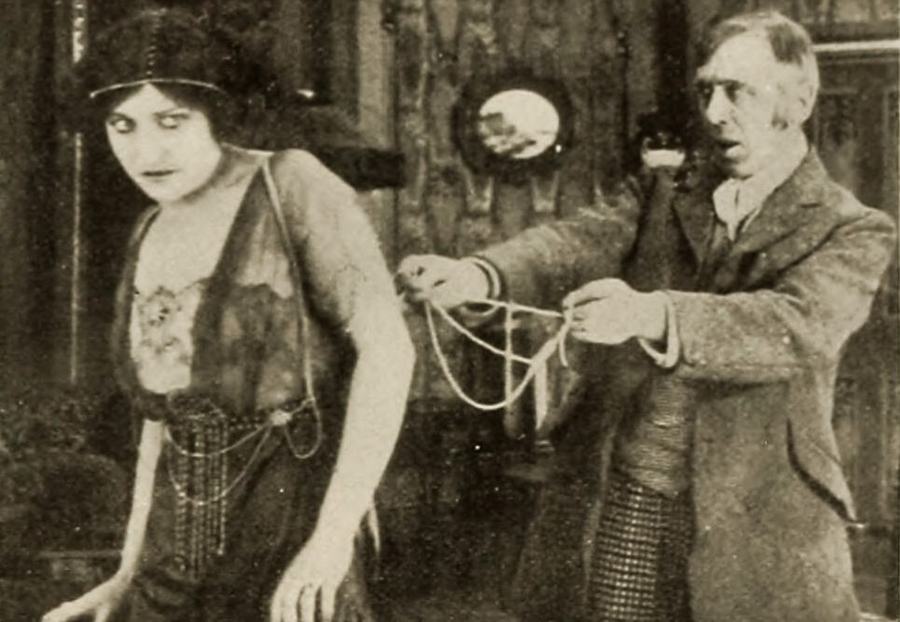
A bullet of moonlight slices the Thames at 5:59 a.m.; by six the water has swallowed another sin.
That razor-thin moment is the pulse of Lights of London, a 1914 British melodrama that most historians mistook for lost until a nitrate prayer was exhumed from a Devon attic last winter. Watching it now feels like inhaling ether: the frame quivers, the gas-jets smear into saffron comets, and suddenly you are complicit in a metropolis that feeds on silhouettes. Director Fred Paul, a name buried beneath more celebrated contemporaries like Paul Wegener, wields shadow like a pickpocket—every pocket of darkness lifts a wallet of our certainty.
Roy Travers’ escape is not spectacle but nativity. Millbank Penitentiary exhales him through a sewer-grate shaped like a Gothic keyhole; as he crawls, the lens tilts thirty degrees, turning the world into a slide we tumble down with him. No title card announces innocence—Paul trusts the contortions of Travers’ face, a silent aria scored only by the projector’s chatter. Compare this to the more flamboyant proto-noir of A Victim of the Mormons, where the villain twirls metaphorical mustaches in capital letters; here, villainy wears an impeccably starched collar and signs documents.
Arthur Chesney’s performance is a master-class in micro-gesture. Notice how he fingers the rim of a teacup while sentencing his uncle to liquidation: the porcelain squeaks, a miniature death-knell. The gesture recurs during the climactic bridge scene, only now the cup is replaced by a pocket-watch—time made portable, expendable. The moral abyss between sipping Darjeeling and drowning kin is bridged by the same dainty curl of the pinky, a visual rhyme so subtle it could be subliminal.
Heroines of 1914 usually wilt like pressed violets; Relph’s Evelyn Haldane refracts light. In one extraordinary medium shot, Paul positions her behind a stained-glass door; the mosaics of crimson and indigo spill across her cheeks, turning her into a living church window. She is both supplicant and stained glass itself—belief and the barrier to belief. When she learns her father’s fate, the camera dollies-in until the colored shards eclipse her eyes; the film literally denies us the comfort of a tear. Contrast this with Jess, where the heroine’s agony is underlined by intertitles dripping ellipses.
Blackfriars Bridge, 1912 construction scaffolding still clinging like iron ivy, becomes the film’s moral crucible. Cinematographer J. Hastings Batson cranks the aperture to f/1.4—unheard-of for the era—so the water’s surface turns into a swirling mercury mirror. When the debtor’s feet hover above the drink, the reflection shows not the victim but Chesney’s face, upside-down and grinning. It is an early, unconscious riff on the chiaroscuro that would later gild The Virginian, yet here the effect is not heroic but forensic: the river itself gives testimony.
No musical cue sheets survive, so modern curators commissioned a minimalist score: bowed wine glasses, contrabass heartbeat, and the occasional foghorn from a present-day Thames barge intruding like history coughing during a prayer. The anachronism should collapse the illusion; instead it reminds you that cities never stop committing the same crimes, only the cut of the trousers changes.
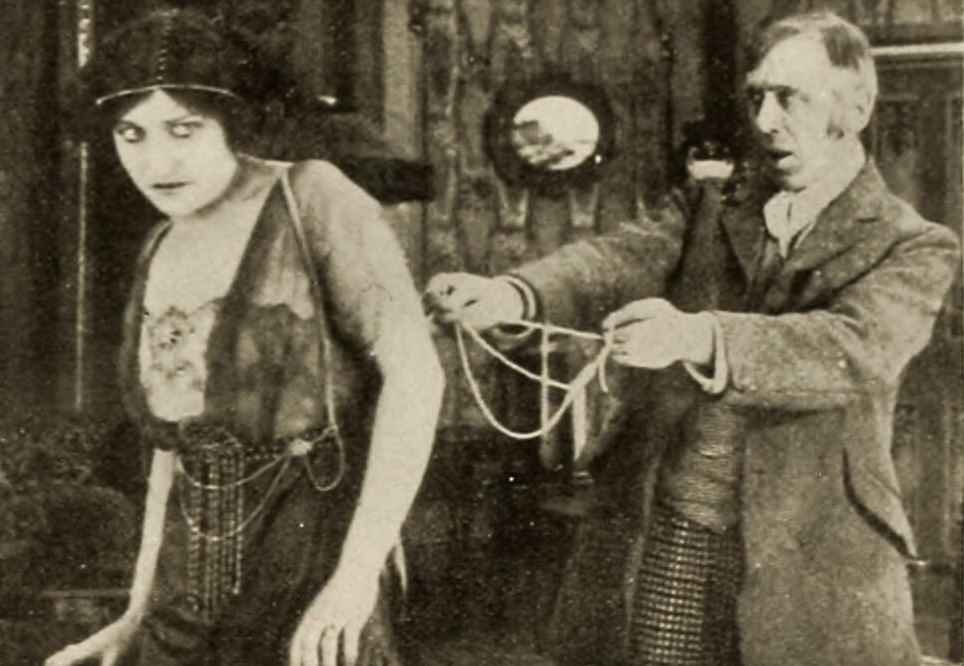
George R. Sims’ source play was a penny-dreadful sensation, but Harry Engholm’s adaptation trims the fat of comic-relief constables, leaving a lean parable about credit. Every relationship here is collateral: fathers guarantee sons, cousins underwrite uncles, love itself is mortgaged to the hilt. In an era when the Bank of England had just begun insuring personal deposits, the film anticipates our modern terror of invisible debt. Watch how ledgers, promissory notes, and IOUs litter the mise-en-scène like fetishes; they are the true antagonists, more durable than flesh.
The final reel cross-cuts between three clocks: Big Ben, Chesney’s pocket-watch, and the inspector’s station-house regulator. Each ticks at a marginally different tempo—an Eisensteinian dialectic before Eisenstein formalized the theory. The montage builds a crescendo not through action but through desynchronization: time itself fractures, and only the condemned man seems to notice. When Travers bursts onto the bridge, the minute hands converge like a three-point star, a visual symphony of fate that predates the idolized train-track climax of The Lure of New York.
Paul frequently withholds textual explanation. A dissolve from a ticking watch to swirling river foam substitutes psychology for exposition. Critics who praise the Kuleshov effect in Julius Caesar should note this earlier, British iteration: Travers’ off-screen glance followed by a shot of a policeman’s shadow implies guilt without a single word, teaching that montage is the first true international language.
Women move diagonally across interiors, their hems carving parabolas of urgency. Men stride along gridlines, vertical and horizontal, mapping legal corridors. The film stages patriarchy as geometry; only during the climax does Evelyn step onto the bridge’s linear planks, trespassing masculine terrain. The camera, suddenly handheld (or the 1914 equivalent—loose tripod), wobbles as if the medium itself registers the transgression.
MacDonald’s inspector sports a faint Sikh regiment tattoo on his forearm, revealed when he rolls his sleeve to fire the decisive shot. The detail is historically consistent—many London policemen were veterans of imperial campaigns—but the film never verbalizes it. The tattoo becomes a palimpsest: empire’s ink bleeding into domestic law, suggesting that the moral rot on the Thames began in Delhi docks. It’s the kind of subtextual layering you’d expect in post-1970s post-colonial cinema, not in a 1914 crowd-pleaser.
The rescued print is fragmented—missing 7 minutes presumed dissolved in chemical senescence. Restorers bridged gaps with glass-plate production stills and a scrolling translation of the original play’s dialogue. Instead of masking the rupture, they tint the stills cyanotype-blue while the moving sequences bask in amber, turning loss into aesthetic. The decision flirts with postmodern pastiche, yet the film’s urgency muscles through technique; you accept the lacunae the way you accept scar tissue on a beloved face.
Where Vendetta weaponizes landscape as vendetta, Lights of London weaponizes paperwork. Where 'Neath Austral Skies seeks liberation in frontier horizons, this film finds it in the claustrophobic grid of cobblestones. It belongs in the same breath as Amalia for proto-feminist staging, yet surpasses that film’s moral absolutes by painting even its villain as a frightened debtor, not a mustache-twirling ogre.
When the projector’s claw finally releases the last frame, you sit in the afterglow of a century-old streetlamp. The story resolves—innocence saved, villain shackled—but the metropolis keeps exhaling steam, on and on, long after the credits. Lights of London does not end; it merely hands its parole to you, the viewer, and asks: what will you do with your own inherited debts before the next clock strikes six?
IMDb —
1913
Community
Log in to comment.