DbcultAccessing Vault...
7.4/10
Senior Film Conservator
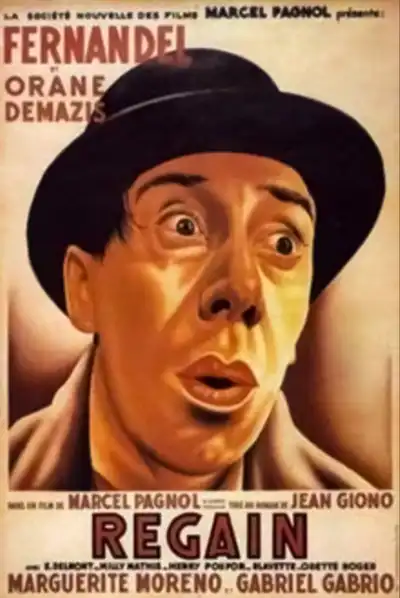
A definitive 7.4/10 rating for a film that redefined the boundaries of cult cinema. Harvest remains a cornerstone of transgressive art.
Should you watch Harvest today? Only if you have the patience for dirt, silence, and people who talk like the landscape. If you need explosions or a plot that moves at a sprint, you’re going to be bored out of your mind. But if you like movies that smell like dry grass and sweat, this one hits different.
It’s 1937, and the village of Aubignane is basically a graveyard that hasn't realized it's dead yet. Panturle, played by Gabriel Gabrio, is just this mountain of a man trying to survive in a place where the houses are literally falling down. It’s not exactly a rom-com, even if the premise sounds like one.
There’s this scene early on where Panturle is just moving through the ruins, and you really feel the weight of those empty stone walls. It’s not Beauty and the Beast; there’s no magic here, just gravity and hunger. The way the film handles the passage of time is weirdly hypnotic. Sometimes a whole season passes in the blink of an eye, and other times, you’re stuck watching a single pot of stew bubble for an eternity.
The cinematography is surprisingly rough. It doesn’t feel polished or carefully curated, which is exactly why it works. The cameras aren't obsessed with looking pretty; they’re obsessed with the way light hits the side of a barn or the back of a neck.
Fernandel shows up, and honestly, he brings a weird energy that I wasn't expecting. It’s like he’s in a slightly different movie than everyone else, but it doesn't break the spell. It just makes the village feel a little more lived-in and unpredictable.
Some of the dialogue is so simple it feels like it might snap, yet it carries all the weight in the world. You can tell Marcel Pagnol didn't want to overcomplicate the human condition. He just wanted to show you what happens when someone refuses to leave.
The pacing is… well, it’s not pacing. It’s more like a slow walk up a hill. There’s a moment toward the middle where the film lingers on a field of wheat that feels like it lasts for ten minutes. You start to wonder if they’re just waiting for the wind to blow in the right direction. 🌾
It’s not perfect. The transition between Panturle’s loneliness and the sudden arrival of companionship feels a bit rushed, like the film got tired of being sad and wanted to hurry up to the happy part. But that’s fine. I don't need a perfectly symmetrical story.
Watching this made me think about The Libertine in a weird, roundabout way—probably because both films have such a distinct, stubborn sense of place. But where one is frantic, this one is just… settled.
If you watch this, don’t try to analyze the metaphors. Just watch the way they handle the tools. It’s all in the hands. The way they hold a scythe, the way they pour water. That’s the real story.
IMDb 5.8
1930
Community
Log in to comment.