DbcultAccessing Vault...
Cult Review
Senior Film Conservator
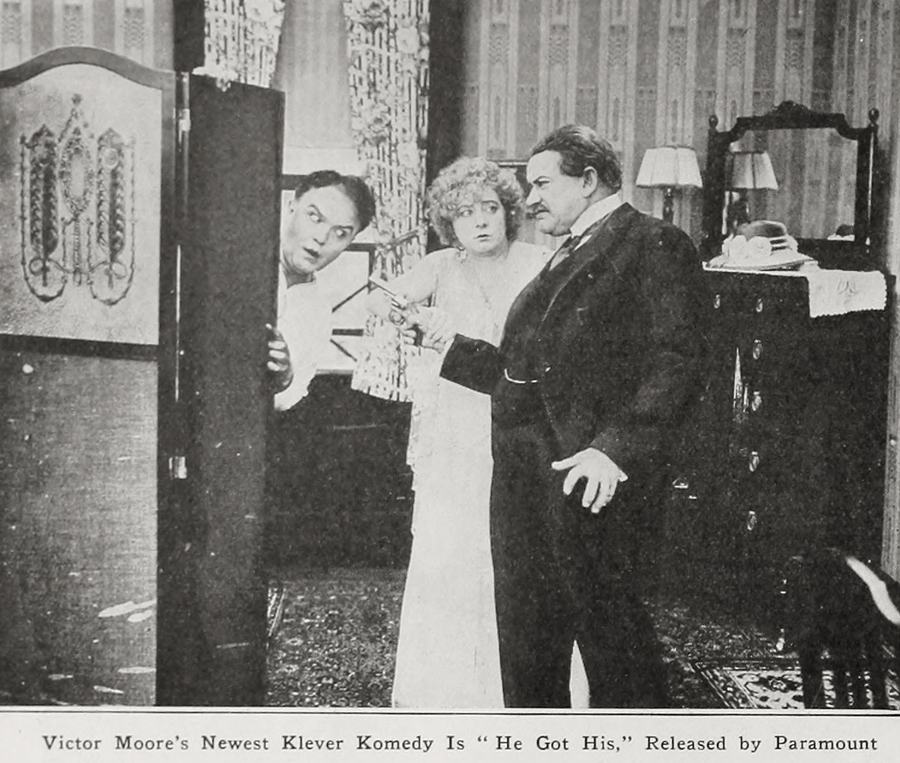
In the annals of early cinema, where the language of expression was paramount and narrative often hinged on the grand gesture or the perfectly timed pratfall, ‘He Got His’ emerges as a fascinating, albeit perhaps lesser-known, specimen of the silent comedy. Starring the inimitable Victor Moore, whose career would span decades and genres, this particular cinematic escapade plunges its protagonist, Vic, into a vortex of domestic turmoil not of his own making, demonstrating a deft understanding of escalating farce. It’s a testament to the era’s storytelling prowess that such a simple premise—a broker, a doctor, and a wife—could blossom into such a convoluted, yet utterly delightful, comedic nightmare.
Moore, a master of the bewildered everyman persona, is perfectly cast as Vic, a character who seems to stumble into chaos with an almost magnetic pull. His entanglement with the doctor and his wife is not malicious, nor is it overtly romantic in the traditional sense, but rather a series of unfortunate coincidences that snowball with relentless comedic momentum. The film, like many of its contemporaries, relies heavily on visual gags and the expressive faces of its performers to convey the intricate dance of misunderstanding. The doctor’s jealousy, a central pillar of the plot, is not born of genuine infidelity but rather a rapid-fire succession of ‘laughable mix-ups’—a phrase that almost understates the exquisite agony Vic endures. One can easily imagine Moore’s wide-eyed innocence contrasting with the doctor’s increasingly apoplectic rage, a visual dynamic that would have surely captivated audiences of the time.
The brilliance of ‘He Got His’ lies in its meticulous construction of escalating absurdity. It’s not merely that Vic is mistaken for a lover; it’s the compounding layers of misinterpretation that elevate the narrative beyond simple misunderstanding. Perhaps Vic is seen helping the wife with a dropped package, only for the doctor to glimpse a fleeting embrace. Or he might be caught in an innocent private conversation that, when viewed from a distance, appears intensely clandestine. Each incident, seemingly trivial on its own, adds another brick to the wall of the doctor’s paranoia, slowly but surely sealing Vic’s fate. This kind of comedic architecture requires precise timing and a keen understanding of human psychology, even if exaggerated for laughs. The film doesn't just present a plot; it engineers a comedic trap, with Vic as the unsuspecting quarry.
The character of the doctor, while driven by jealousy, is not a one-dimensional villain. His rage is fueled by a series of visual cues that, from his perspective, offer irrefutable proof of his wife’s infidelity and Vic’s perfidy. This allows the audience to both empathize with his misguided fury and revel in the comedic irony of his error. Emma Littlefield, as the wife, must navigate a delicate balance: innocent yet inadvertently contributing to the chaos through her interactions with Vic, perhaps through a charming naiveté or a series of unfortunate coincidences that place her in compromising, albeit harmless, situations. Her performance, likely relying on subtle expressions and reactions, would have been crucial in maintaining the comedic tension without making her character seem manipulative or overtly flirtatious.
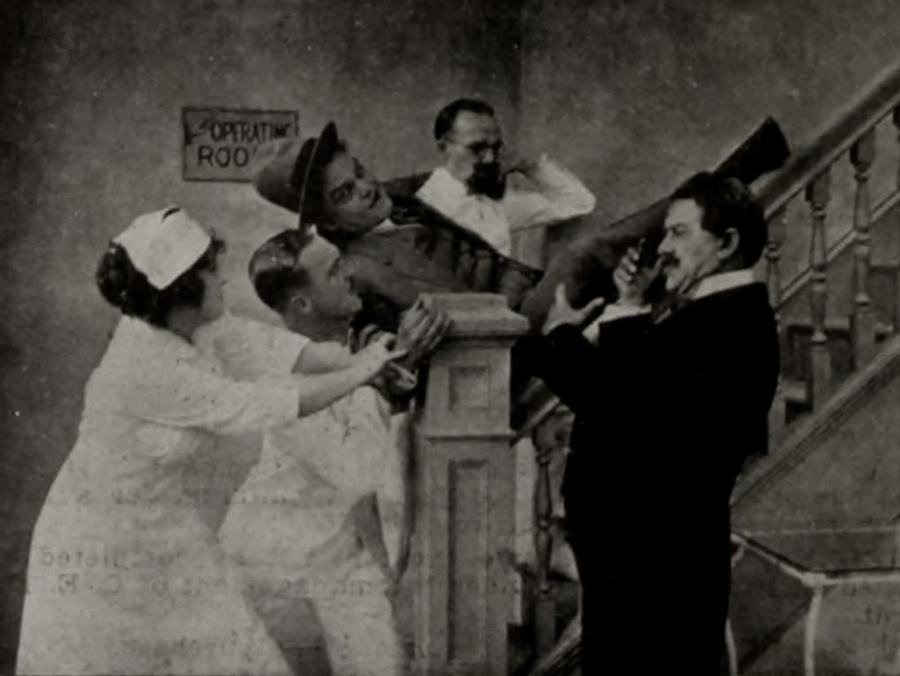
The climax, with Vic strapped to the operating table, is a masterstroke of dark humor and situational irony. The doctor, in a moment of deliciously villainous glee, prepares to operate, fully aware that Vic is not the intended patient but rather the object of his personal vendetta. This moment transcends mere slapstick; it ventures into the realm of the truly absurd, a comedic horror that plays on the audience’s discomfort while simultaneously eliciting laughter. The zealous attendants and nurses, blindly following protocol, become unwitting accomplices in this darkly comical scheme. It’s a subversion of the medical profession’s ethical foundation, played for maximum comedic effect, highlighting the dangers of unchecked emotion and the blind adherence to procedure.
Victor Moore’s career was built on his ability to portray characters who were often put-upon, mild-mannered, and perpetually surprised by the world around them. In ‘He Got His,’ this persona is exploited to its fullest potential. His physical comedy, which would have involved precise movements, exaggerated expressions, and perhaps a touch of pathos, would have been central to the film’s appeal. Unlike the boisterous, acrobatic slapstick of a Chaplin or Keaton, Moore’s comedy often stemmed from his character’s internal struggle—a befuddled resignation to the absurdities of life. This makes his eventual predicament on the operating table all the more poignant and hilarious; he is not fighting the situation with heroic vigor, but rather succumbing to it with a bewildered acceptance that only heightens the comedy.
The stylistic choices of early silent films would have been crucial here. Close-ups on the doctor’s malevolent grin, intertitles conveying his vengeful thoughts, and quick cuts between Vic’s terrified face and the approaching scalpel would have amplified the tension and the humor. The use of lighting to create dramatic shadows or highlight facial expressions would also have played a significant role in conveying mood and intent without spoken dialogue. One can imagine a scene where the doctor, silhouetted against a bright operating lamp, casts a long, menacing shadow over the prone Vic, a visual metaphor for the power imbalance and the impending, farcical doom.
The thematic threads of mistaken identity and escalating chaos are perennials in comedy. While ‘He Got His’ might not be as widely known as some other silent-era masterpieces, its core premise resonates with a long tradition of farcical storytelling. One might draw parallels to the intricate plot mechanics of films like The Foundling, which also explores the comedic potential of confused parentage and social entanglement, though perhaps with a more sentimental bent. The sheer vulnerability of an innocent character caught in a web of circumstances beyond their control is a common comedic trope, expertly wielded here.
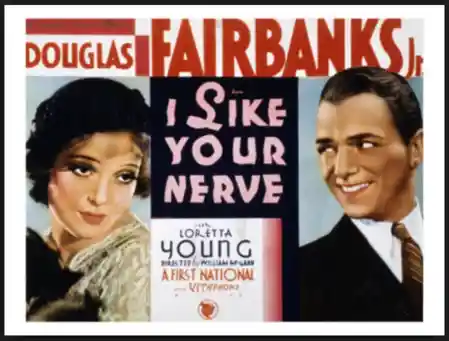
In terms of character-driven comedy, where the protagonist's personality is the primary engine for humor, one could compare Moore's performance to that of Douglas Fairbanks in He Comes Up Smiling, though Fairbanks often portrayed a more athletic and proactive character. Moore's charm lies in his reactive nature, his character often a victim of circumstance rather than a master of it. This contrast highlights the diverse approaches to comedic performance in the silent era, from the physical prowess of a Fairbanks to the nuanced bewilderedness of a Moore.
Even without the benefit of a full restoration or widespread availability, the synopsis of ‘He Got His’ paints a vivid picture of a film that skillfully blends elements of domestic farce, mistaken identity, and a surprisingly dark comedic edge. It’s a snapshot of a particular moment in cinematic history when visual storytelling was king, and the art of the gag was finely honed. The film, through its central premise, explores universal themes: the fragility of perception, the destructive power of jealousy, and the often-hilarious chaos that can erupt from the simplest of misunderstandings. It reminds us that sometimes, the most profound laughter comes from situations where our characters are most vulnerable, most utterly lost to the whims of fate and human folly.
The film's satirical undercurrent, though lighthearted, subtly critiques the dangers of unchecked assumptions and the absurdities that can arise when personal vendettas infiltrate professional duties. The doctor's delight in preparing to operate on Vic, despite knowing he's the wrong patient, is a moment of pure, unadulterated cinematic audacity. It's a scene that would have undoubtedly elicited gasps and guffaws in equal measure, leaving an indelible impression on the audience. Such a bold narrative choice underscores the creative freedom and experimental spirit that characterized the early decades of filmmaking.
Ultimately, ‘He Got His’ stands as a testament to Victor Moore’s comedic genius and the enduring power of silent film to tell compelling, entertaining stories without a single spoken word. It’s a delightful, if perilous, journey into the heart of comedic misunderstanding, proving that sometimes, getting ‘his’ means getting more than one ever bargained for. The film, even in its outline, promises a rollicking ride through the human condition’s more farcical aspects, a charming relic that continues to speak volumes about the timeless appeal of a good, old-fashioned mix-up. Its legacy, though perhaps understated, lies in its contribution to the evolving language of cinematic comedy, a language that continues to be spoken and understood across generations.
IMDb 5.2
1931
Community
Log in to comment.