DbcultAccessing Vault...
7/10
Senior Film Conservator
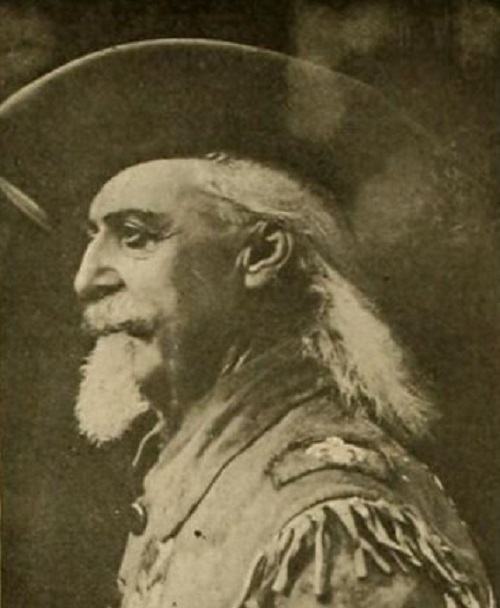
A definitive 7/10 rating for a film that redefined the boundaries of cult cinema. The Indian Wars remains a cornerstone of transgressive art.
When the first frame flickers, you are not merely watching a movie; you are witnessing a crucifixion of memory. The Indian Wars, that sanctimonious little strip of 1914 celluloid, pretends to be a documentary, yet every sprocket hole reeks of state-sponsored incense. Wilson’s bureaucrats bankrolled it, the War Department lent Gatling guns as props, and surviving Lakota—still carrying 1890 frostbite scars—were herded before Edison’s tar-black cameras to resurrect their own extinction for popcorn-munching audiences. Imagine survivors of Auschwitz forced to restage liberation in a Berlin revue, choreographed by Goebbels: that is the moral temperature here.
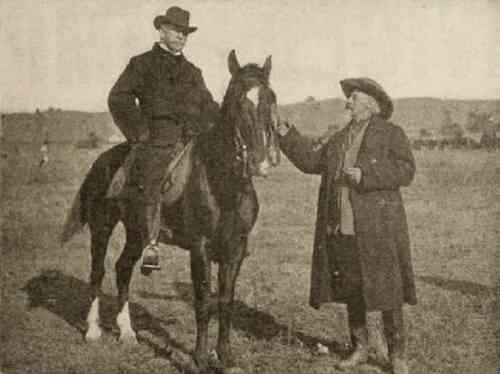
Charles King, dime-novel colonel turned scenarist, stages the massacre like a passion play. Bugles blare, carbines spit polite puffs of smoke, and the Seventh Cavalry gallops in immaculate formation—no mention that these same troopers were Custer’s avengers, drunk on revenge and cheap whiskey. Intertitles bloom in florid serif: “The hostile camp surrounded at dawn.” Hostile, apparently, because they dared to dance the Ghost Dance, to sing of bullet-proof shirts and returning buffalo, to remind Washington that treaties once bore signatures. The camera ogles General Miles’s ostrich-plumed hat as though it were a cardinal’s mitre; each tilt upward is a genuflection.
Black Elk stands in the foreground, his cheekbones carved by winter hunger, eyes twin eclipses. He is supposed to impersonate ‘a recalcitrant brave.’ Instead, he radiates the stillness of someone who has already died and now must die again nightly for paying customers. Beside him, Dewey Beard—listed in the credits under his Lakota name, which the typesetter mangles—clutches a cardboard Springfield rifle, rubber bayonet wobbling like a drunk weather vane. Their silence is the only authentic line of dialogue in the entire reel.
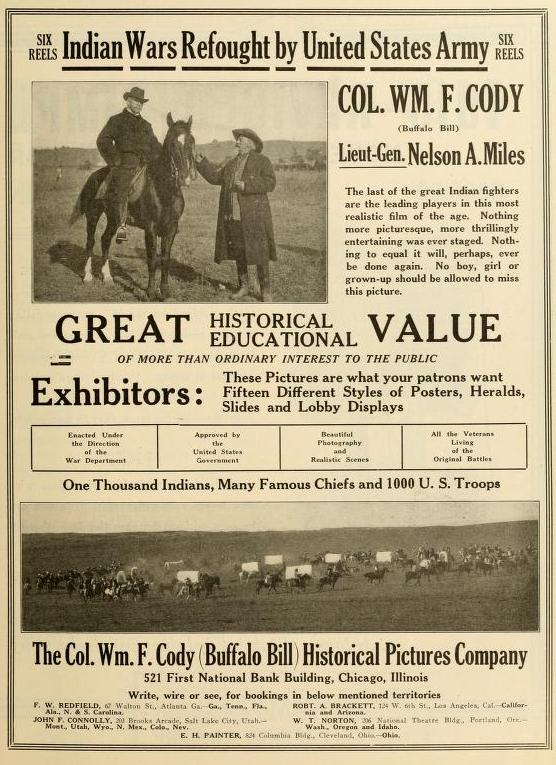
“We were told to smile when the soldiers fired,” Beard recalled decades later. “They said it would look like we were surrendering. I had no teeth left to smile. They took them at the real place.”
Technically, the film is as primitive as a cave painting, yet its crudity sharpens the insult. There is no reverse-shot, no interiority, only the relentless forward march of imperial gaze. The Battle of Slim Buttes becomes a country fair reenactment: ketchup blood, sacks of flour for exploding gun-powder, and a bugler who keeps glancing at the director for cues. When the Hotchkiss cannons finally turn on the encampment, the camera lingers on the American flag snapping in the wind, as though the cloth itself were Eucharistic. Each editorial splice feels like a scalp taken.
Compare this to The Squaw Man, where DeMille at least allowed his Native characters tragic love; or to John Barleycorn, which mythologizes the white male ego without requiring actual corpses to tap-dance. The Indian Wars is more akin to The Last Days of Pompeii—another spectacle that converts calamity into tourism—except here the lava is still warm on indigenous flesh.
Listen to the score if you ever get the chance—a 2012 restoration tacked on a brass band arrangement of “The Battle Hymn of the Republic.” Every tuba blare feels like a boot heel on a throat. Meanwhile, the massacre’s aftermath is staged with pieta-like delicacy: a blonde child actress (obviously white) cradled by a cavalryman against the backdrop of stacked Lakota bodies. The subtitle reads: “Rescued from barbarism.” No mention that those ‘barbarians’ were her own relatives by marriage; that the blonde tint came from peroxide; that the real children frozen in the snow had their brains blown out for the crime of speaking Lakota.
The film’s distribution history is a sepia study in statecraft. Prints were ferried by rail to every Chautauqua tent from Topeka to Tucson, where Daughters of the American Revolution sold penny pamphlets titled “How the West Was Won.” School districts screened it on loop; a young Eisenhower remembered watching it in Abilene, later calling it “a lesson in frontier discipline.” In Washington, the Interior Department used select scenes to lobby Congress against Lakota land claims. The reel became evidence: See, even their own people reenact the battle—surely it was a battle, not a massacre.
Only in 1973, after the siege at Wounded Knee, did the Library of Congress reclassify the footage from “documentary” to “propaganda reenactment.” By then, the original negatives were vinegar-syndrome mush, smelling of formaldehyde and guilt. Restorationists scavenged whatever fragments survived—some turned up mislabeled in a Moscow archive, having been shipped there in 1921 as proof of American brutality by Soviet agitprop. Film stock, like trauma, travels.
I keep returning to one shot: a Lakota elder—identified only as “No Neck” in the call sheet—stares past the lens toward the Black Hills, which the camera cannot show because they lie outside the frame. His gaze pierces the fourth wall, indicts the projector beam, indicts me in my cushioned cinephile seat. It is the same stare you see in archival photos of lynching postcards, where white families picnic beneath dangling feet. The stare says: I am not your metaphor. Yet the film insists on allegory, insists that these bodies stand in for every inch of wilderness that must be cleared so that railroads may run on time.
There is, perversely, a kinetic thrill in the battle choreography. Horses rear in perfect unison, their breath visible in the Dakota winter, nostrils flaring like locomotive bellows. The camera, hand-cranked at 14 fps, accelerates motion into Keystone frenzy—so that when a trooper’s saber slashes, it leaves comet trails in the emulsion. You understand why 1914 audiences whooped. Violence, stripped of consequence, is pure adrenaline. It is the same reason kids slow down to ogle car wrecks, the same reason I rewound the Hotchkiss sequence three times, ashamed at my own pulse.
But the real montage happens outside the frame. Between reels, projectionists in Minnesota were encouraged to invite veterans onstage to testify. One sergeant boasted of using a baby’s blanket as a bayonet rag. Laughter. Applause. The film rolls again, and history hardens into folklore. Meanwhile, Lakota survivors who traveled with the circus were paid in canned beef and forbidden to speak to press. Their contracts included morality clauses: get drunk off-duty and you forfeit the nickel-per-mile stipend. Imagine surviving genocide only to become a reenactor of your own extinction, monitored by Pinkerton agents.
Contemporary critics—those few who bothered—praised the picture’s “educational value.” The New York Times called it “a stirring reminder of the courage that tamed a continent.” No mention of the 20 Medals of Honor awarded for mowing down infants. The Nation, usually progressive on labor, shrugged: “The Indian question is settled; art may now commemorate the victory.” Only the socialist paper The Masses dared dissent, running a cartoon of a skeleton in cavalry boots pinning medals on itself. The cartoonist was later jailed under the Espionage Act. The film played on.
What haunts me most is the epilogue, shot months later in a Washington studio: President Wilson, flanked by General Miles and a waxen Indian Bureau chief, signs the bill that dissolves the Great Sioux Reservation into checkerboard allotments. The intertitle calls it “the final act of peace.” As ink touches paper, a chorus of white schoolgirls in starched dresses sings “America the Beautiful.” Cut to an insert of the same Lakota performers, now wearing surplus army uniforms, saluting the flag. Their eyes are hollow, but their mouths are fixed in rictus grins. The camera irises out on a close-up of the flag, the stripes dissolving into barbed wire. Cue fade. End of history, beginning of myth.
Today, the film survives mostly as GIF snippets on far-right forums, where users loop the cannon volleys to soundtrack of Ted Nugent. Yet in Pine Ridge, Ogala media collective Mnaago reclaims the footage, decolonizing it with Lakota lullabies overlaid, the images slowed to 4 fps so that every bullet becomes a drawn-out scream. They project it onto a bedsheet strung between two desolated trailers, the snow onscreen merging with the snow underfoot. Elders who lost siblings in 1890 sit on lawn chairs, wrapped in star quilts, watching their childhood nightmares resurrected by moonlight. No one applauds. Someone burns sage. The smell of prairie sage and vinegar-syndrome celluloid mingles into a new scent: memory fighting back.
So, is The Indian Wars worth watching? Only if you are prepared to be an accomplice, only if you consent to sit in the dark and let 1914 rifle fire shoot holes through your 21st-century conscience. It offers no catharsis, only complicity. Yet to look away is its own abdication. The film is a black mirror: stare long enough and you see the genealogy of every drone strike apologia, every “mission accomplished” banner, every children’s textbook that calls conquest “westward expansion.” The reel keeps spinning; the Hotchkiss keeps firing. The only way out is through, eyes open, heart cracked, bearing witness.
IMDb —
1915
Community
Log in to comment.