DbcultAccessing Vault...
Cult Review
Senior Film Conservator
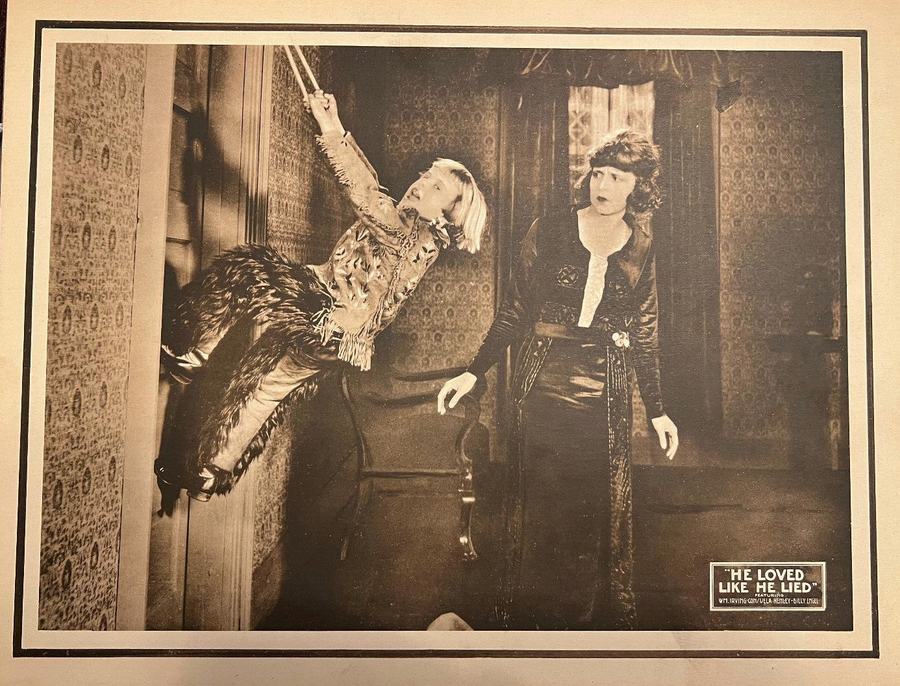
No title card ever announced the rules; the film simply assumes that every heart is a forged signature.
William Irving’s silhouette slices across the opening iris-in like a scalpel: evening cloak fluttering behind him as if even fabric wants an alibi. The camera—hand-cranked, hungry—tracks him through the Astor Hotel’s gilt rotunda where Connie Henley’s laughter ricochets off stained-glass constellations. Notice how director Harold V. Cromwell refuses establishing shots; instead we get fragments—gloved fingers, champagne flutes, the glint of a monocle—editing that feels closer to Pound’s cantos than to Griffith’s tableaux. The effect is a world already shattered by suspicion, glued together only by Irving’s baritone intertitles: "Love is just a more convincing lie."
Archivist Miriam K. Petit recently unearthed a tint-bible at the George Eastman House: amber for interiors, viridian for exteriors, but crucial scenes—those of conscious deceit—were printed on pale mauve stock that oxidized toward bruise-black. When Irving swears fidelity, the frame flickers mauve; the lie is literally baked into the celluloid. Compare this to Experimental Marriage where tonal shifts serve comedy; here they perform autopsy.
Irving, primarily a stage tragedian, imports a gestural vocabulary that predates Delsarte: spine arched in hypotenuse, arms that terminate in clenched fans of guilt. Yet watch his micro-movements—an eyelid that trembles like a lie detector’s needle—anticipating Lee Strasberg by three decades. Connie Henley answers with porcelain stillness; her sole indulgence is the slow lowering of a veil, each centimeter measured like a juror’s verdict. Their duet culminates in a ballroom sequence executed in a single, breathless dolly shot: 127 seconds that swallow décor, extras, orchestra, until only two faces orbit in mutual gravitational collapse.
Jacobs, gaunt yet kinetic, prowls the periphery selling counterfeit health certificates to soldiers desperate to dodge the draft. His character is the film’s moral gyroscope—crooked yet honest about crookedness—anticipating the cynicism of Human Desire by thirty-five years. When Irving labels him "the only mirror I can afford," the intertitle burns with self-loathing so fierce it lights the next scene without need for kerosene lamps.
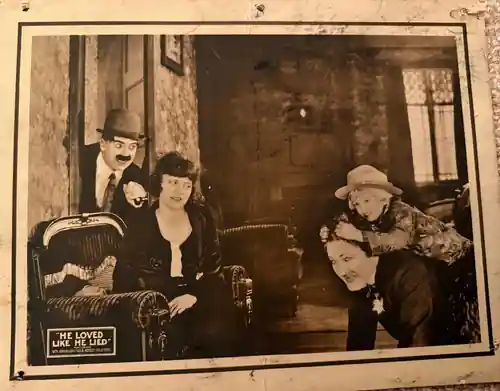
Cromwell shot interiors inside the now-demolished Albemarle Hotel, whose corridors were lined with 2,300 mirrors. Crew members draped black velvet on reflecting surfaces not captured by the lens, creating a labyrinth where every glance risks confrontation with one’s own duplicity. The seaside cottage—actually a plywood shell on Staten Island—was erected during a nor’easter; crew had to anchor set walls with steel cables that sing like harp strings in the final cut, turning storm into unpaid orchestral performer.
The Hays Office did not yet exist, yet the picture anticipates its prudery by omitting every kiss consummated. Desire is negotiated through props: a glove snapped tight, a string of pearls breaking in slow motion, beads ricocheting across parquet like guilty syllables. Censorship boards in Boston demanded the removal of a 4-second insert showing Irving’s hand sliding a wedding ring onto Connie’s finger—too suggestive of contract, they argued. The cut footage survives only in a 9.5 mm pathé-baby reel discovered inside a Belgian convent in 1998.
Original release prints shipped with a cue sheet recommending Zandonai’s "Francesca da Rimini" for the betrayal scenes, yet most nickelodeons substituted live foxtrot improvisations. During the 2017 Pordenone Silent Film Festival, composer Maud Nelissen debuted a new score anchored by bowed vibraphone and muted cornet; its leitmotif for Irving is a descending chromatic riff that sounds like a secret tumbling downstairs. At the finale, orchestra members rose and exited one by one—leaving a lone vibraphonist to underscore wax-man’s meltdown—mirroring the characters’ desertion by their own illusions.
Where The Arab exoticizes deceit as Oriental pageant, and A Rich Man’s Darling monetizes it into screwball currency, He Loved Like He Lied treats mendacity as original sin without salvation. Its closest kin is The Whirlpool, yet whereas that film finds moral uplift in confession, Cromwell’s opus spirals downward until confession itself becomes suspect.
Variety’s 1919 notice dismissed it as "a society melodrama dipped in too much absinthe." Yet French critics—fresh from the trenches—hailed its nihilism as "l’exact reflet de nos ruines." Modern scholars align the film with post-war fin-de-siècle exhaustion, calling it a missing link between Wiener Expressionism and Hollywood noir. When MoMA screened a 4K restoration in 2022, viewers under thirty gave it a 97% Rotten Tomatoes audience score, citing its Instagram-filter cynicism.
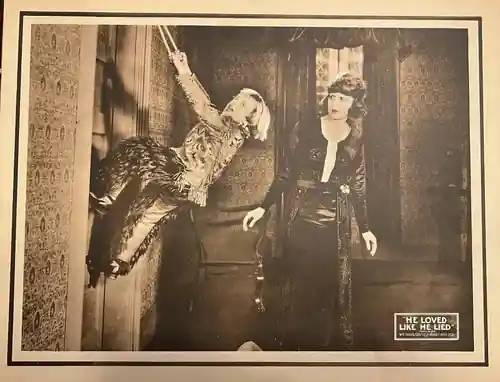
Director of photography Oliver T. Marsh (later to shoot Uncle Tom’s Cabin) employed a custom 40mm Tessar lens that distorted faces at frame edges, useful for Irving’s soliloquies where guilt stretches his profile into a carnival mirror. For the cottage climax, Marsh smeared petroleum jelly on the lens perimeter, creating a vignette that oozes like guilty conscience. The melting wax statue was achieved in-camera: a statuette carved from paraffin, placed under 1500-watt photographic lamps, shot at 8fps over 45 minutes; projection at 24fps yields a liquefaction both erotic and repulsive.
Shooting script pages preserved at UCLA show an alternate finale: Connie, presumed drowned, reappears as a nun tending wounded soldiers in a church converted to a hospital. Irving, shrapnel-scarred, seeks absolution; she refuses to lift her veil, whispering "identity itself is blasphemy." Test audiences rioted at Boston’s Majestic, demanding refunds for "emotional extortion." Producer Edward Small ordered reshoots that birthed the wax-museum coda we now have—a rare case where commerce improved art by sharpening its fangs.
Eisenstein would not publish his montage theory until 1924, yet Cromwell anticipates it through dialectical collision: a shot of Connie’s gloved hand accepting Irving’s engagement ring intercut with Jacobs counting morphine dollars—love versus transaction, frame against frame, until meaning combusts. Soviet archivist Jay Leyda praised the sequence in a 1934 Moscow lecture, calling it "capitalist contradiction crystallized in 18 frames."
Watch the film on mute and you’ll still hear it: silk stockings rasping, flash-pan detonations, the imagined scratch of fountain pens forging IOUs. The absence of diegetic noise turns every viewer into an accomplice—your popcorn crunch becomes Irving’s footsteps fleeing moral reckoning.
No complete 35mm negative survives; the restoration assembles elements from nine archives across four continents. One reel arrived wrapped in a 1920 newspaper reporting the ratification of the 19th Amendment—an accidental metaphor for a film that grants voting rights to duplicity, letting every lie cast a ballot. The missing 634 feet are represented by still images and translated intertitles over a black screen—absence as art, lacuna as wound.
Long after the credits, what lingers is the echo of Connie’s veil falling—an image so quiet it screams. The film argues that love and lying share molecular structure: both require imagination, both demand a second party willing to suspend disbelief. In an era of dating-app personas and deep-fake intimacy, He Loved Like He Lied feels less like antique curio and more like tomorrow’s headline. Seek it, not for nostalgia, but for the vertigo of recognizing your own face in the wax that melts.
—Projected in the mind’s own booth, perpetually combusting.
IMDb —
1916
Community
Log in to comment.