DbcultAccessing Vault...
Cult Review
Senior Film Conservator
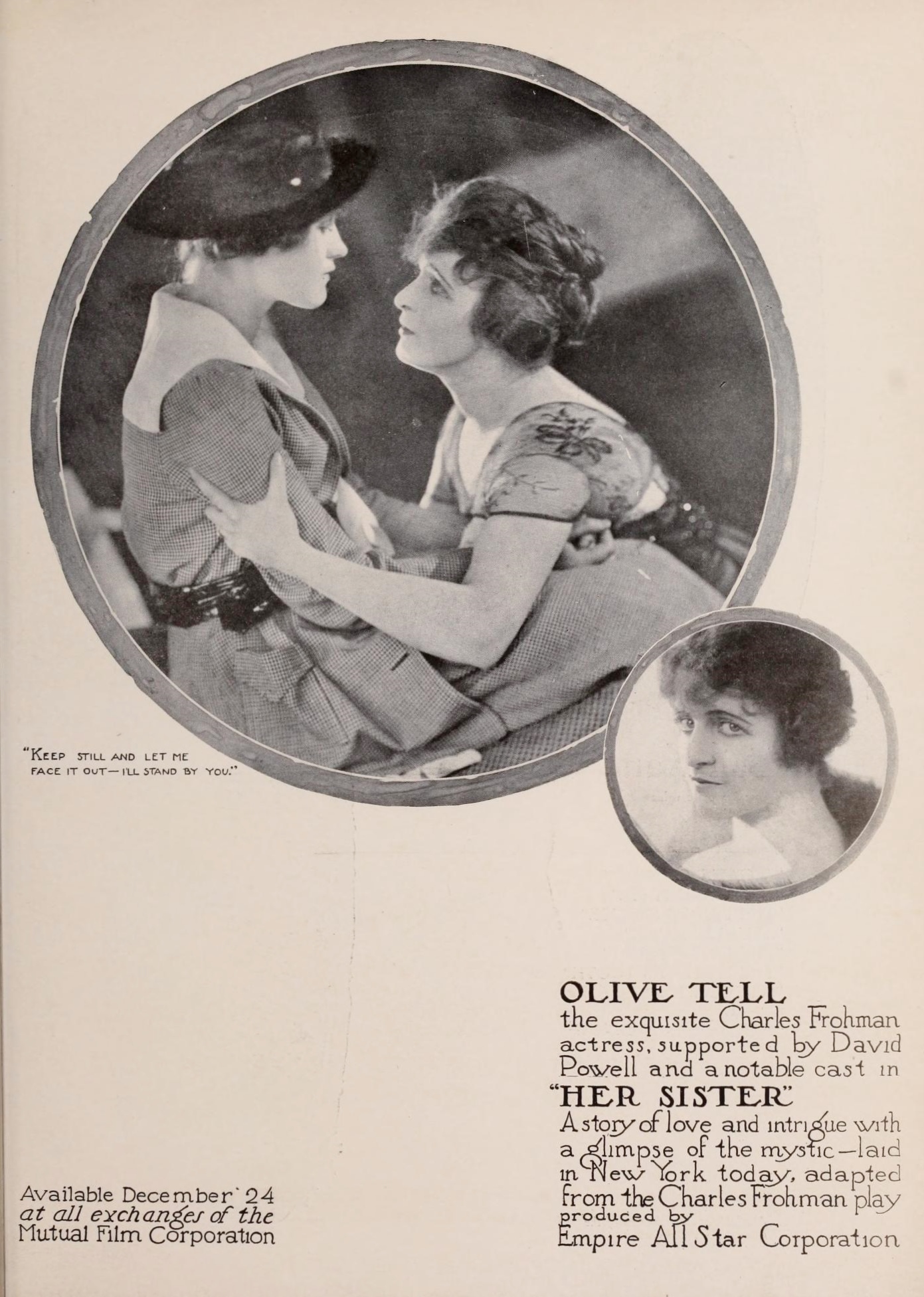
There are films that merely tell stories, and then there are celluloid séances like Her Sister—a picture that seems to exhale the very spirit of 1920 through every fluttering title card, every cigarette-scented iris-in.
From its first amber-tinted frame, the movie positions Manhattan as a glittering abattoir where mannequins are traded like porcelain dolls. Eleanor and Jane Alderson—one flint, one feather—glide through boutique salons where the air smells of gardenias and predation. When Eleanor slaps away the pawing advances of a buyer, the act feels less prudish than apotropaic: she is warding off a whole century of casual commodification.
The fall is swift. One cut later the sisters are skulking through rain-slick alleyways, their satin heels clicking like typewriter keys spelling the word ruin. Enter the retired seeress—think Madame Blavatsky in a moth-eaten kimono—who gifts Eleanor a trunk of gauzy scarves and a crash-course in orientalist hokum. Overnight, Eleanor transmogrifies into “Isis the Eastern Mystic,” a soothsayer whose parlour is draped in Nile-blue bunting and whose accent drifts between Cairo and Connecticut. The con is absurd, yet Anita Rothe plays it with such regal conviction you almost believe she could levitate the nickelodeon itself.
Meanwhile Jane, all flapper nerves and bee-stung lips, takes to joyriding like a moth to kerosene. The roadhouse sequence—shot in chiaroscuro so sharp it could shave—unfurls like a fever dream: jazz bleeding through walls, gin fizz bubbling like laboratory poison, Hamilton’s wedding ring catching the single overhead bulb in a wink of doom. When Eleanor bursts in, the camera dollies back as though even it were startled by her fury. The sisters’ silhouettes overlap, a visual confession that their identities are about to blur.
The divorce papers arrive with the crisp snap of a guillotine.
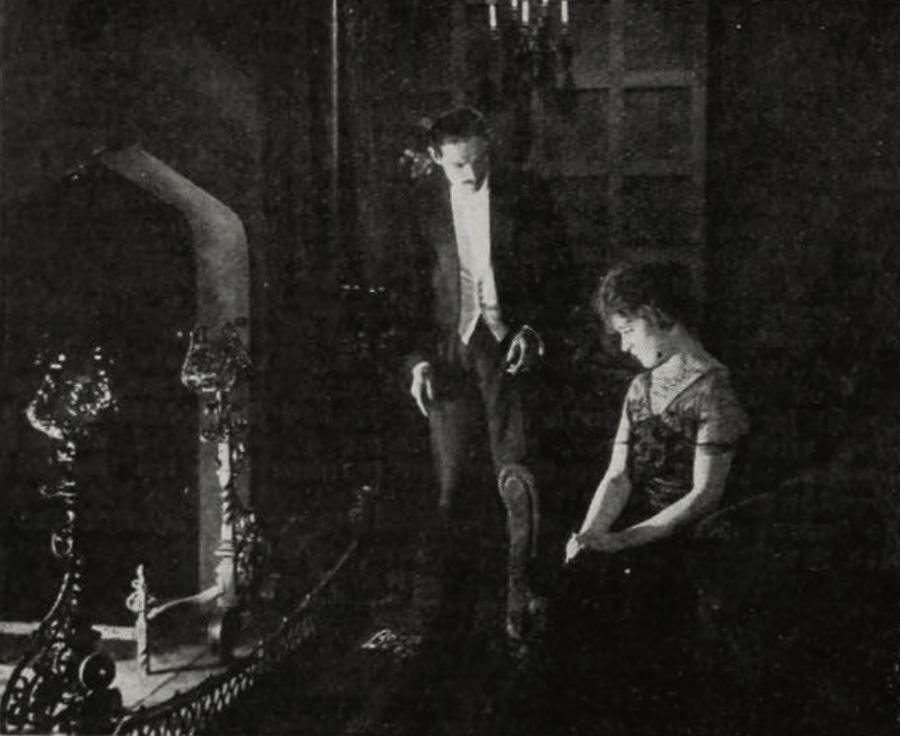
Mrs. Hamilton, a society cobra in pearls, needs a co-respondent and chooses the most chewable victim: Jane. The lawsuit is less legal than theatrical—a danse macabre performed in the newspapers for the delectation of stenographers and scullery maids. Jane is exiled to a country estate where the hydrangeas look accusatory and every cicada seems to whisper scarlet woman.
Enter Ernest Bickley, played by David Powell with the tousled insouciance of a man who has never met a bill he couldn’t outrun. Ernest is introduced via a tracking shot that follows his motorcycle side-car as it splashes through puddles—an image so kinetic it makes the preceding melodrama feel like a daguerreotype. He falls for Eleanor in the way one falls off a cliff: sudden, irreversible, potentially fatal.
The Bickley house-party is the film’s coral reef of intrigue: a weekend where every guest carries a secret in their cigarette case. Mrs. Herriard—Olive Tell in a career-high performance of velvet malice—flutters through drawing rooms dropping compliments as if they were poisoned bonbons. She learns of Ernest’s attachment and, in a set-piece worthy of Wilde, stages a midnight tableau in the conservatory: moonlight drips through stained glass, a phonograph grinds out a tango, and she insinuates that Eleanor’s past is “a locked diary in a burning house.”
Jane’s terror that George might discover her disgrace is communicated without words.
Director Wesley Ruggles simply holds the camera on her eyes as George descends the grand staircase; the iris contracts until we are swimming in her panic. It is silent-era psychology at its most blistering.
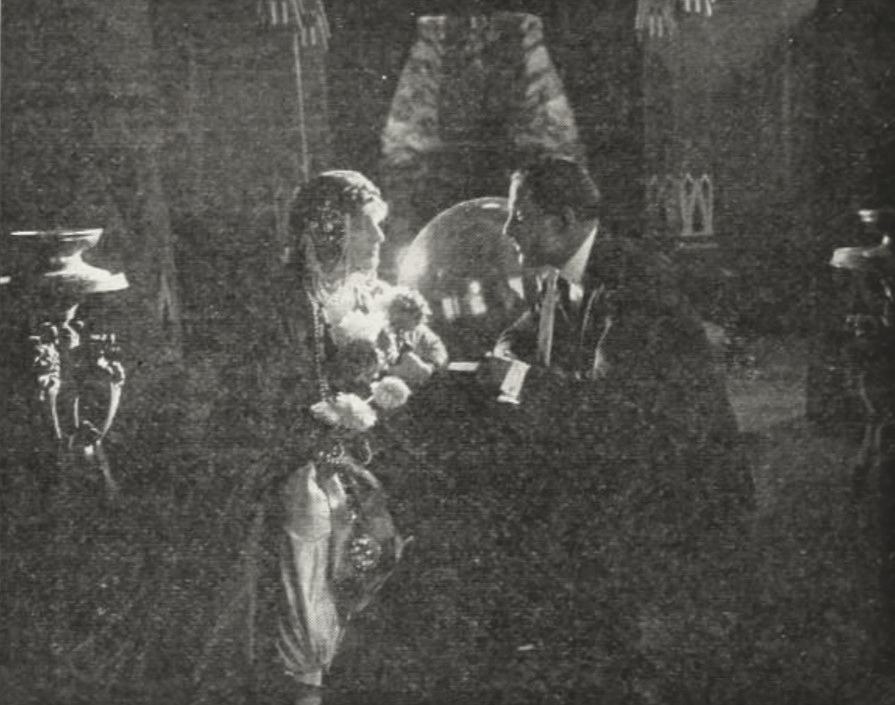
Then the newspapers detonate. A grainy photograph—Eleanor in profile—becomes the Shroud of Turin for gossip. Headlines scream Mystic Seductress Named in Divorce! Eleanor, ever the elder shield, steps into the bullet path and claims the identity of the co-respondent. The scene is lit like a Pietà: side-lighting carves her cheekbones into alabaster, and for a moment she seems to absorb all the shame America can manufacture.
Ernest refuses the narrative. In a delicious reversal of the usual “fallen woman” plot, he becomes the detective of his lover’s honor. His scheme is simple yet cruel: he instructs a maid to knock on Eleanor’s door announcing “Miss Jane Alderson to see you.” The door flies open; Eleanor’s gasp is the sound of truth cracking like ice. The trap exposes not duplicity but devotion, and the film suddenly tilts from melodrama into something approaching tragic grandeur.
The final act races along parallel tracks: a courtroom where Mrs. Hamilton’s counsel waves Jane’s monogrammed glove like Hamlet’s Yorick, and a side corridor where George finally confronts Jane. Their exchange is rendered in a single two-shot: no intertitles, just the tremor of hands, the slow folding of a newspaper into a paper crane of absolution. When the verdict clears Jane, the newsreel cameras outside the courthouse swivel toward the real story: sisterly love as the last unsullied currency.
Clyde Fitch’s original stage play—condensed, re-stitched, and ironed onto celluloid—survives here less as text than as perfume: a whiff of lilac, a trace of gunpowder. The surviving print, though riddled with nitrate rot, is rescued by a tinting schema that alternates between bruise-purple for night interiors and honey-amber for exteriors, as if the film itself were breathing through stained glass.
Comparisons spring to mind: the urban spleen of Sins of Great Cities, the spiritualist hokum of The Call of the Dance, even the motor-gothic peril of The Winged Mystery. Yet Her Sister outstrips them in moral complexity: it is a pre-Code morality play smuggled into the last gasp of the Roaring Twenties, a film that asks whether sacrifice is nobler than honesty and answers with a shrug that feels almost modern.
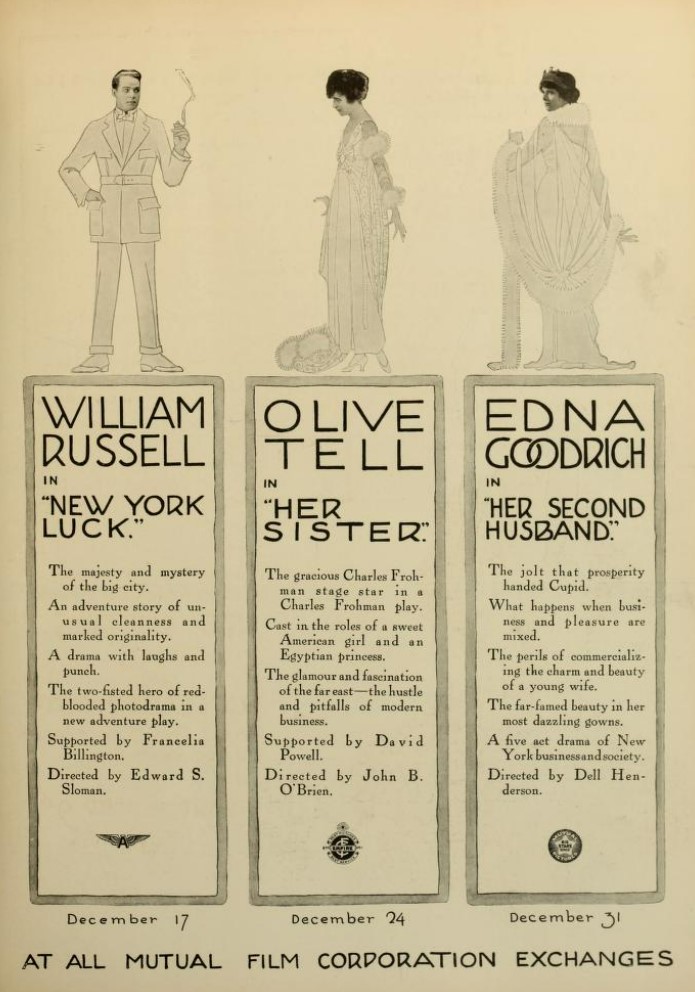
Anita Rothe’s Eleanor is the film’s gravitational centre. Watch how she modulates between sphinx-like composure during séances and raw, almost feral protectiveness when Jane is threatened. The moment she trades her turban for a cloche hat to follow Ernest to the country, the gesture carries the weight of a knight removing armour. David Powell matches her with a kinetic restlessness: every time he ruffles his hair or vaults over a garden bench, the frame seems to loosen its stays.
The camera work—credited to future noir pioneer Hal Mohr—anticipates techniques that wouldn’t flourish until the 1940s. A slow dolly through a beaded curtain abstracts a corridor into a string of pearls; an overhead shot during the roadhouse brawl turns flailing bodies into a cubist swirl of limbs and fedoras. These flourishes never feel ostentatious; they serve the emotional temperature, raising it degree by degree until the final thaw.
Yet what lingers is the film’s quiet insistence that women’s stories need not end at the scaffold of reputation. Eleanor’s self-immolation is not defeat but transmutation: she emerges scorched yet luminous, a phoenix in a beaded chemise. Jane, too, is allowed complexity: neither virgin nor vamp, but a young woman high on velocity and learning, in real time, the cost of abandon.
Viewing Her Sister today is akin to opening a time capsule and finding your own heartbeat inside. The scandal that once threatened to shred social fabrics now reads as quaint, but the emotional calculus—how far we will go to protect the people who break us and remake us—remains ferociously alive.
Seek out any archive screening, any Vimeo rip stitched from 9.5 mm fragments, any pianist willing to vamp along with the flicker. Let the amber light soak your retinas. Notice how the darkness between frames feels alive, pregnant with the ghosts of every sister who ever took the fall for another. When the lights come up, you may find yourself checking your palm for the ink of yesterday’s headlines, half expecting to see Eleanor’s profile stamped there like a tattoo.
That, ultimately, is the miracle of this nearly lost bauble: it turns spectators into co-conspirators, demanding we ask which scandals we are willing to inherit, which sacrifices we are prepared to wear like a second skin.
IMDb 6.2
1936
Community
Log in to comment.