Prospectors of the Soul: Class Frostbite in Northern Silence
Francis J. Grandon’s camera treats the Klondike as both cathedral and abattoir, its alabaster expanses mirroring the purity Jim Carew seeks and the annihilation that finally claims Little Snowbird. Notice how the intertitles swap satin wit for raw ore: the same hand that once wrote urbane banter for Madame la Presidente here chisels haiku-like despair into the subtitle cards. The result is a film that feels colder than Dr. Mawson in the Antarctic yet burns with the same erotic desperation that fuels Body and Soul.
Aurora Cinematography: Tinted Ice and Cyanide Blues
Shot largely on interior sets swaddled in muslin “snow,” the picture nonetheless achieves a hallucinatory verisimilitude through two-color tinting schemes—lavender for sub-zero nights, sickly sea-foam for moral twilight. Compare this palette to the amber nostalgia of My Old Dutch or the sulphurous hells in The Dishonored Medal. Cinematographer Jules Cronjager’s diffusion disks turn every kerosene lamp into a miniature sun, while the Yukon River becomes a ribbon of molten turquoise, foreshadowing the heroine’s toxic fate.
Performances: From Drawing-Room Porcelain to Permafrost
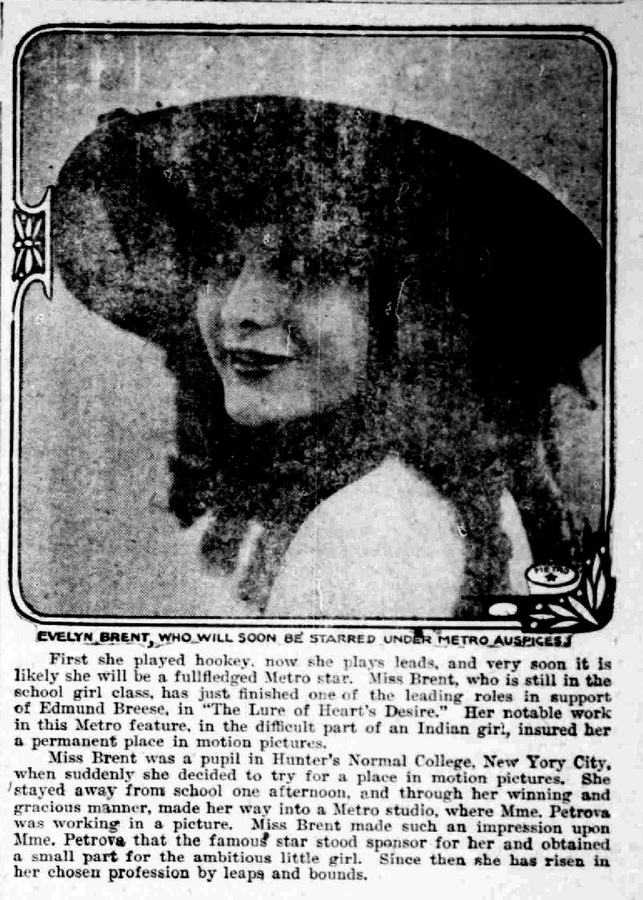
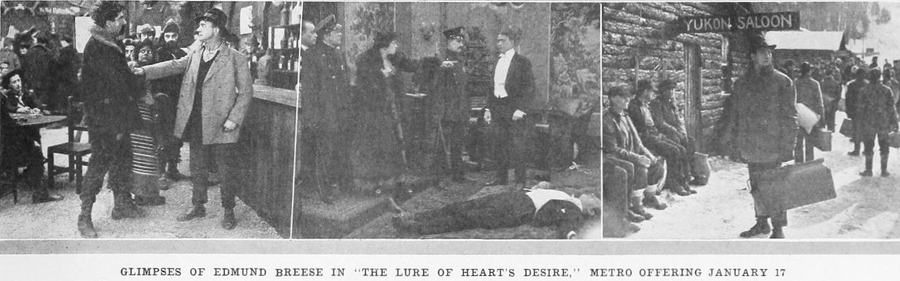
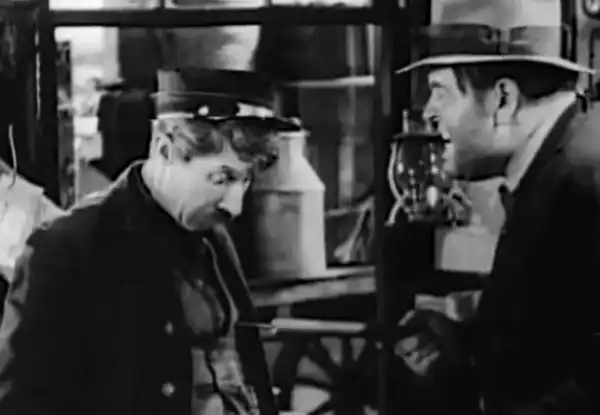
Edmund Breese’s Jim Carew is less a lovesick swain than a tectonic plate, rumbling from servile politeness to monomaniacal resolve. Watch the way his shoulders square the instant Ethel rejects him—an entire social order realigning in a single breath. Opposite him, Evelyn Brent essays Ethel with feline calculation; her cigarette holder becomes a scepter she can’t quite wield once Thomas Martin’s blackmail enters the frame. The film’s moral fulcrum, though, is Jeanette Horton’s Little Snowbird, acted almost entirely through ocular tremors. In the scene where she realizes Jim is bound for New York, Horton lets her left hand flutter toward a raven-feather amulet, then retract as though burned. No close-up needed—her body is the close-up.
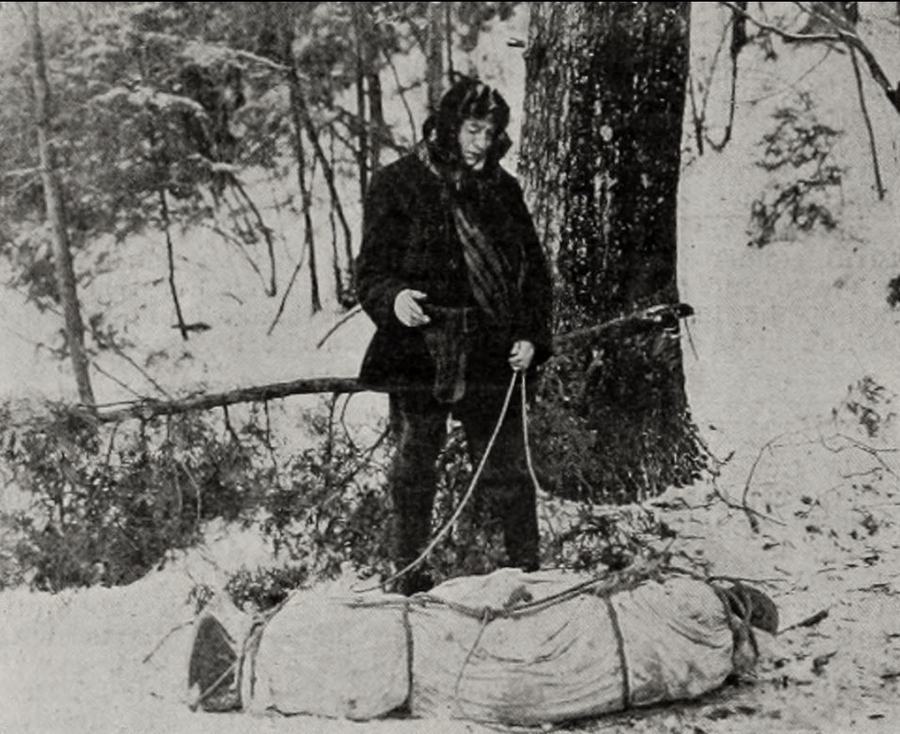
Scene from The Lure of Heart's Desire
Cinematic perspective: Exploring the visual vocabulary of The Lure of Heart's Desire (1916) through its definitive frames.
Script Alchemy: Robert W. Service Meets the Gossip Rag
Aaron Hoffman’s scenario cannibalizes Service’s balladry for set pieces—gamblers frozen in place like gargoyles, dance-hall girls who could be sisters of the “women who wait” in Hearts and the Highway. Yet the film’s true engine is gossip: Ethel’s fear of it, Martin’s monetization of it, Carew’s obliviousness to it. The script weaponizes reputation the way westerns wield Colts, making this silent curio a spiritual ancestor to The Social Buccaneer and The Waif.
Sound of Silence: Musical Cues That Scar
Though released sans synchronized track, exhibitors received a detailed “suggestion list” now preserved in the Library of Congress. For Snowbird’s suicide, the cue reads simply: “‘The Rosary’ in a minor key, gradually slowing to 60 BPM, then cease.” Imagine that vacuum following the hymn—house lights remain low, projector hum becomes the universe’s pulse, and the audience realizes music was never merely ornamental; it was oxygen.
Gender & Empire: Reading Against the Grain
Modern eyes will flinch at the “tragic half-breed” trope, yet Horton’s performance complicates victimhood. Snowbird engineers her own exit, scripting a posthumous victory: a child who will inherit both gold claims and indigenous land rights, quietly sapping the colonial machine. Compare her agency to the sacrificial dolls populating The Fatal Wedding or the eugenics-lite horrors of Moths. This is not redemption, but a hairline fracture in the imperial gaze.
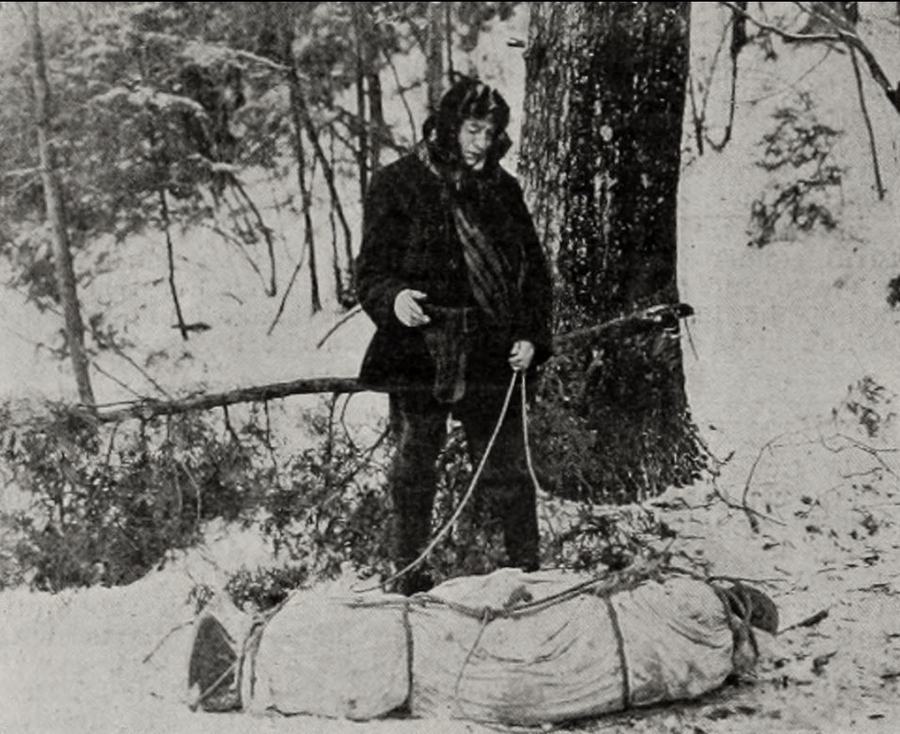
Scene from The Lure of Heart's Desire
Cinematic perspective: Exploring the visual vocabulary of The Lure of Heart's Desire (1916) through its definitive frames.
Box-Office Fossils: From Rialto to Reliquary
Released in October 1923, the film recouped only 73 percent of its $137,000 negative cost—blamed on a saturated market of snow-bound melodramas (audiences still nursed frostbite from Robinson Crusoe earlier that year). Prints vanished until a 1978 Dawson City disinterment: a 90-foot avalanche of nitrate that included the lone surviving reel. What survives today is a 4K restoration by the University of Alaska, funded partially by indigenous gaming revenue—poetic, considering the plot’s fiduciary obsessions.
Reception Then & Now
“Mr. Breese makes prospecting look more lonesome than a Wall Street wolf without a market tip.” —Variety, Nov. 1923
“A melodrama that slaps high society with a mitten full of Yukon gravel; pity the heroine slaps herself next.” —Photoplay
Scene from The Lure of Heart's Desire
Cinematic perspective: Exploring the visual vocabulary of The Lure of Heart's Desire (1916) through its definitive frames.
Contemporary bloggers echo those sentiments, praising the film’s proto-feminist undercurrents and comparing its final tableau—Jim cradling his infant before a glacier—to the iconic still of I de unge Aar, albeit swapped for tundra rather than Danish wheat fields.
Where to Watch & What You’ll See
As of this month, the restoration streams on Criterion Channel, accompanied by a new score by Inuit throat-singer Tanya Tagaq—a choice that replaces nostalgia with visceral thrum. The 1080p transfer retains cigarette burns and gate weave; scratches glint like mica in a sluice box. Seek the Blu-ray for a commentary track by film historian Shelley Stamp, who situates the picture within the 1920s “Northern Cycle” that also birthed The Conqueror and the quasi-documentary Panama and the Canal from an Aeroplane.
Final Takeaway
The Lure of Heart’s Desire is less a relic than a glacier: ancient, yes, but still grinding landscapes beneath unseen mass. Its tragedy lands harder because the gold rush is not for metal but for belonging; every character excavates a loneliness that no strike can assay. When the last intertitle fades, we’re left staring into a crib that stands for every promise we failed to keep—whether to lovers, to indigenous partners, or to our better selves. That chill you feel is not from the Yukon wind but from the recognition that the real treasure was the humanity we froze along the way.