DbcultAccessing Vault...
6.5/10
Senior Film Conservator
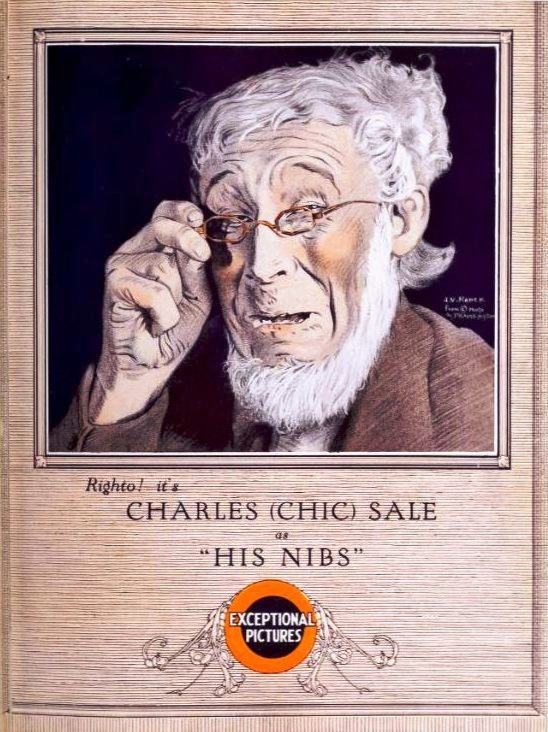
A definitive 6.5/10 rating for a film that redefined the boundaries of cult cinema. His Nibs remains a cornerstone of transgressive art.
Stepping into the world of 1921’s 'His Nibs' is less like watching a conventional silent film and more akin to participating in a communal, almost theatrical, event. This cinematic curio, penned by Arthur Hoerl, transcends mere narrative to offer a fascinating commentary on the very act of film exhibition itself during the nascent years of the medium. It’s a film about a film, narrated by a showman, presenting a unique meta-textual experience that remains strikingly fresh even a century later. At its core, it celebrates the human element of storytelling, a quaint, personal touch that often went unrecorded in the grander annals of cinema history.
The setting is the wonderfully named Slippery Elm Picture Palace, a bastion of small-town entertainment where the local populace gathers, not just for the moving pictures, but for the distinct atmosphere curated by its proprietor, Theo Bender, played with delightful aplomb by Charles 'Chic' Sale. Theo, or 'His Nibs' as he’s affectionately known, is more than just an owner; he’s the ringmaster, the master of ceremonies, and, most crucially, the live voice of the silent screen. This ingenious framing device immediately sets the film apart, drawing the audience into a world where the cinematic experience is inherently communal, punctuated by the reactions and interpretations of its charismatic host and the colorful local characters populating the theater.
Theo Bender's audacious decision to remove all intertitles from the feature presentation, a melodrama titled 'He Fooled 'Em All,' is the film’s central conceit. Instead of relying on printed text, he personally narrates the action, explaining every twist and turn, every emotional beat, with a homespun charm that is both endearing and utterly captivating. This act transforms the passive viewing experience into an interactive one, where the audience hangs on Theo’s every word, their understanding of the on-screen drama filtered through his folksy, often humorous, interpretations. It’s a powerful reminder of the live, improvisational aspect that once defined early cinema, a tradition that gradually faded with the standardization of intertitles and, eventually, synchronized sound.
The film within the film, 'He Fooled 'Em All,' presents a classic morality tale: the journey of 'The Boy' from rural innocence to urban disillusionment. He ventures to the bustling city, brimming with naive optimism and a pocketful of dreams, only to become an immediate target for a slick, predatory city swindler. This familiar trope of the country bumpkin encountering urban corruption was a prevalent theme in early 20th-century cinema, resonating with audiences grappling with rapid societal changes and the allure, and often danger, of metropolitan life. We see 'The Boy' stripped of his money, his dignity, and even his clothes, forced into the menial labor of a dishwasher to survive. This stark contrast between the pastoral ideal and the harsh realities of city life is a narrative device explored in many films of the era, from lighthearted comedies to more somber dramas, reflecting a societal anxiety about the loss of traditional values.
Charles 'Chic' Sale, in the titular role of 'His Nibs,' is the magnetic force that holds this peculiar structure together. His performance is a masterclass in understated comedic timing and genuine warmth. He embodies the quintessential small-town character, a figure of authority and entertainment, whose quirks are as beloved as his storytelling prowess. Sale’s Theo Bender is not just narrating; he’s performing, adding inflections, gestures, and personal asides that breathe unique life into the otherwise silent images. His interaction with the local denizens—his son Elmer, the newspaper editor Mr. Percifer, the weather-predicting Wally Craw, and the melodious organist Miss Dessie Teed—creates a rich tapestry of rural Americana, a nostalgic glimpse into a bygone era.
While the focus is heavily on Sale, the cast of 'He Fooled 'Em All' also deserves mention. Colleen Moore, a rising star of the silent era, brings her characteristic charm to 'The Girl.' Though her role within the inner film is somewhat archetypal, her presence adds a touch of romantic interest and vulnerability to the urban saga. Her portrayal here, even in a supporting capacity within the meta-narrative, showcases the burgeoning talent that would soon make her one of Hollywood’s most beloved flappers. The ensemble, including Harry Edwards as 'The Boy,' Walt Whitman, Lydia Yeamans Titus, J.P. Lockney, and Joseph J. Dowling, fulfill their roles within the melodramatic framework with conviction, creating the necessary foils and sympathetic figures for Theo’s lively commentary.
'His Nibs' is replete with thematic richness, primarily exploring the perennial conflict between rural innocence and urban deceit. The journey of 'The Boy' serves as a cautionary tale, a common narrative thread in early cinema that aimed to both entertain and instruct. The city is depicted as a place of moral ambiguity, where appearances are deceiving, and trust is a dangerous commodity. This stark contrast echoes similar moralistic narratives found in films like A Question of Right or In the Hour of Temptation, where characters often face profound ethical dilemmas in unfamiliar or corrupt environments. The urban landscape of 'He Fooled 'Em All' is a crucible, testing the mettle and virtue of its naive protagonist.
Beyond this moralistic framework, the film delves deeply into the very essence of storytelling and its power to shape perception and emotion. Theo Bender's narration isn't just a practical necessity; it's an artistic choice, an act of interpretation that imbues the silent images with his own personality and perspective. When the original film's ending deviates from the expected happy resolution, Theo, in a charming act of benevolent censorship, takes it upon himself to provide the audience with the customary matrimonial bliss. This moment is profoundly significant, highlighting the then-flexible nature of film exhibition and the power of the exhibitor to curate the audience's experience, essentially rewriting the narrative in real-time. It suggests that sometimes, the audience craves a particular kind of ending, and a good showman knows how to deliver.
For film historians and enthusiasts, 'His Nibs' offers an invaluable window into the exhibition practices of early silent cinema. Before the full standardization of intertitles, and certainly before the advent of sound, live narration was not uncommon. Exhibitors or 'lecturers' would often provide commentary, explanations, and even character voices, especially for films imported from other countries or those with complex plots. This film fictionalizes and celebrates that tradition, presenting it as an integral, cherished part of the movie-going experience. It reminds us that cinema, in its infancy, was a much more fluid and interactive medium, often blending film with live performance elements, much like vaudeville.
The atmosphere of the Slippery Elm Picture Palace itself contributes significantly to this historical context. The various comical rural types, from the earnest organist Miss Dessie Teed to the weather-forecasting Wally Craw, paint a vivid picture of local community life centered around the picture show. It’s a stark contrast to the sprawling, opulent movie palaces that would soon dominate urban landscapes, yet it represents the heart of cinema's initial reach into every corner of America. This depiction of a small-town theater, with its unique personalities and communal rituals, offers a nostalgic counterpoint to the
IMDb 7.1
1934
Community
Log in to comment.