DbcultAccessing Vault...
Cult Review
Senior Film Conservator
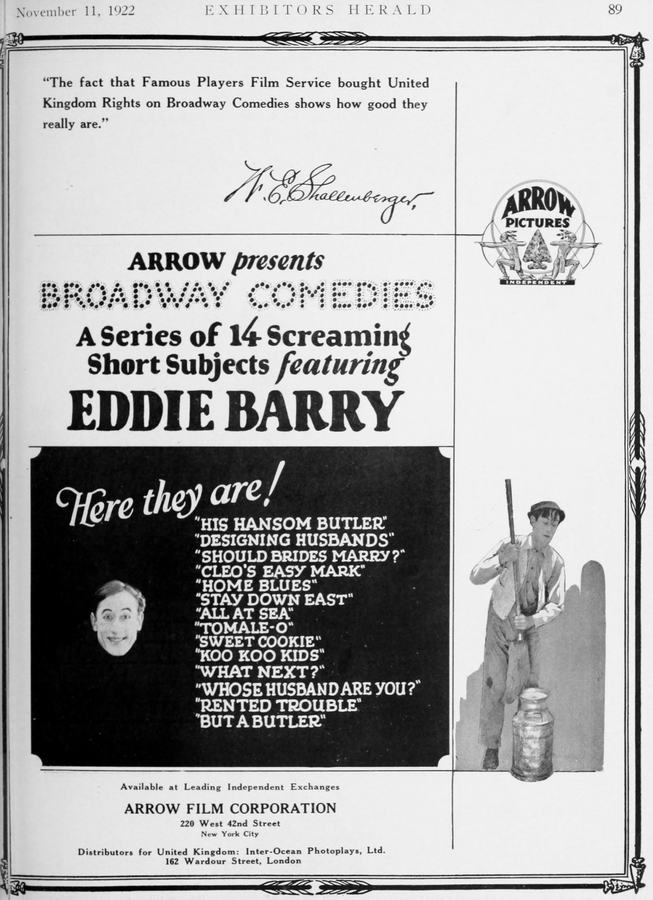
If the twenties roared, Home Blues listens to the hangover.
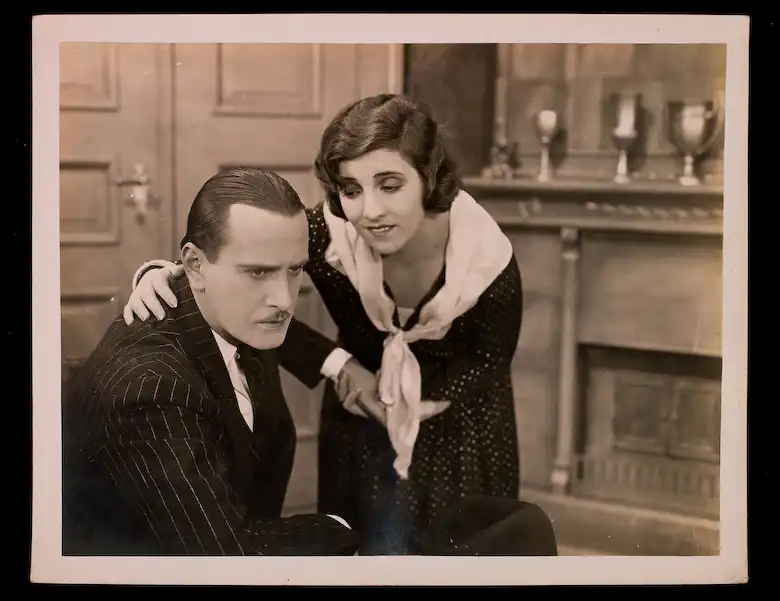
Vera Reynolds, often dismissed as merely a gamine foil to peppier comedies, here wields silence like a scalpel. Her first close-up—hair unpinned, eyes two smudged copper coins—lasts a full seven seconds, an eternity in 1921 syntax, long enough for the viewer to feel the gravitational tug of destitution. It is the inverse of The Unbeliever’s patriotic bravado; instead of waving flags, she wrings a dishrag until the droplets fall in 4/4 time, each splash a quarter-note of despair.
Eddie Barry, better known for slapstick shorts, strips his comic armor so completely that you half expect the camera to catch the moment his real persona slips out the fire escape. His slump against the doorjamb—shoulder blades jutting like broken wings—recalls the shell-shocked soldiers in In Mizzoura, but without battlefield pretext. The battlefield is solvency; the enemy is Thursday.
Cinematographer Jules Cronjager—later condemned to poverty-row westerns—here paints chiaroscuro worthy of the Dutch masters. Notice how kitchen steam backlights Reynolds so that her silhouette becomes a movable fresco: every time she crosses the frame, it is as though a Renaissance Madonna has decided to moonlight as a laundress. Compare this to the flat, magazine-ad lighting of Cleaning Up!!?, where even grime glows like product placement. In Home Blues, dirt is allowed to be dirt—yet somehow, through alchemy of contrast, it shimmers.
The recurring visual motif is the staircase: shot from above, its spiral resembles a treble clef; shot from below, a vertebra cracked by the weight of ascending rent. Each time Barry trudges up, the camera tilts ever so slightly, as though the building itself is sighing. The device predates the more baroque staircases in German silents like Arme Thea, but achieves expressionism on a shoestring—proof that budgetary shackles can midwife aesthetic daring.
No extant discs of the original score survive, yet the film’s intertitles—scarce, almost bashful—function like rests in a lead sheet, allowing the viewer’s internal jukebox to occupy the void. When Barry’s trumpet finally appears, the camera does not show him playing; instead, it cuts to a kettle lid rattling in exact syncopation, then to a cat flicking tail at 140 beats per minute. The montage becomes a ghost solo, more potent for being imagined. Scholars have likened it to the absent bagpipes in The Seekers, but Home Blues is stingier: it withholds even the promise of music, letting absence itself be the refrain.
Reynolds’ micro-gestures—a thumbnail grazing the hem of an apron, the way her pupils chase a falling teardrop without ever intercepting it—owe less to Stanislavsky than to jazz syncopation. She acts slightly off the beat, letting emotion arrive a sixteenth-note late, so that pathos never curdles into melodrama. Barry counters with a more legato despair, shoulders collapsing as though the air were made of wet cement. Their duet climaxes in a two-shot where neither touches the other; instead, the space between them vibrates like an overdriven bass string.
Contrast this with the matrimonial slapstick of The Joyous Trouble-Makers, where every quarrel ends in a pillow-fight. Here, the couple’s most intimate contact occurs when Reynolds folds Barry’s coat, pressing her cheek briefly against the collar to inhale the vanished scent of better days. The moment is so naked that the camera discreetly pans to a peeling wall, as if privacy itself were a character requesting entrance.
Writing credits are murky—some sources list the director, others a moonlighting reporter from the Baltimore Afro-American. Whoever the author, the script behaves like jazz sheet music: themes stated, abandoned, reharmonized. A discarded subplot involving a white slumlord (shot but excised after preview audiences rioted in Philadelphia) surfaces only as a ghost—an extra glancing toward camera with inexplicable terror. The resulting lacunae force spectators into co-authorship, filling rests with their own blue notes. This participatory breach anticipates modern hyperlink storytelling more than the linear piety of David Harum.
Set during the 1920-21 depression—rarely depicted onscreen—the film anticipates the socio-economic bluntness of post-1960s cinema. When a bailiff nails a yellow seizure notice to the door, the hammer blows echo those constructing the nearby skyscraper, implying that eviction and expansion are conjoined twins. The detail feels proto-neorealist, closer to post-war Rome than to contemporaneous escapism like Phroso. One could splice these tenement corridors into Rossellini’s Germany Year Zero without stylistic whiplash.
Reynolds’ character moonlights as a piece-work seamstress, sewing collars at three cents a dozen. The film lingers on her cracked thimble, transforming the tiny object into a crown of thorns for the Taylorized age. Unlike the flapper exuberance marketed by Mary Moreland, this heroine’s fingers blister to the rhythm of market forces. When she finally hurls the thimble out the window, the camera follows its arc until it clinks against a political poster promising “Prosperity Is Just Around the Corner”—a visual epigram worthy of Soviet agitprop.
A Salvation Army captain attempts to convert the couple, brandishing a tambourine like a halo under warranty. Reynolds listens, eyes downcast, while Barry silently rolls a cigarette paper—his fingers, calloused from trumpet valves, manipulate the fragile tissue with obscene delicacy. The scene refuses both ridicule and epiphany; faith is just another currency bouncing off the bankruptcy court of daily life. The stance feels more honest than the pieties of The Sawdust Trail, where redemption arrives on schedule like a commuter train.
Home Blues is the missing link between the urban fatalism of Zudora and the proletarian lyricism of Die Insel der Seligen. Its DNA resurfaces in Kazan’s On the Waterfront during the glove scene—where love is negotiated through a withheld object—just as its staircase reverb resounds in The Exorcist. Yet because the film was independently distributed by a defunct coal-company subsidiary, it sank into archival limbo, screened only at midnight gatherings of Harlem jazz clubs where Duke Ellington reportedly teased new arrangements from its afterimages.
A 4K restoration premiered last winter at MoMA, scanned from a sole surviving nitrate print discovered in a Slovenian monastery—ironically mislabeled Satan’s Carnival. The lavender tint of night scenes has been reinstated, conjuring a bruised twilight that makes streetlamps look like guardians too tired to stand. Home media rights are tangled in the same bankruptcy that devoured the original distributor, so your best bet is an academic streamer or repertory house. Catch it before it vanishes again; the current housing crisis lends the film a scalpel-edge relevance that no contemporary prestige miniseries about gig-economy woe has matched.
Home Blues does not end; it merely stops paying rent. The last frame—a gutter where trumpet valves glint like fallen stars—lingers for 30 freeze-frame seconds, enough time for the audience to hear the echo of every promise ever broken by a city that keeps insisting tomorrow will be in tune. You walk out humming, though no tune was supplied; that is the film’s wicked miracle. It teaches that silence, too, can go blue.
Verdict: A stealth masterpiece—part jazz elegy, part eviction notice—whose aftershock rewires your heartbeat to 4/4 lament. Seek it, or spend the rest of your moviegoing life settling for talkies that merely speak.
IMDb —
1928
Community
Log in to comment.