DbcultAccessing Vault...
Cult Review
Senior Film Conservator
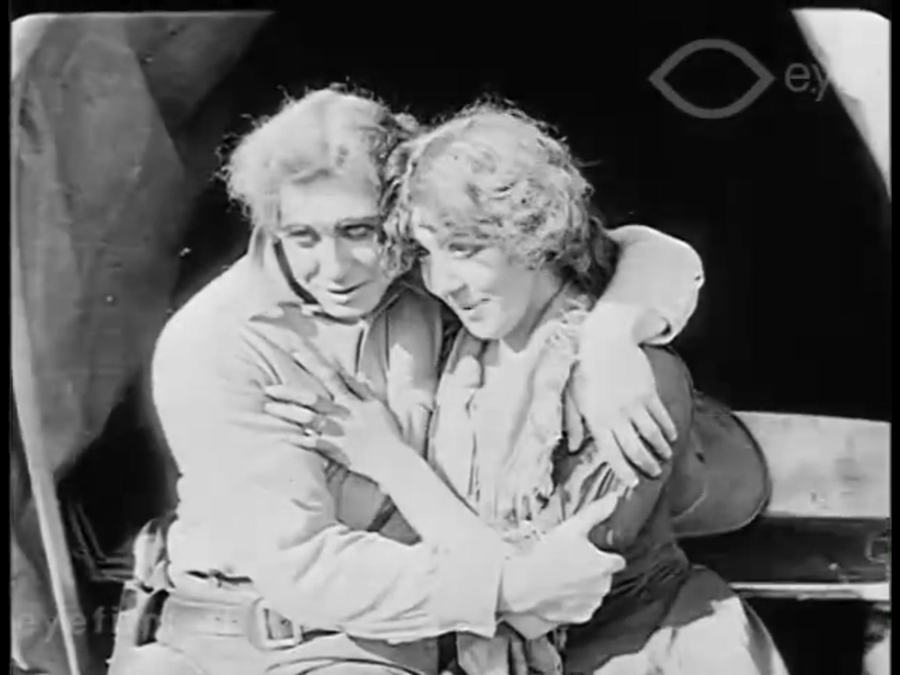
Imagine, if you will, a tremulous strip of 35 mm nitrate flickering inside some 1913 nickelodeon, its images ghosting across a muslin sheet like campfire smoke. The Romance of the Utah Pioneers is that kind of phantom—half morality play, half topographical fever dream—wedged between the biblical pageantry of From the Manger to the Cross and the prizefight actualities that bloodied screens the same year. Yet its heartbeat is utterly its own: a hymn to endurance that dares to stage Manifest Destiny as a conversation rather than a conquest.
The film opens on a horizon so wide it feels like someone yanked the edges of the world apart. Edward Martin—played by Frank Montgomery with the stoic velvet of a daguerreotype come alive—hoists the mantle of captaincy over a caravan whose only armor is faith and whose wagons are willed forward by blistered palms. These are the Hand-Cart immigrants, theological exiles whose earthly possessions amount to cast-iron pots, heirloom quilts, and a psalter that never leaves Alice Martin’s apron pocket. Helen Case’s Alice is the film’s quietly seething conscience; her eyes carry the stunned brightness of a woman who has read the Book of Ruth and now must write her own.
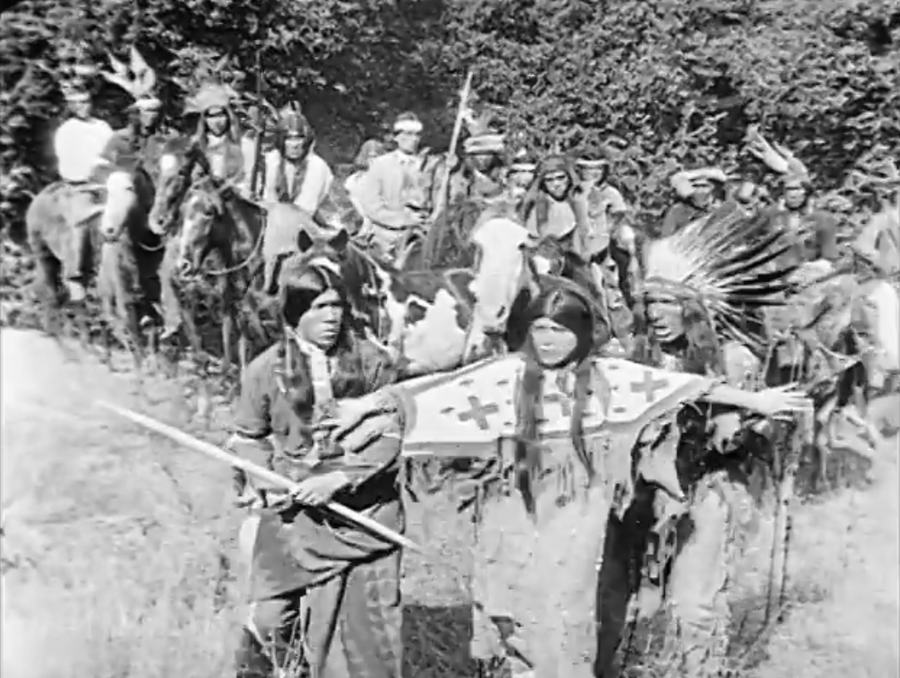
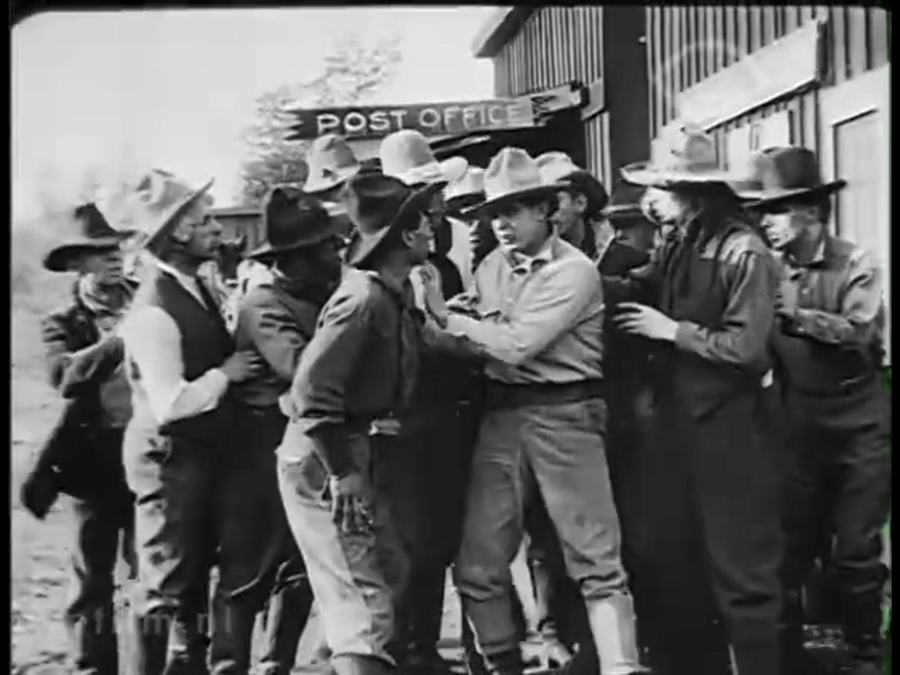
Enter Mona Darkfeather’s Watana, a name that means “spring water” in several Uto-Aztecan dialects, a detail the film honors by letting her first appearance coincide with the glint of a desert spring. She weaves baskets the way other teenagers weave daydreams, each coil a syllable in a language soon to be severed. When Mexican slavers erupt into the frame—stunt-riders in serapes borrowed from some earlier Griffith Western—they fracture the fragile détente between desert tribes and settler theology. Watana’s abduction is staged in a single, merciless tableau: the camera holds on her overturned basket, its geometric patterns dissolving into hoof-churned sand, a visual epitaph for a cosmos about to be carted off in chains.
Mountain Pine, essayed with smoldering brevity by an uncredited actor whose cheekbones could cut quartz, becomes the film’s avenging Mercury. His ride to rally tribal warriors is shot silhouetted against a salmon dusk, the sequence rhyming—perhaps deliberately—with the ride of the Klansmen in The Birth of a Nation two years later. But where Griffith’s horsemen are bathed in racist triumph, Mountain Pine’s posse is framed through a filter of mourning; their massacre of the slavers feels less like victory than like the last, desperate exhale of a world already consigned to museums.
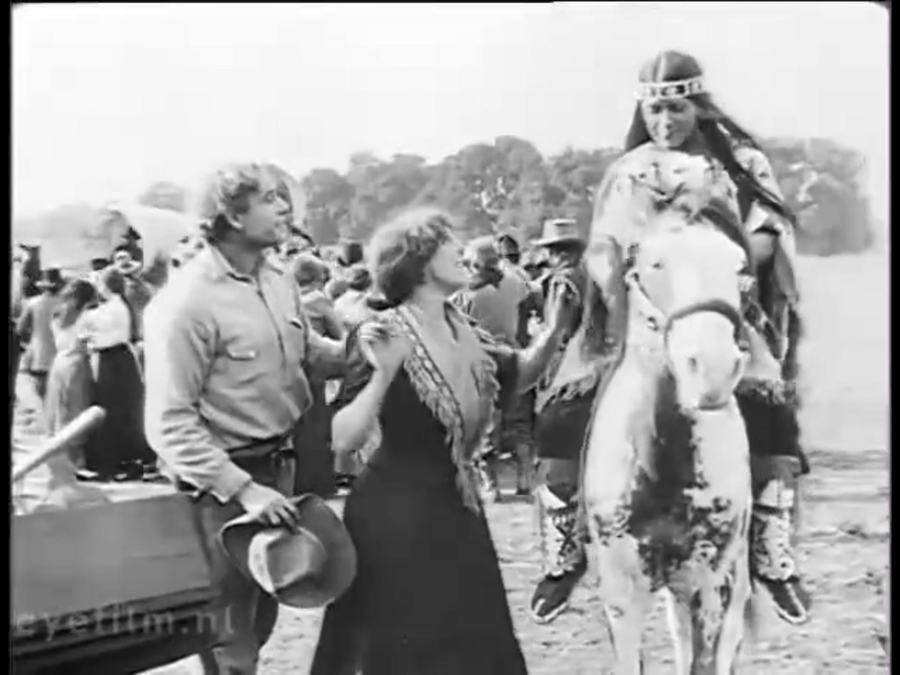
Here the film pivots on a moral hinge as delicate as lace. Flush with revenge, the Paiute warriors sight the Mormon hand-carts and read in them the same pale threat that sponsored their abduction. Cue the second act’s existential cliffhanger: the immigrants, lost without a guide, are literally dying in diagonals—bodies strewn like chess pieces after a drunken match. The camera lingers on Alice Martin as she presses her lips to a tin cup, coaxing the final drop of water into her husband’s cracked mouth; the image is translucent with the erotics of desperation, a chaste cousin to the more overt masochism in The Cheat.
And then, the miracle: Watana, remembering her own shackles, steps between two civilizations. She pleads with the tribal elders in a sequence performed entirely in gesture and subtitle cards whose fonts resemble basketry patterns—a subtle visual rhyme that fuses theme and design. The decision to aid rather than annihilate is rendered in a single, luminous close-up: Watana’s pupils reflecting both the threatened pilgrims and her own memory of captivity. It’s the silent era’s answer to the later Close-Up of Grace, predating Renée Falconetti by more than a decade.
Water is found, then pemmican, then a moment so quietly radical that it feels like a shaft of 21st-century light piercing a 19th-century tent: Alice kisses Watana on the cheek. The gesture is swift, unpremeditated, an act of cross-cultural gratitude that the film treats with neither prurience nor exoticism. Watana’s subsequent bewilderment—she touches the spot as if it were a butterfly that might flutter away—carries more anthropological veracity than any of the ethnographic actualities cluttering early cinema. When she relays the experience to Mountain Pine, his tentative smile suggests a new lexicon of tenderness, one that renders the frontier not as a battlefield but as a classroom of possible courtesies.
Visually, the film is a study in contradictions: the hand-carts are crude, yet the cinematography—credited to an unnamed cameraman who may have moonlighted from Keystone—is almost impressionistic. Dust becomes pointillist haze, moonlight pools like liquid mercury, and the final tableau of pioneers limping toward Zion is framed through a halo that evokes the transcendental glow in Pilgrim’s Progress. The tinting is instructive: amber for daytime trek, cyan for thirst, rose for the kiss, and a final return to amber—an arc that implies history itself has been baptized in empathy.
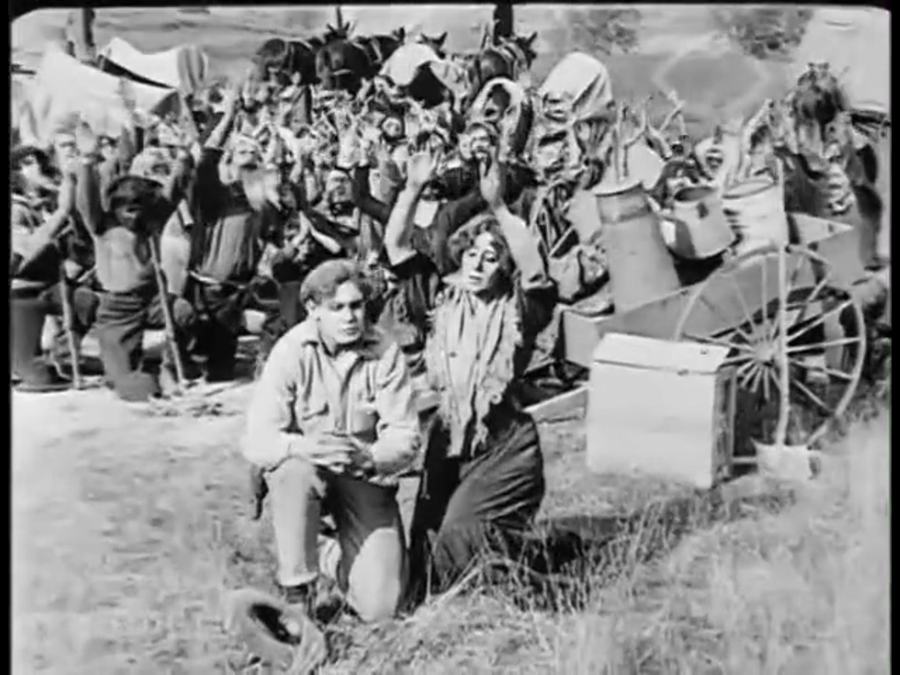
Yet the film is not without its era’s scars. The Mexican raiders are sketched with the same swarthy villainy that mars The Mystery of the Black Pearl, and the Paiute warriors oscillate between noble-savage tropes and genuine agency. What rescues the narrative is its refusal to grant the settlers unalloyed sainthood; their hymns are off-key, their desperation unpretty, their survival contingent upon a Native teenager’s moral largesse. In that asymmetry lies a proto-feminist, proto-post-colonial frisson that feels downright insurgent for 1913.
Compare it to the same year’s Oliver Twist, where poverty is picturesque, or to The Independence of Romania, where nationalism is pageantry. Utah Pioneers dares to stage starvation not as spectacle but as stench—you can almost smell the rancid bacon fat and the metallic tang of snowmelt tainted with alkali. When the guide tumbles over the cliff, the camera does not follow him into the abyss; instead it stays with the women who must decide whether to weep or keep walking. That choice—grief as logistical problem—feels startlingly modern, a harbinger of the procedural despair in later masterpieces like Ingeborg Holm.
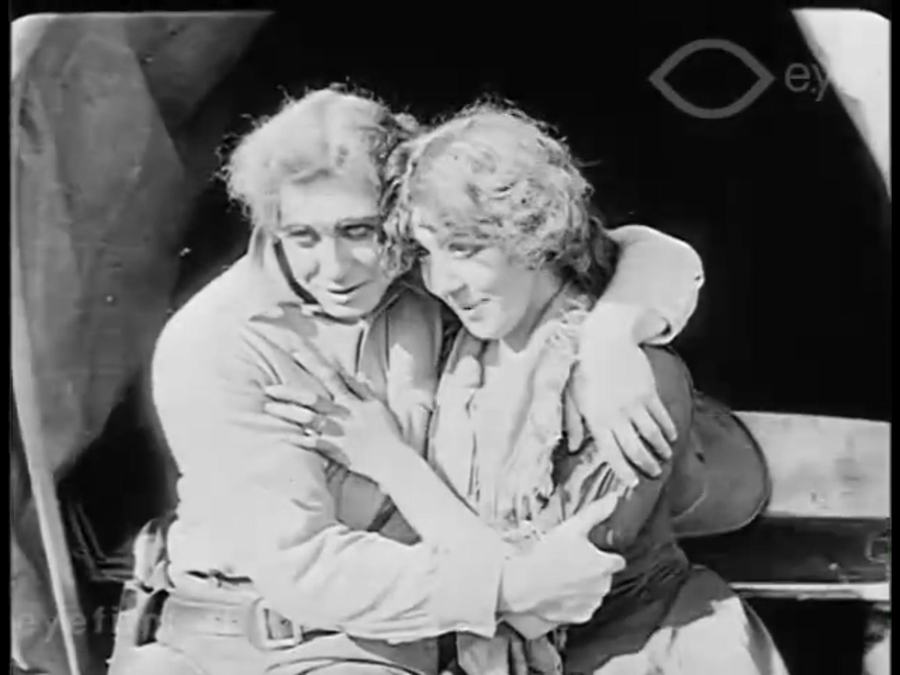
The performances are calibrated to the grammar of silent revelation: Helen Case lets her throat hollow and her eyes bulge ever so slightly, suggesting hunger without slipping into histrionics; Mona Darkfeather communicates entire cosmologies through the angle at which she holds a basket, the warp and weft of her fingers syncing with the film’s edit rhythm. Frank Montgomery has the square-jawed rectitude of a dime-novel saint, yet in the moment he tastes the first spoonful of Watana’s broth his face flickers with shame—an admission that survival has cost him the right to judge.
Musically, the original exhibitors were encouraged to accompany the picture with a hybrid program: Mormon hymns on pump organ for the trek sequences, tribal drums fashioned from sheepskin for the Paiute councils, and—most startling—a solo violin scordatura for the kiss, the strings retuned to suggest an unresolved chord between civilizations. Few nickelodeons obliged; most slathered the reels with generic gallop music, a vandalism akin to scoring Rossini over Bach. Yet even in bastardized form, the film’s rhythmic DNA survives: the creak of wheels, the gallop of hooves, the hush of water, the intake of breath before lips touch skin.
Critical reception in 1913 was bifurcated. The Deseret Evening News praised its “sanctified realism,” while a New York Dramatic Mirror critic sniffed at “melodramatic largesse unmoored from historical fact.” Both camps missed the point: the film is less historiography than hymnography, a cinematic cantata whose true subject is the moment when vengeance chooses to become hospitality. In that sense it anticipates the ethical pivot of The Redemption of White Hawk by a full decade, yet avoids that later film’s cloying martyrdom.
Archivally, the picture exists only in fragments—roughly 42 minutes at 18 fps, housed in a climate-controlled vault beneath the Utah State Historical Society. The tints have oxidized toward bruise-purple, and the intertitles—once scarlet—have faded to a consumptive pink. Yet even in this necrotic state, the film exerts a magnetic pull. During a 2019 MoMA retrospective, attendees reported dreams of hand-carts and basketry for weeks afterward, as if the celluloid had grafted its DNA onto their subconscious. One scholar compared the experience to “being sung to by a ghost who forgets the words but remembers the consolation.”
So, is The Romance of the Utah Pioneers a masterpiece? By the auteurist yardstick of pristine auteurial control, no—its authorship is communal, its politics conflicted, its survival fragmentary. But by the more capacious metric of cinema as communal dream, it approaches the sublime. It teaches that the opposite of conquest is not surrender but reciprocity, that a kiss on the cheek can be as seismic as a Gatling gun, that history’s wheel—like the pioneers’ rickety cart—turns not on the axle of destiny but on the lubricant of shared vulnerability.
In the final shot, the survivors crest a ridge and glimpse the distant shimmer of the Great Salt Lake, its saline vastness resembling a sheet of hammered pewter under the noon sun. The camera lingers, then irises out—not on the promised land, but on Watana’s face as she watches them go. Her expression is unreadable: part benediction, part bereavement, part prescient awareness that the same pilgrims who thank her will soon name valleys and temples after themselves while forgetting her name. Yet for one suspended heartbeat, the frontier is not a zero-sum equation but a loom where disparate strands—Mormon, Paiute, Mexican, woman, man, child—intertwine into a single, fragile fabric. The film ends; the loom keeps clacking; the basket, once overturned, is set upright again, ready to hold whatever future we dare to place within it.

IMDb —
1936
Community
Log in to comment.