DbcultAccessing Vault...
Cult Review
Senior Film Conservator
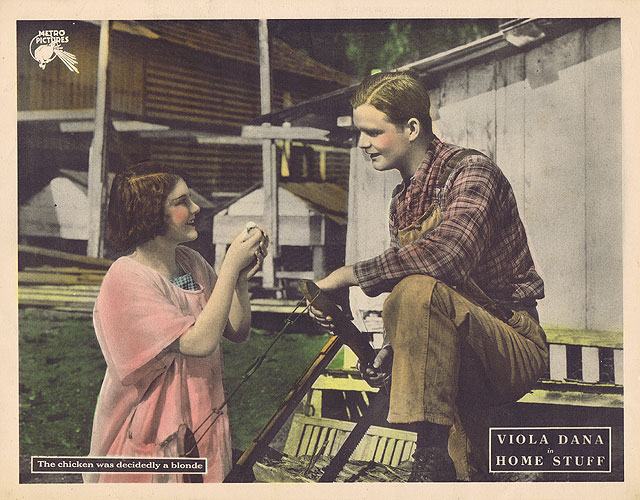
Frank Mitchell Dazey and Agnes Christine Johnston’s *Home Stuff* (1920) is a film that thrives in the liminal spaces between artifice and authenticity. Set against the stark contrast of a struggling theatrical troupe and the unyielding moral framework of a rural homestead, the story of Madge Joy serves as a microcosm for the broader cultural tensions of early 20th-century America. With its intricate interplay of personal reinvention and societal expectation, the film transcends its silent format to deliver a narrative that feels both intimately human and expansively universal.
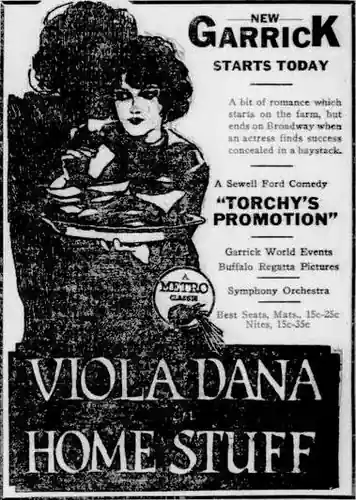
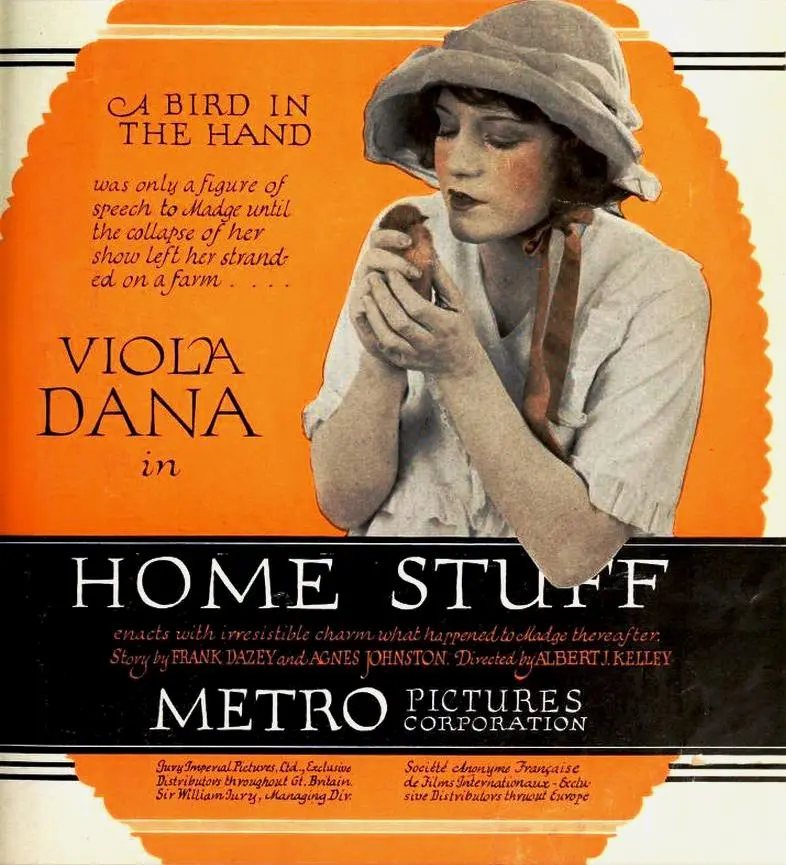
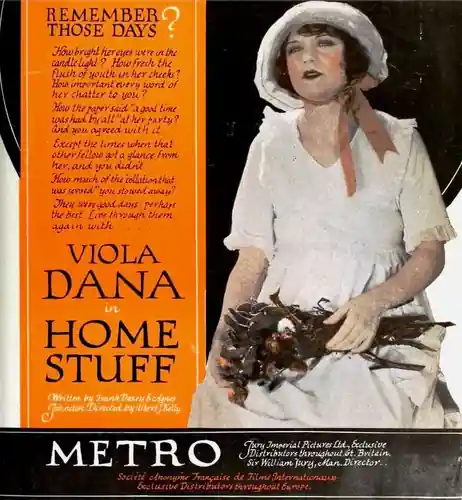
At the heart of *Home Stuff* lies Madge Joy (Priscilla Bonner), whose journey from itinerant actress to reluctant member of the Deep family is a masterclass in restrained performance. Bonner’s portrayal captures the duality of her character: the flicker of theatrical flair beneath the veneer of a meek orphan, the quiet resolve in her eyes when she chooses to withhold her true identity. Her initial encounter with the Deep homestead—a stumble into a world of hay-strewn floors and stern gazes—sets the stage for a narrative that hinges on misdirection and eventual revelation. The scene where she awakens in the Deep living room, disoriented and clutching a tattered shawl, is a visual tour de force. The muted tones of the set, the heavy wooden furniture, and the unspoken tension between the family members (led by the commanding presence of Aileen Manning as “Ma” Deep and Tom Gallery as the rigid patriarch) ground the film in a tangible sense of place.
Robert Deep (James Robert Chandler), the farmer’s son, embodies the film’s central thematic conflict: the friction between artistic ambition and rural pragmatism. His seventeen-act play, a sprawling work of self-mythologizing, becomes the locus of both his aspirations and his limitations. Chandler’s performance is a study in earnestness; his gestures are those of a man both yearning and constrained, his dialogue delivered with the fervor of someone who believes in the transformative power of art. The play itself, with its cumbersome structure and melodramatic flourishes, is a metatextual device that mirrors the narrative’s own meandering path. Madge’s critique—her blunt dismissal of his work as the “worst ever”—is not merely a plot point but a thematic pivot. It underscores the film’s interrogation of what constitutes “good” art and whether authenticity can coexist with convention.
The film’s exploration of identity is further deepened by the arrival of Susan Deep (Josephine Crowell), Robert’s estranged sister and a stage actress herself. Her presence injects a sense of irony into the narrative: Madge’s subterfuge is exposed not by the Deep family’s piety but by the very profession she has been hiding. Crowell’s Susan is a complex figure—part prodigal daughter, part emblem of the theatrical life Madge both admires and resents. Their interactions are charged with unspoken parallels, their shared vocation a double-edged sword that binds them while highlighting their divergent paths. The moment when Madge reveals her true identity to the Deep patriarch is a masterstroke of cinematic economy. The man’s stern expression, the weight of his silence, and the slow pivot of his gaze toward his daughter’s estranged return all convey a universe of emotion without a single line of dialogue.
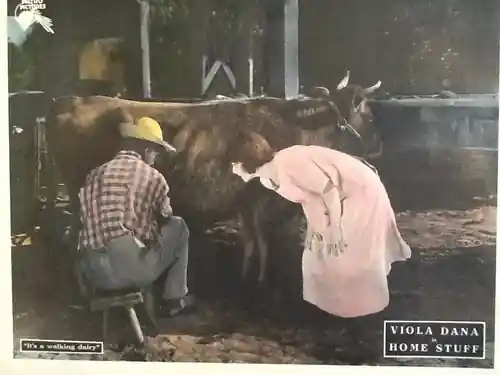
Visually, *Home Stuff* is a triumph of silent film aesthetics. The cinematography—though uncredited in most sources—employs a restrained palette of earth tones and golden light to evoke the duality of its settings. The road show sequences are shot with a frenetic energy, the actors’ exaggerated gestures and the makeshift stage backdrops underscoring the transient, almost delusional nature of their existence. In contrast, the Deep family’s world is rendered in long, slow takes that emphasize the weight of tradition and the claustrophobia of rural life. One particularly striking sequence involves Madge reading Robert’s play under the flickering light of a kerosene lamp. The camera lingers on her face as she progresses from amusement to exasperation, her expressions a silent commentary on the disconnect between her theatrical sensibilities and Robert’s earnest, if misguided, vision.
Thematically, *Home Stuff* resonates with the broader cultural anxieties of its era. The film’s juxtaposition of urban theatricality and rural morality mirrors the shifting social landscape of the 1920s, a time when traditional values were increasingly challenged by modernist aspirations. Madge’s eventual decision to return to New York and pursue stardom is not a rejection of the Deep family but a reaffirmation of her own identity. The final scenes, where she meets Robert in a more cosmopolitan setting, are steeped in a bittersweet ambiguity. The play they begin to read together is left unfinished, a narrative choice that reflects the film’s central thesis: the pursuit of art is as much about the journey as the destination, and sometimes, the most profound revelations occur in the spaces between.
Comparatively, *Home Stuff* shares thematic DNA with films like *Within Our Gates* (1920), which also explores the tension between societal expectations and individual agency. However, where *Within Our Gates* leans into social critique, *Home Stuff* is more introspective, focusing on the internal conflicts of its characters. The film’s influence on later works—such as *The Way Women Love* (1923) or *12.10* (1922)—is evident in its nuanced portrayal of female ambition and the constraints of gender roles. Yet *Home Stuff* stands apart for its unflinching gaze at the performative nature of identity, a theme that remains strikingly relevant in contemporary cinema.
Technically, the film’s use of intertitles is noteworthy. The dialogue is sparse but precise, with each line serving multiple functions—advancing the plot, revealing character, and underscoring thematic motifs. The absence of synchronized sound is not a limitation here but a deliberate choice that enhances the film’s emotional resonance. The pauses between lines, the lingering glances, and the subtle shifts in body language become the primary tools for conveying meaning, a testament to the actors’ skill and the directors’ vision.
In conclusion, *Home Stuff* is a film that rewards careful attention. Its exploration of identity, artistry, and the collision of worlds is rendered with a quiet intensity that lingers long after the final frame. While it may not have the immediate visual flair of some of its contemporaries, its strength lies in its subtlety and emotional depth. For those interested in the evolution of silent film, particularly its treatment of gender and artistic ambition, *Home Stuff* is an essential viewing. It is a work that reminds us that the most compelling stories are often those that straddle the line between reality and invention, just as the characters themselves navigate the fragile boundaries of their own lives.
IMDb —
1928
Community
Log in to comment.