DbcultAccessing Vault...
6.4/10
Senior Film Conservator
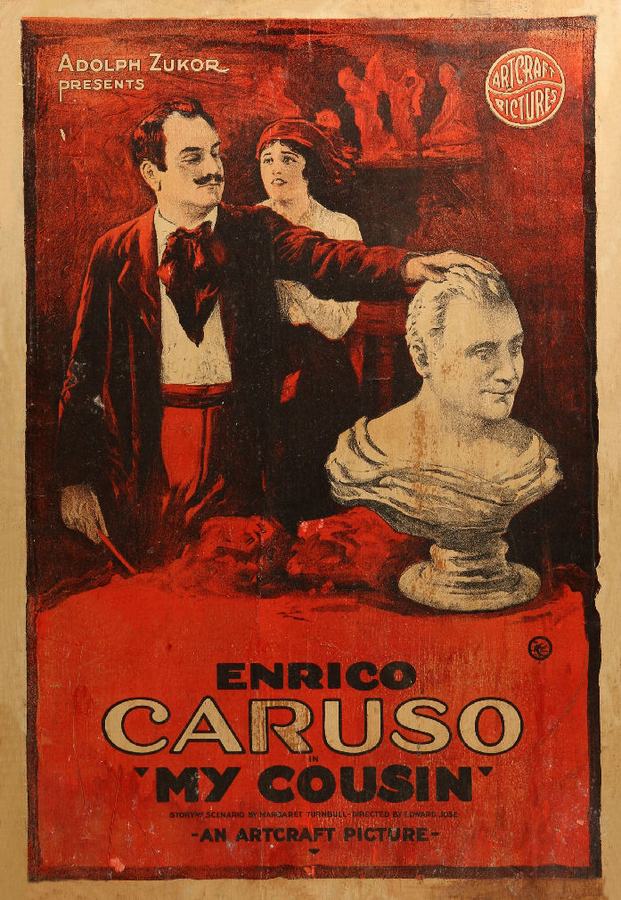
A definitive 6.4/10 rating for a film that redefined the boundaries of cult cinema. My Cousin remains a cornerstone of transgressive art.
The historical anomaly of a silent film starring the most celebrated operatic voice of the early twentieth century is a paradox that cinema historians have long savored. Enrico Caruso, whose golden timbre defined the acoustic era, stepped before the cameras of the Famous Players-Lasky Corporation in 1918 to deliver a performance that relied entirely on the physicality of his presence. My Cousin remains a fascinating artifact, not merely because it captures the legend in motion, but because it treats the concept of celebrity with a self-aware, almost self-deprecating wit that was rare for the period. Unlike the heavy-handed moralizing found in A Soul Enslaved, this film leans into the lighthearted tragedy of the everyman, using the immigrant experience as a backdrop for a story about the masks we wear and the monuments we build to our own aspirations.
Caruso’s dual role as Tommasso and Caroli is a masterstroke of casting that plays on the audience's existing adoration for the tenor. As Tommasso, Caruso is unrecognizable—a bumbling, bushy-mustached artisan whose hands are perpetually stained with the white dust of his trade. He moves with a nervous, staccato energy that stands in stark contrast to the fluid, aristocratic grace of Caroli. This juxtaposition is more than just a showcase for Caruso’s acting range; it is a commentary on the fragmentation of the Italian-American identity. Tommasso represents the laboring class, the foundational plasterers and stonemasons who built the city, while Caroli represents the cultural zenith that the community looks toward for pride. The film handles this dichotomy with a deftness that avoids the saccharine pitfalls of Sunshine Alley, opting instead for a grounded, almost neorealistic texture in its depiction of the plaster shop.
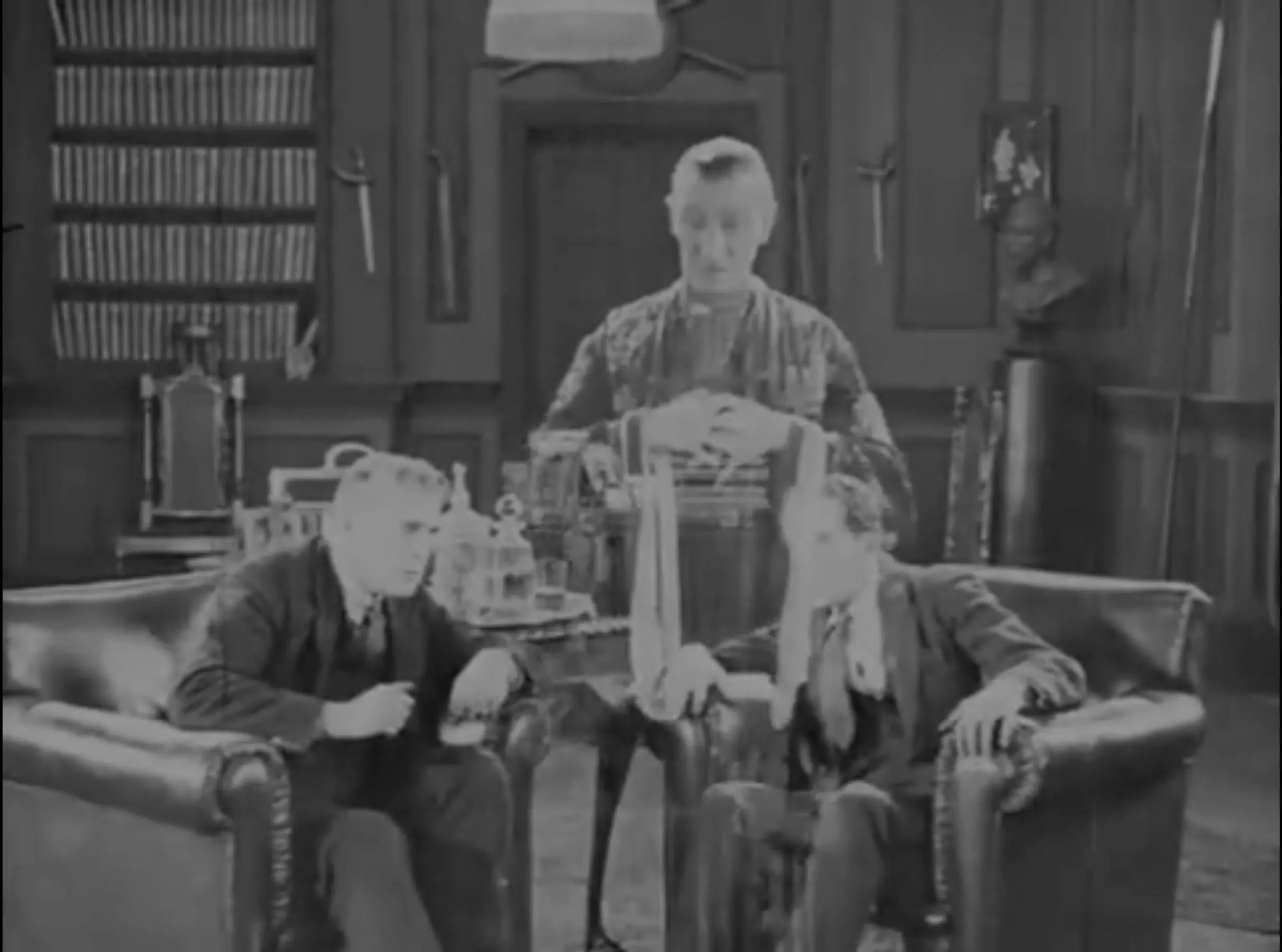
The technical execution of the scenes where both cousins appear is remarkably sophisticated for 1918. The split-screen work and double exposures are handled with a precision that allows the two versions of Caruso to inhabit the same space without shattering the illusion. When Tommasso gazes upon the bust he has sculpted of his cousin, we see a man literally staring at the idealized version of himself. It is a moment of profound introspection that transcends the film’s comedic beats. This internal conflict—the desire to be seen as an equal to one’s own blood—echoes the thematic depth of For the Freedom of the East, though on a much more intimate, domestic scale.
The setting of the film is as much a character as the cousins themselves. The crowded streets, the steaming bowls of pasta at Galeotto’s, and the cramped quarters of the plaster shop provide a rich, tactile environment. Edward José captures the claustrophobia of the immigrant experience—the way reputation is everything and gossip travels faster than the elevated train. Pietro, played with a gruff but understandable pragmatism by Henry Leone, serves as the gatekeeper of this social order. His preference for the greengrocer Lombardi is not born of malice but of a survivalist instinct. In a world where Unprotected souls often fall through the cracks of the metropolis, a stable income in vegetables is worth more than a dozen plaster masterpieces.
Rosa, portrayed by the luminous Carolina White, is more than just a passive prize to be won. There is a palpable chemistry between her and the gawky Tommasso, a shared dream that flickers in the dim light of the opera house. When they attend the performance together, the film cleverly utilizes the audience’s knowledge of Caruso’s voice. We don't hear the arias, but we see the transformative power of the music on Rosa’s face. It is a moment of pure cinematic transcendence, where the silent medium manages to evoke the very sound it is incapable of producing. This emotional resonance is something that even grander productions like Sapho often struggle to achieve with their more melodramatic flourishes.
The centerpiece of My Cousin is the agonizing sequence at Galeotto’s restaurant. It is a masterclass in pacing and tension. Tommasso, riding high on the belief that his cousin will recognize him and thus elevate his social standing, is met with a cold, blank stare from the tenor. The shift in the room’s atmosphere—from expectant reverence to mocking derision—is visceral. Caruso’s performance here is heartbreaking; the way his posture collapses, the way his bushy mustache seems to droop under the weight of his shame, is a testament to his prowess as a silent actor. He doesn't need a high C to convey a shattered heart.
This scene highlights the precarious nature of the "reflected glory" that many in the immigrant community clung to. If Tommasso isn't related to the great Caroli, then who is he? He is just another laborer with dirt under his fingernails. The cruelty of the crowd at the restaurant reflects a darker side of the human condition, one that is explored with similar cynicism in films like Where Is Coletti?. It raises the stakes for the film’s final act, transforming a simple romance into a quest for personal and professional redemption. Tommasso isn't just fighting for Rosa; he is fighting for his right to exist as an artist in his own right, independent of his cousin’s shadow.
The resolution of the film, involving the sale of the bust, is both satisfying and narratively elegant. It brings the two worlds of Caruso together in a way that feels earned rather than forced. The bust itself is a symbol of Tommasso’s labor and his love. To have Caroli eventually recognize the talent in the clay is a validation of the working man's spirit. It suggests that while the voice may belong to the elite, the hands that shape the world belong to the Tommassos. This theme of the artist’s struggle for recognition is a universal one, often depicted with more tragic results in En kunstners kærlighed, but here it is given a hopeful, American-dream-inflected ending.
The cinematography by Harold Wenstrom deserves particular praise for its use of light and shadow within the plaster shop. The white dust creates a soft, almost ethereal glow around Tommasso as he works, contrasting with the sharp, high-contrast lighting of the opera house and the swanky restaurant. These visual cues subtly reinforce the film's class distinctions. We see the beauty in the grit, a visual philosophy that aligns with the best of the era’s urban dramas. The film’s pacing, guided by Margaret Turnbull’s tight script, ensures that the 1500-foot reels never drag, maintaining a brisk yet emotionally resonant tempo that keeps the viewer engaged in Tommasso's plight.
In the grand tapestry of silent cinema, My Cousin is often overshadowed by the epic spectacles or the slapstick comedies of the time. However, it occupies a unique niche as a star vehicle that actually cares about its characters. It doesn't rely on the gimmick of Caruso’s fame; it uses that fame to tell a story about the human need for connection and respect. While it may lack the sheer kinetic energy of Zigomar contre Nick Carter, it compensates with a warmth and a sincerity that is deeply moving.
Watching Caruso today, one is struck by his expressive eyes and his ability to communicate complex internal states through subtle shifts in his facial muscles. He was a natural for the screen, and it is a tragedy of film history that he didn't make more movies before his untimely death. My Cousin stands as a testament to his multifaceted talent and as a charming, insightful look at the early twentieth-century Italian-American experience. It is a film that rewards the patient viewer with its nuanced performances and its gentle, humanist heart. Whether you are a fan of opera or a devotee of silent film, this is a piece of cinema that demands to be seen, not just as a curiosity, but as a genuine work of art that captures a specific moment in time with grace and humor.
Ultimately, the film succeeds because it understands that we are all, in some way, Tommasso—struggling to be seen, working in the shadows of giants, and hoping that our own small masterpieces will one day be recognized by the world. It is a sentiment that remains as relevant today as it was in 1918, proving that the silent screen can still speak volumes to a modern audience. The legacy of My Cousin is not just the image of a great singer on film, but the enduring story of a man finding his own voice in a world that only wanted to hear his cousin's.
IMDb 8
1929
Community
Log in to comment.