DbcultAccessing Vault...
6.4/10
Senior Film Conservator

A definitive 6.4/10 rating for a film that redefined the boundaries of cult cinema. Hypocrites remains a cornerstone of transgressive art.
Truth, according to Lois Weber, wears no gown—only skin lit from within. Hypocrites detonates the idea that time moves forward; instead, it spills sideways, soaking both 1915 and the Middle Ages in the same moral iodine.
Picture this: a monk’s cell carved from tufa, candles guttering like anxious consciences while Gabriel files away at marble that somehow already knows it will be hated. His statue is no Venus pudica modestly shielding herself; she stands arms akimbo, pubis forward, eyes level with ours, a defiant glassy stare that accuses every spectator of voyeurism while gifting them revelation. Weber’s camera—yes, she was one of the first to demand that credit—circles the sculpture the way skeptics circle scripture, searching for cracks and finding instead a mirror.
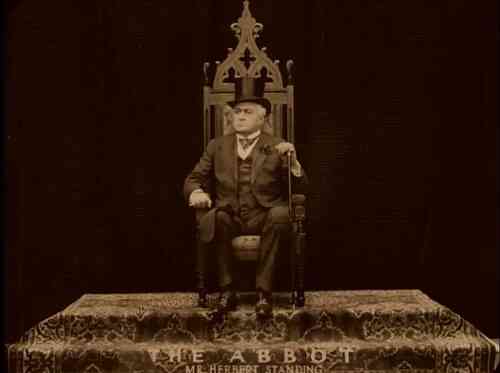
Cut to a boulevard alive with bobbing derbies and suffragette sashes. The modern preacher, played by Courtenay Foote with the posture of a man who has never doubted his own reflection, strides from charity banquet to press room, brandishing sermons against liquor and burlesque. Yet the moment the phantom girl—Margaret Edwards, dusted with silver powder so she seems perpetually moonlit—drifts across his path, his tongue tangles. Weber rhymes his stumbles with Gabriel’s, cross-cutting so that a 15th-century torch and a 20th-century camera flash ignite the same fear: ungoverned flesh.
The film’s notoriety began before its premiere. Censors sharpened scissors, objecting less to the nudity than to its metaphysics: a woman unclothed by principle rather than prurience. Weber’s publicity leaned in, printing posters that asked: “Would you ban the Sistine Chapel?” It worked; theaters sold out, clergy picketed, and editorials compared the picture to Spartacus for the soul.
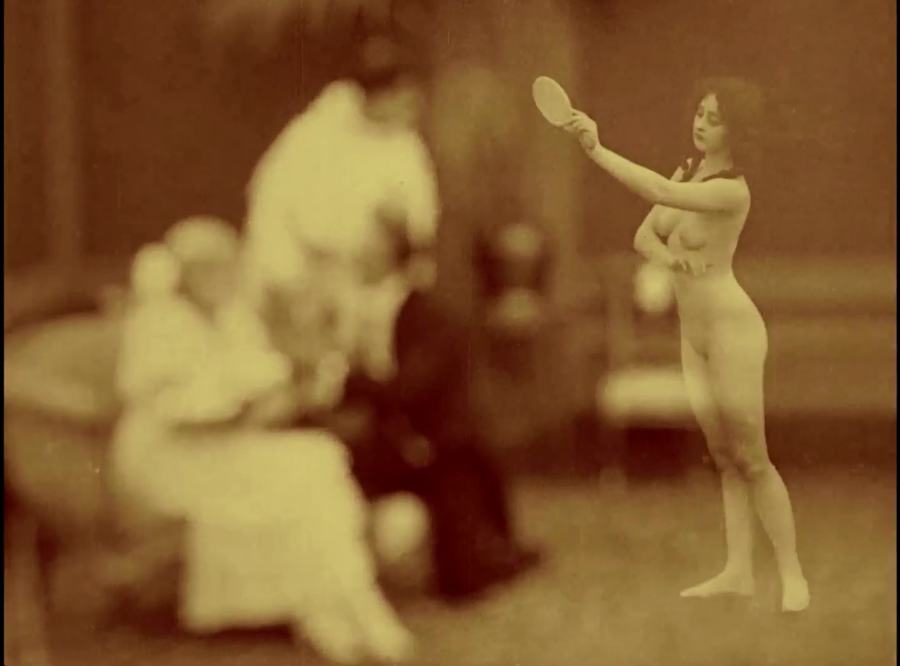
Weber’s technical arsenal feels modern even now. She layers double exposures so Gabriel’s monastery appears to hover inside the preacher’s sanctuary like a palimpsest. The spectral girl’s opacity varies shot by shot; sometimes she’s a matte silhouette, other times solid enough to cast shadows, suggesting Truth’s mercurial grip on tangibility. Night exteriors were filmed on sets drenched with magnesium flares, creating a halo around actors that anticipates digital rim-light. Most audacious: the final dissolve that merges the monk’s burning pyre with newsprint sheets about the preacher’s disgrace—flames become black ink, smoke becomes gossip.
Francesca Bertini, imported from Italy to lend European gravitas, plays the Magdalene-inspired follower who secretly funds Gabriel’s marble. She communicates devotion through micro-gestures: a thumb brushing dust from the statue’s foot equals pages of devotion. In the modern thread, Myrtle Stedman’s newspaper illustrator sketches the phantom girl from eyewitness accounts, becoming a stand-in for the audience—she both records and yearns, her pupils dilating each time she draws another curve. Their parallel fates—excommunication and career ruin—echo without a single shared frame.
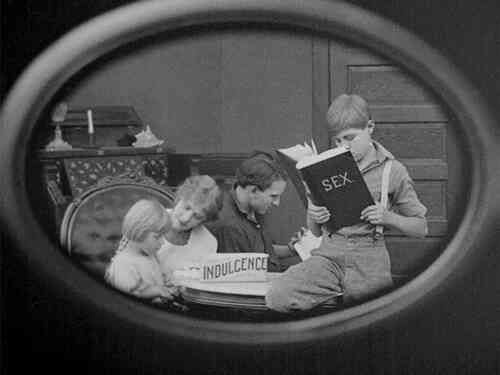
Although released two years before feature-length sound, Hypocrites vibrates with sonic suggestion. Intertitles alternate between biblical iamb and tabloid bark, forcing viewers to modulate inner voices. The absence of synchronized noise makes the phantom girl’s appearances feel colder; you swear you hear linen rustling though no cloth touches her. Contemporary exhibitors were encouraged to accompany her scenes with wordless choral moans, turning auditoriums into haunted chapels.
Critics who label Weber a moralist miss the subversion: she indicts institutional religion while exalting feminine knowledge. The male clerics—medieval and modern—brandish texts, yet the unclothed woman, wordless, rewrites reality with her mere walk. In a era when The Perfect '36 celebrated suffrage and The Photo-Drama of Creation sermonized audiences into piety, Weber fused both impulses, arguing that enfranchisement must include the body.

Where The Golem turns clay into protector, Hypocrites turns marble into menace; both reveal how icons bite their sculptors. The communal hysteria recalls Jealousy, yet Weber refuses a cathartic trial; instead she offers perpetual unease, closer to the existential slap of Denn die Elemente hassen.
Chicago’s censorship board issued perhaps the most poetic ban in film history: “The naked figure shall not glow.” Weber appealed, arguing that to dim the glow would be to endorse the very hypocrisy indicted. She offered to clothe the actress in diaphanous gauze; the board recoiled, realizing translucency might titillate more. The standoff ended with a compromise: individual theater owners could purchase “clothed” or “unclothed” prints, making Hypocrites perhaps the first director’s cut marketed by morality.
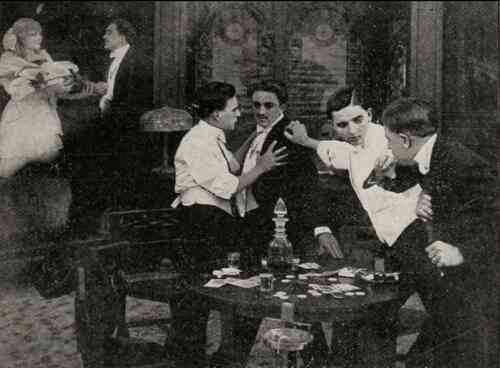
Streaming-era viewers, inured to flesh by prestige nudity clauses, may scoff at the scandal, yet Weber’s staging reawakens discomfort. The phantom girl never poses; she strides, pivots, exits, always just ahead of desire. Her agency weaponizes the gaze, turning viewers into self-policing censors, much like Michael Haneke would decades later. The film anticipates every debate about body autonomy, pixel modesty, and algorithmic shame.
A 2021 4K restoration from two surviving negatives (one “heavenly” print owned by Weber’s heirs, one “earthly” held in a convent archive) reunited split-tint fragments. Blues once swallowed by nitrate decay now ripple like bruised conscience; amber hearthlight halos faces formerly lost in umber murk. The phantom girl’s silver body makeup, revealed under ultraviolet scans, contains traces of actual mica, explaining her ethereal shimmer. The restoration team layered a minimal score: bowed wine glasses and distant church bells, keeping silence central.
Hypocrites argues that civilization advances not when we stop looking, but when we admit why we cover. Weber doesn’t preach nudism; she precludes it, suggesting that any doctrine—socialist, suffragist, sanctified—risks calcifying into robe, collar, or algorithmic filter. The monk’s chisel, the preacher’s pen, the censor’s scissors: all carve coffins for Truth, yet she slips out, glowing, naked, and impatient for the next screening.
Verdict: A molten core of cinematic ethics that refuses to cool. See it on the largest screen you can find, and when the phantom girl walks toward you, meet her gaze—anything less would be, well, you know.
IMDb —
1923
Community
Log in to comment.