DbcultAccessing Vault...
Cult Review
Senior Film Conservator
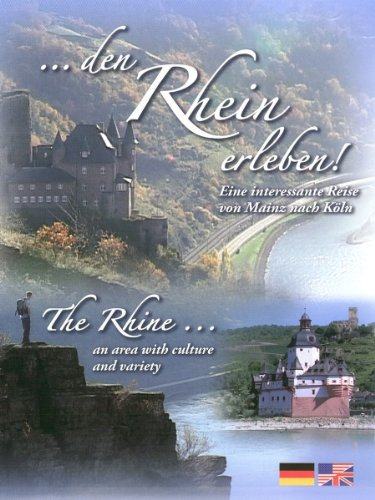
The camera, half-submerged in Rhine water, opens its glass eye to a cathedral of light: sun shafts pierce the current, refract against quartz grains, and dapple the hull of a vine-painted barge drifting past Kaub’s toll castle. Already you sense this is no postcard montage but a living codex whose ink is Riesling must and whose parchment is slate.
Director—let’s call him the anonymous archivist of terroir—rejects drone-smooth omniscience in favor of tactile anthropomorphism. Lenses perspire inside wine cellars where the air itself seems to ferment; microphones nestle so close to cobblestones they capture the groan of centuries each time a leather sole lands. The result intoxicates like a 1976 Auslese: golden yet electric, honeyed yet laced with a sulfur crackle that warns of volcanoes slumbering under the valley.
Medieval fortresses appear not as museum relics but as brooding dramaturgs. Marksburg, untouched by French artillery, glowers down like a stage manager ensuring every vintner and glassblower hits their cue. Burg Rheinstein, restored by Romantic princes, preens in ivy mascara, whispering verses to passing riverboats. Between these sentinels, the river itself becomes protagonist—its depth a plot twist, its surface a mirror that refuses flattery.
There is no conventional narrator; instead, voices emerge the way mist does at dawn. A cooper taps a cask: the knock translates, via subtitle, into a haiku about time’s elliptical gait. A grape picker hums a 14th-century carillon; the tune drifts across terraces until it collides with the electronic throb of a youth raft race near Rüdesheim. The collision is left unresolved—an audio jump-cut that honors the valley’s refusal to fossilize.
Color grading oscillates between Caravaggio chiaroscuro and psychedelic Fanta-orange. One dusk sequence in Bacharach renders half-timbered houses as ember grids while the sky above erupts into a potassium-purple bloom. You half expect a starship to descend behind Wernerkapelle’s Gothic ruins, yet the only UFO is a slow-moving hotel ship whose portholes flicker with candlelit waltzes.
Editing rhythms mimic river hydraulics: languid meanders followed by cataract cuts. A three-second shot of a woman’s hand brushing catkins is interspliced with a 0.3-second flash of a Roman sandal unearthed during vineyard expansion. The montage feels synaptic—like memory itself—where the taste of slate-born Riesling can trigger 2,000-year-old legionary footprints.
Sound design deserves oenological vocabulary: it has mineral verve. Church bells toll from both banks, arriving at the ear with a binaural lag that re-creates the width of the valley. In the Saarburger Antoniuskapelle, the organ’s lowest pipe vibrates at 16 Hz—below human hearing—yet your diaphragm registers it, much like subterranean quartz conducts Rhine temperature to vine roots.
Cultural layering rivals palimpsests found in Das rosa Pantöffelchen, yet whereas that film erases and redraws gender archetypes, Impressioni del Reno superimposes epochs without cancellation. You see 1930s Expressionist shadows creep across a Romanesque cloister while a 2020s Instagram couple in LED sneakers photo-bombs the frame. The coexistence feels truer than any sanitized heritage reel.
One midnight sequence in Oberwesel pierces the safety of travelogue conventions. The camera follows a vintner who descends into a lava-lit tunnel built by National Socialists for submarine engine storage. He stops beside a rusted drum, taps it, and the metallic resonance transmutes—via post-production reverb—into the chant of 12th-century pilgrims. History here is not linear but liquified, able to seep through any containment vessel.
Compare this to the deterministic plot coils of When Fate Leads Trump, where characters march toward pre-orchestrated humiliation. The Rhine film prefers quantum ambiguity: every lock gate opens onto parallel universes—one where the vineyard is devoured by phylloxera, another where the same parcel births a 300-year Trockenbeerenauslese miracle.
Women’s labor, so often cropped from wine lore, receives chiaroscuro dignity. In a Kiedrich abbey, a barber-surgeon’s daughter from 1349 passes a pruning knife to a modern Kellermeisterin via match-cut. The iron blade never leaves the frame, suggesting knowledge transfusion rather than replacement. Their shared gaze through 700 years lasts 1.5 seconds—feminist historiography condensed into a blink.
Children appear as trickster choruses. In a Mainz backyard, kids transpose street-marking chalk into faux-heraldic frescoes, crowning a cardboard box Burg Neef—a castle that never existed. Their play satirizes heritage branding while simultaneously expanding it; fantasy becomes an additional soil layer where future Riesling may root.
Religious iconography mutates into pagan chromatics. The robe of the Kölner Dreikönigsschrein glints with lapis and ruby, yet the film’s grade tempers those jewels toward turmeric and indigo—colors tied to harvest and twilight. You sense Cologne’s cathedral chapter would sue for chromatic heresy, yet the shift insists that sacredness resides in pigment’s origin (lapis mines, madder roots) rather than ecclesial decree.
Pacing, at 127 minutes, risks epic bloat—a sin punished by streaming audiences who swipe after 8 seconds. But the director inserts micro-cliffhangers: a barrel hoop rolling downhill, a kestrel stooping toward a vineyard mouse, a fermenting tank’s pressure valve trembling. Each micro-narrative resolves in under ten seconds, feeding dopamine while macro-narrative breathes.
Unlike the procedural determinism of The Spy or the marital algorithm in Assigned to His Wife, this documentary trusts the viewer’s sensorial intelligence. You are not fed conflict; you inhale tension between sweetness and acidity, between river calm and the knowledge that upstream glaciers are retreating.
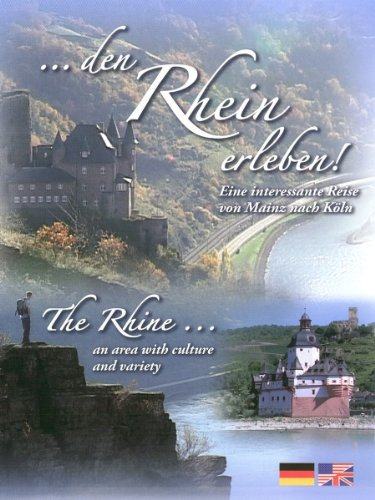
Climate grief surfaces obliquely. A drone shot ascending the Ahr tributary reveals 2021 flood scars—polished boulders tossed like Spielberg’s velociraptor playthings. The camera hovers until a solitary apple tree, roots exposed, clings to a new shoreline. No voice-over editorializes; instead the soundtrack’s heartbeat slows to 45 bpm, approximating torpor. You confront anthropocene aftermath without sermon.
Language itself becomes topography. Subtitle typography bends: Alsatian dialect phrases arc like river meanders, while Swiss Alemannic words stack vertically like vineyard terraces. Multilingual puns—Reben/rêves (vines/dreams)—flash in mustard-yellow, then dissolve into water ripples. Reading becomes archaeology; you unearth meaning by following textual strata.
Historical cameos sparkle: Byron’s handwritten Childe Harold margin—“I live not in myself”—materializes via ultraviolet fluorescence inside a Heidelberg library. Victor Hugo’s 1840s sketch of the Pfalzgrafenstein duck-shaped castle is superimposed onto present-day barge traffic, the inked turrets aligning with steel containers. Literature is treated as sediment, not pedestal.
The score, composed by the obscure Ensemble Silex, fuses glass-harmonica overtones with field recordings of lock gears. Movements follow the Rheingau’s microclimate: during a Spätlese harvest, pizzicato violin mimics grape plopping into baskets; when fog cloaks the Riesling slopes, sub-contrabass flute drops to 20 Hz, coaxing goosebumps rivaling The Tyranny of the Mad Czar’s dread brass.
Marketing departments will label this slow cinema, yet the film pulses with hedonistic immediacy. A sommelier’s slurp during a tasting is amplified so intimately you hear saliva viscosity change as air mixes with wine, aural equivalent of ASMR orgasm. Your mirror neurons spark, mouth watering, even if you swore off Riesling years ago after one too many treacly supermarket bottles.
Economics intrude only through texture: the tactile difference between hand-blown Zalto crystal and the thick green Bembel jug used for Apfelwein. The camera lingers on thumb smudges left on a tasting glass, refracting chandelier sparks like minor constellations. Consumer critique smuggled via sensuous detail—far cleverer than didactic Marxist voice-over.
Gender-fluid fashion blooms in Mainz carnival: a vintner dons a mauve crinoline paired with steel-toe boots, echoing both The Lure’s mermaid seduction and the ironclad pragmatism of river dockworkers. The film refuses to pin identity to terroir; instead it proposes terroir as performance, soil as runway.
Horror aficionados may snicker at the lack of jump scares, yet dread pools in negative spaces. A lock chamber empties; barnacles on concrete resemble ossified roses. The descending water level exposes graffiti: 2012 Kilroy woz here. The banal tag, suddenly high and dry like a beached jellyfish, whispers mortality more keenly than any chainsaw.
Cinephiles will recall Herzog’s Fata Morgana or even the industrial sublime of Temblor de 1911 en México, yet the Rhine film trades existential angst for convivial astonishment. It believes landscapes and humans can still astonish each other, a stance both retro and utopian.
Accessibility? Minimal: no explanatory graphics for first-time viewers who can’t tell Bacchus from Riesling. Yet the sensorial grammar is universal; a child could read the joy in a vintner’s eyebrow lift when 2020 Eisweiser must hits 180 °Oechsle. The film democratizes connoisseurship through synesthesia.
Archival footage—Koblenz, 1928, children steering stick-boats beneath Deutsches Eck—interlaces with 4K drone shots so crisp you spot every fissure in basalt. The temporal braid tightens until past and present feel like simultaneous exposures on one photographic plate.
Running jokes emerge: every time a castle appears, a distant cowbell answers, irrespective of bovine presence. By the ninth occurrence, the bell becomes a comedic Wilhelm-scream, a meta-gag mocking the inevitability of picturesque cliché yet embracing it with affectionate wink.
The final ten-minute single-take dusk shot—handheld from a river ferry—ranks among 21st-century cinema’s bravura sequences. Twilight bruises into indigo, barges switch on sodium lamps, and a guitarist on deck strays into La Paloma. People lean over rails, faces half-lit, half-eclipsed, while the riverbank’s vineyards dissolve into silhouettes. No cut interrupts; time dilates until you forget the screen’s rectangle, until you feel night air on your own skin.
End credits roll over black-and-white infrared imagery: vine leaves glowing white like neuronal clusters, river coursing like spinal fluid. You exit the theater—or laptop—buzzing, synapses rearranged, nose hallucinating petrichor of slate and Riesling.
Impressioni del Reno is not content to sell wanderlust; it stages a full-sensory transmutation. You will taste acidity in your dreams, hear cowbells in subway clatter, and when you finally visit the Rhine, you’ll swear the river has adopted the film’s color palette, its cadence, its conviction that geography is biography written in liquid.
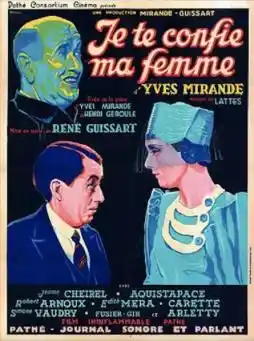
IMDb —
1933
Community
Log in to comment.