DbcultAccessing Vault...
Cult Review
Senior Film Conservator
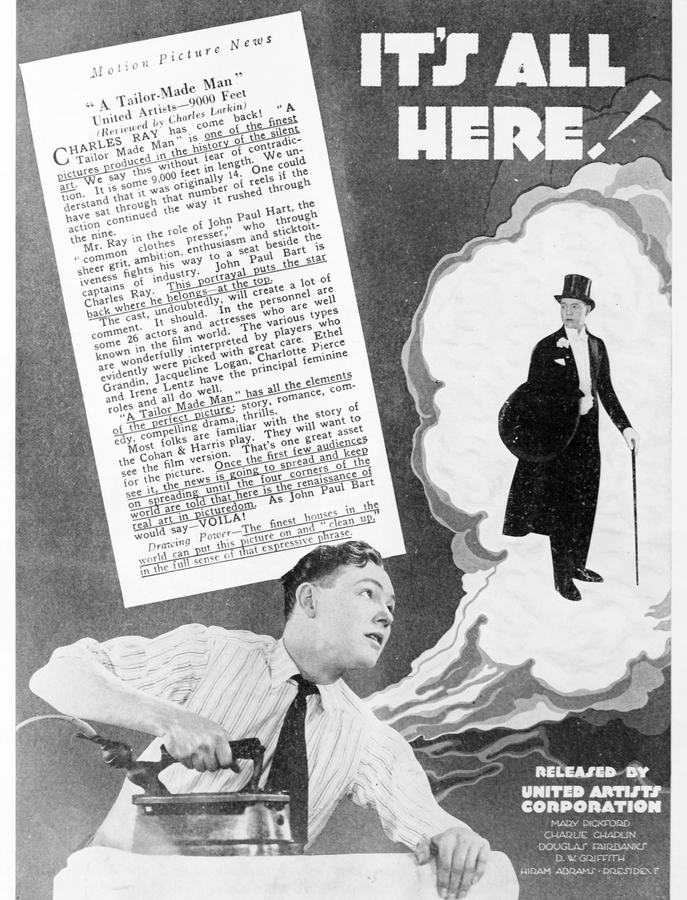
In the flicker of 1922 nitrate, A Tailor-Made Man drapes itself across the screen like a perfectly cut bolt of midnight wool: deceptively smooth, impossibly reflective, and hiding a thousand loose ends. The film’s central conceit—an unassuming presser who steps into the skin of privilege via stolen worsted—is less a narrative hook than a philosophical gauntlet hurled at the feet of an America busy mythologizing self-invention while clinging to the silk lining of inherited hierarchy.
Director Frederick A. Thomson (never a household name, always a visual tactician) shoots the opening sweatshop scenes in chiaroscuro so thick you can almost smell scorched linen. Press flat-irons hiss like gossip, and every vapor wisp foreshadows the protagonist’s imminent evaporation from his caste. John Paul Bart—played with deft physical wit by Charles Ray, the silent era’s poet of striver vulnerability—doesn’t merely covet the jacket; he genuflects before it as if it were ecclesiastical armor. When he finally lifts the garment from its mahogany hanger, the camera tilts upward in a brief, vertiginous swoon: a visual confession that identity itself is vertical.
Nathan’s chandeliered ballroom, by contrast, is an ice-cream avalanche of whites and pearls, each frame over-exposed just enough to bleach moral nuance out of the marble. Here, status is not worn but refracted; every tiara and cummerband ricochets photons into the retina until reticence itself is blinded. Bart’s borrowed suit—oxblood cashmere with satin lapels—glows like ember against this pallor, a chromatic assertion that the American dream is really just convincing lighting.
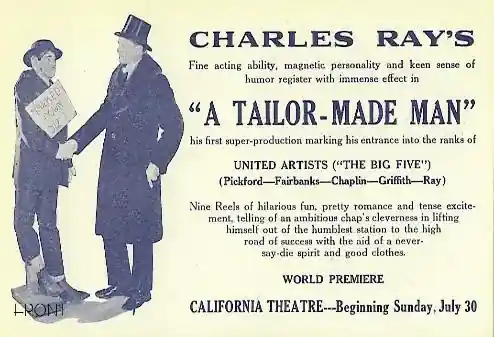
Once installed as labor liaison, Bart’s task is to pacify stevedores who distrust tycoons in top hats. The film’s middle reels pivot on a delicious irony: our hero’s legitimacy derives from apparel, yet his success hinges on exposing the very garment industry’s wage theft. In one smoky sequence, he negotiates between cigar-chewing foremen and a seething union delegate while jacket buttons strain across a chest suddenly heaving with unaccustomed authority. The irony is pure Fitzgerald: the outsider achieves insider status only to discover insiders are bankrupt.
Screenwriter Harry James Smith—a boulevardier who once translated Molnár—threads Pygmalion DNA into this Horatio Alger tale. Bart’s elocution lessons occur off-camera, but the evidence arrives when he silences a gaggle of stockholders by invoking “the moral economy of cloth.” The phrase lands like a brick in a pond; ripple effects travel through gilt-edged portfolios, and for a moment the movie dares to believe rhetoric can outweigh lineage. Alas, the dénouement reminds us that even bespoke eloquence can be repossessed.
William Parke Jr. essays Gustavus Sonntag with the feline languor of one who savors villainy the way oenophiles swirl Bordeaux. He doesn’t snarl; he exhales malice through a perpetual half-smile, the corners of his mustache weighted with cynicism. His exposé of Bart’s proletarian roots arrives not via thunderbolt but whispered innuendo during a foxtrot—the social equivalent of slipping razor blades inside valentines. The revelation sequence, cross-cut with Tanya Huber’s dawning horror, is a master-class in montage economy: three shots, two heartbreaks, one unforgiving spotlight.
Yet the film refuses to demonize Sonntag entirely; his final glare at Bart carries as much envy as vengeance, suggesting class treason wounds both traitor and gatekeeper. In that glance, one senses the pre-Code willingness to complicate sin before the Hays scythe sterilized Hollywood into moral binaries.
Jacqueline Logan—all Boticelli curls and watchful poise—embodies Tanya as someone who has spent life surrounded by measuring tapes yet refuses to be measured. Her courtship with Bart occurs amid bolts of serge and snippets of gabardine, courtship by textile. In a sublime insert, she pins a carnation to his borrowed lapel; the flower’s crimson exactly matches the suit’s buttonhole stitching, a chromatic vow that what is tailored can also be true.
When Bart is unmasked, Tanya’s reaction is not shock but recognition: she always intuited the hand beneath the glove. Their reunion inside Anton Huber’s cramped atelier—sunlight slicing through dust motes like divine interrogation—plays less like melodrama than sacrament. She sews the torn sleeve of his erstwhile armor while he confesses; the needle’s rhythmic pierce becomes contrition’s metronome.
Cinematographer Gus Peterson (unjustly forgotten outside archive circles) employs a traveling matte technique to superimpose dockworkers’ silhouettes against billowing sails, collapsing labor into iconography. Meanwhile, interior scenes favor low-key lighting that carves cheekbones out of darkness; faces emerge as living cameos. Notice how Bart’s first boardroom speech begins in medium shot, then incrementally lowers the key light until only his eyes float, disembodied orbs of persuasion. The visual arc literalizes his ascent: from whole garment to pure essence.
The film’s palette survives in a tinted 35 mm print at MoMA, amber for interiors, cerulean for exteriors, evoking the two realms between which Bart shuttles. Such chromatic coding predates the expressionist leitmotifs of Der siebente Tag yet feels organic rather academic.
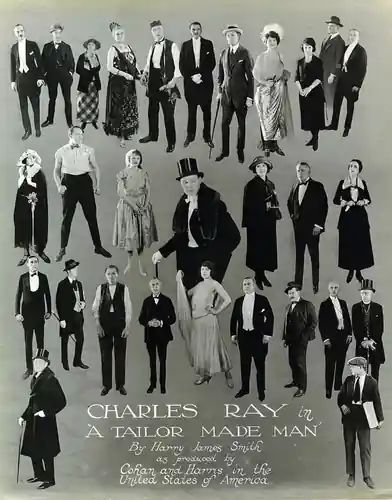
Ray’s physical vocabulary marries Chaplin’s balletic deference with Keaton’s engineer’s eye; watch how he tests a chair’s sturdiness before sitting among nabobs—one finger, two, then full weight, as though calculating tensile strength of social fabric. Opposite him, Frederick Sullivan’s Nathan oscillates between Caesar and weary father, voiceless yet vociferous through brow alone. In the silent medium, such micro-acting becomes symphonic.
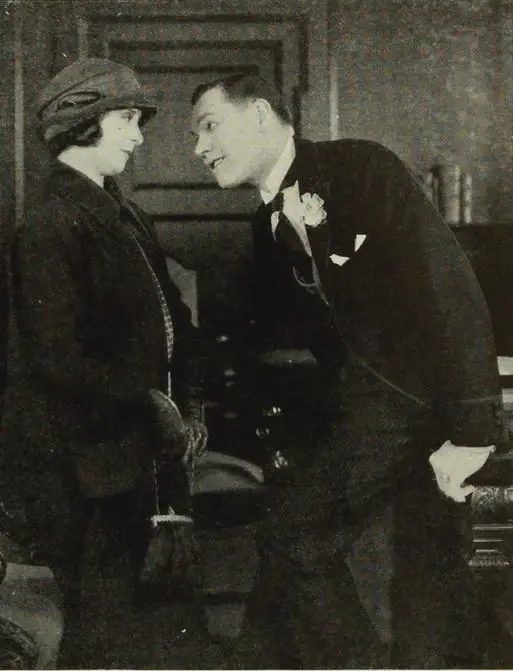
The ensemble’s crowning moment arrives during a strike-vote scene: a sea of bobbing heads filmed from a vertiginous balcony, the frame crowded yet every extra granted individuated rage or resignation. Thomson blocks it like a Renaissance fresco where perspective converges on Bart’s panicked resolve.
Cinephiles will detect DNA shared with The Law of the North’s outsider protagonist, though that film swaps fabric for fur. Conversely, The Wolf Woman dissects feminine camouflage whereas Tailor interrogates masculine masquerade; together they form a diptych on Jazz Age costumery as battleground.
Less direct, yet spiritually resonant, is Vengeance Is Mine’s meditation on identity theft, though that narrative punishes subterfuge with madness while Tailor countenances redemption—an optimism that feels almost prelapsarian when viewed through Depression-era hindsight.
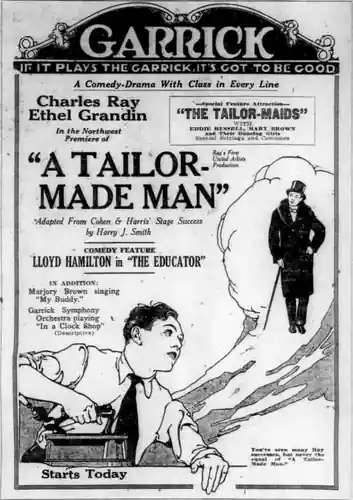
Clocking in at six reels, the picture glides on inter-titles that eschew Victorian loquacity for staccato wit. Example: “Clothes make the man—until the man unmakes the clothes.” Such economy keeps the narrative sprinting; exposition arrives via epigram, plot via ellipsis. One could argue the climax—Bart’s unmasking—occurs too early, yet the final act’s languorous re-stitching of relationships mirrors the bespoke process itself: multiple fittings, inevitable recuts.
Though originally accompanied by improvised house piano, restoration festivals have paired the print with Philippe Jakko’s 2019 suite for string quartet and brushed snare. Jakko’s waltz motifs quote “Button Up Your Overcoat” in minor key, turning jaunty reassurance into hiccupped anxiety—exactly the tension Bart experiences each time a compliment lands on counterfeit lapels.
Post-WWI labor unrest haunts the screenplay; the 1919 steel strike still smolders in American memory, and the script’s dockyard agitation reads as urban parable. Yet the picture also anticipates the coming decade’s fashion mania: ready-to-wear begins to eclipse custom tailoring, making Bart’s talents as obsolete as his morality is progressive. Thus the film mourns a craft while celebrating its transcendence, a dialectic as neatly turned as a French seam.
Swap the suit for a verified social-media profile and Bart’s arc becomes every influencer curating borrowed glamour. The movie’s thesis—that perception, once curated, accrues compound interest—feels ripped from today’s branding seminars. Yet unlike our era’s algorithmic gatekeepers, the film insists on moral ledgers balancing in real time, a quaint belief that nevertheless lands as corrective.
The portrayal of immigrant dockhands flirts with caricature, leaning on bowler-hatted Italians and kerchiefed Irish matrons. While perhaps progressive for 1922, these brushstrokes now read as tokenism. Similarly, the ease with which corporate behemoth Nathan absolves Bart feels expedient; a modern script would demand systemic contrition, not paternal fiat.
Yet quibbles evaporate like steam from Bart’s iron when weighed against the film’s exuberant humanism. A Tailor-Made Man believes not merely that anyone can be refashioned, but that society itself is bolt cloth awaiting ethical recutting. In an age when algorithms size us for digital straitjackets, the movie’s insistence on hand-stitched empathy feels utopian—and therefore necessary.
Seek it out at archival festivals; demand percussion-free screenings if possible, letting the visual semaphore speak. Bring a date who appreciates sartorial puns. Exit humming the unsung melody of second chances, lapels fluttering like flags of unfinalized identity. And remember: every garment eventually reveals the wearer; only character keeps the seams intact.
Rating on a four-button scale: 3½—a half-button deducted for historical myopia, but the remaining trio fastens securely across a century’s girth.
IMDb 5.9
1933
Community
Log in to comment.