Divine Wrath as Cinematic Revelation
G. Mohanial Dave's Narasinha Avtar doesn't merely adapt Puranic lore; it ignites the screen with primal theological theater. Every frame thrums with the tension between sacrilege and salvation, visualized through Trymbakrao Pradhan's tyrannical Hiranyakashyapu – a performance swelling with hubris so palpable you can taste the metallic tang of impending divine retribution. His physicality dominates early reels: shoulders thrust back like fortress ramparts, eyes burning with the cold fire of absolute power. When he smashes idols of Vishnu in his court, shards scattering like brittle stars, the violation feels visceral. This isn't cartoonish villainy but the terrifying spectacle of nihilistic sovereignty, echoing the moral vacuums in The Blacklist's most chilling profiteers.
Liminal Spaces as Sacred Geometry
The film’s genius resides in its architectural symbology. Hiranyakashyapu’s palace becomes a character – pillars stretching like petrified giants, courtyards swallowing light, thresholds oozing metaphysical significance. Dave’s script meticulously maps the boon’s loopholes onto physical space: neither indoors nor outdoors (courtyard), not during day or night (dusk), no weapon made by man (claws). When Vijay’s ethereal Prahlad presses his cheek against a pillar whispering hymns, the stone seems to pulse with latent energy. This anticipation-building mirrors the suffocating dread in Das Phantom der Oper's shadowed opera house, yet transcends gothic horror for cosmic inevitability.
The Unbearable Lightness of Becoming
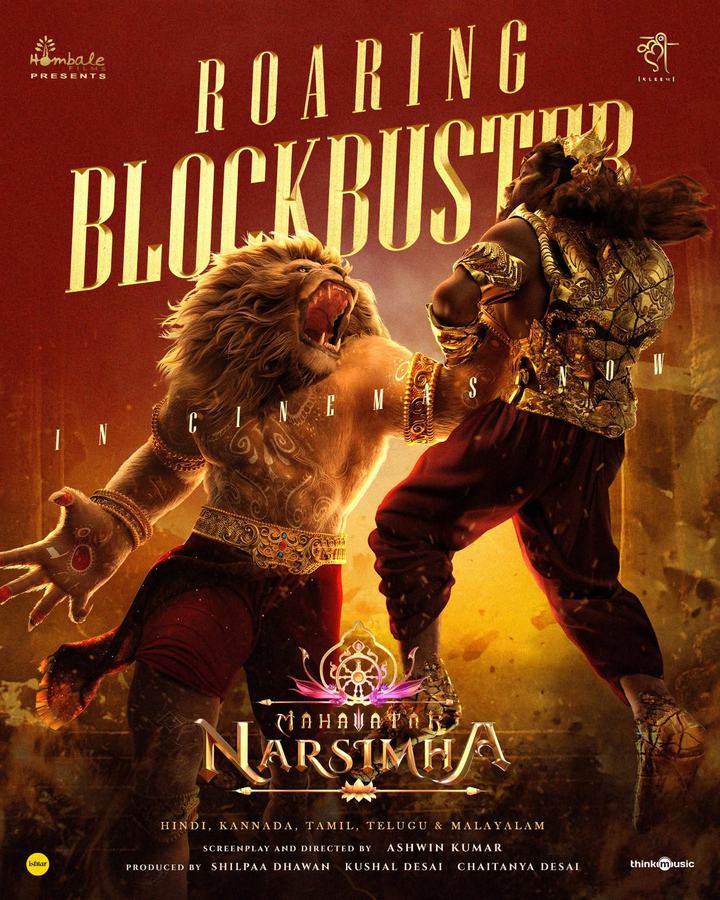
The avatar’s emergence remains Indian cinema’s most astonishing metamorphosis sequence. No digital trickery here – practical effects sculpt a being of wet clay and matted fur, vertebrae cracking like falling mountains as the form unfolds. Half-lion, half-man, yet wholly Other. Cinematographer unknown (a tragic archival gap) employs Dutch angles and shuddering close-ups on the emerging claws, each talon dripping primordial ooze. The ensuing carnage isn’t gratuitous but liturgical – a sacred violence recalling the moral fury in Betrayed yet elevated to cosmic scale. Limaye’s Queen Kayadhu watches, not with horror but devastating recognition: the universe rebalancing through evisceration.
The Silence After the Roar
Post-climax, the film achieves profound grace. Narasimha’s rampage ceases abruptly when Prahlad approaches. The beast’s matted fur retracts like receding tide pools, revealing eyes holding galaxies. This transition – from fury to tenderness – showcases Pradhan’s extraordinary range. As the demon king’s guts steam on marble, his final expression isn’t pain but shattered disbelief: the collapse of a godless ontology. The subsequent darshan scene bathes Narasimha in halation so intense it bleaches the celluloid, evoking the transcendent finales of Tigre Reale, yet rooted in bhakti poetry’s ecstatic surrender.
Textile as Theology
Costume design functions as hieroglyphic narrative. Hiranyakashyapu’s armor incorporates fossilized scales and jagged metallic plates, suggesting reptilian immortality. Contrast this with Prahlad’s unbleached cotton, absorbing light like a sponge. Most startling is Narasimha’s hybridity: shredded royal silks clinging to the leonine haunches, sacred thread snarled in the mane. This sartorial collision visualizes the avatar’s ontological paradox – simultaneously destroying and upholding cosmic order. When Narasimha places his clawed hand on Prahlad’s head, the fabric of the boy’s shoulder cloth seems to shimmer with latent lotuses.
Echoes Across the Cinematic Firmament
Dave’s narrative economy rivals the taut psychodramas of Love and Hate, compressing epochal conflict into human-scale intimacy. The paternal betrayal theme resonates with The Girl in His House’s familial fractures, yet escalates into metaphysical warfare. Heera Limaye’s Kayadhu offers a fascinating counterpoint to heroines in The Fair Pretender – her loyalty isn’t romantic but dharma-driven, silently weaving protection charms while courtiers conspire. Vijay’s Prahlad avoids cloying piety; his defiance manifests as terrifying stillness, eyes holding storms like The Stainless Barrier’s stoic protagonists.
Sonic Cosmology
The soundtrack deserves doctorate-level analysis. Pre-avatar sequences employ atonal tantric drones – conch shells blown without mouthpieces, bowed sarangis missing strings. Hiranyakashyapu’s speeches echo with artificial reverb, amplifying his solipsism. Then silence. Utter, suffocating silence as the pillar cracks. Narasimha’s roar isn’t layered lion samples but a monstrous fusion of temple bell harmonics and tearing silk. This sonic design predates avant-garde experiments by decades, suggesting Dave understood sound as vibrational theology. The subsequent slaying plays against a mridangam’s frantic heartbeat, syncing audience pulses to cosmic rhythm.
The Weight of Ephemera
Modern viewers must grapple with the film’s tragic incompleteness. Of the original 140-minute runtime, only 78 minutes survive, preserved on volatile nitrate stock. The missing sequences – particularly Hiranyakashyapu’s tapasya to earn his boon – haunt the archive. Yet this fragmentation inadvertently mirrors the avatar’s own liminal nature. What remains feels like excavated scripture: flashes of transcendent light on decaying emulsion. The courtyard’s marble floor, slick with otherworldly viscera in the climax, seems to dissolve into celluloid grain, reminding us that all physicality is illusion. This maya becomes the film’s ultimate thesis – a concept explored with less philosophical rigor in Strange Sights in the Pacific Islands.
Prahlad’s Gaze: The Audience’s Portal
Vijay’s performance anchors the metaphysical spectacle. His eyes – wide, unblinking – become the film’s moral compass. When tortured with venomous snakes, his pupils dilate not in fear but devotional ecstasy. During Narasimha’s rampage, the camera lingers on his face: serene amid dismembered guards. This isn’t passivity but radical witness, paralleling the audience’s own confrontation with divine violence. His final touch upon the avatar’s muzzle (a practical effect of heated resin and yak hair) radiates such tenderness it retroactively sanctifies the carnage. Dave suggests that true devotion requires beholding the unbearable – a theme later trivialized in Hypocrisy’s moral simplifications.
Legacy in the Digital Age
Restoration efforts face ethical quandaries. Should digital tools “complete” the fragmented third act? Does algorithmic interpolation honor Dave’s vision? These debates mirror Prahlad’s dilemma: when does intervention become sacrilege? The existing print, scanned at 4K resolution, reveals astonishing details: individual hairs on Narasimha’s forearm trembling with divine current, the fractal patterns in spilled intestines reflecting studio lights. Such granularity forces reevaluation of early Indian cinema’s technical sophistication – lightyears beyond the colonial exoticism of The Land of the Lost. Dave employed shadow play techniques anticipating film noir, bathing conspirators in liquid darkness while Prahlad glows with internal luminescence.
Blood as Sacred Calligraphy
The climactic evisceration remains controversial. Shot in agonizing slow motion, entrails unfurl like crimson temple banners. This isn't exploitation cinema but visceral theology – the demon’s spilled organs forming accidental yantras on marble. Pradhan’s dying tremors mimic classical dance mudras, his last breath shaping the syllable “Rūm”. The scene parallels the psychosexual violence of Der siebente Kuß, yet transcends eroticism for cosmic realignment. When Narasimha wipes his claws on a palace tapestry, the smear mirrors abstract expressionism, suggesting divine artistry in destruction.
The Paradox of Containment
How does one cage infinity? Dave’s solution lies in negative space. After the slaying, Narasimha paces the courtyard’s perimeter, his form bleeding luminosity at the edges. Cinematography boxes him within pillars, archways, and finally – most brilliantly – within Prahlad’s embrace. The boy’s arms circumscribe the infinite, reducing cosmic fury to paternal tenderness. This visual metaphor extends to the film itself: compressing unfathomable theology into 78 combustible minutes. Unlike the sentimental resolutions of The Squatter and the Clown, this embrace offers no easy comfort. Narasimha’s eyes, moments before dissolving, hold terrifying knowledge: that divinity’s duty is eternal recurrence. Justice is a pillar that will crack again.
Decades later, Narasinha Avtar remains a singularity. Its survival feels miraculous – a fragile celluloid vessel containing the uncontainable. To watch it is to stand with Prahlad in that ravaged courtyard: trembling, exalted, forever changed by the beautiful terror of righteousness unleashed. The stains on the marble aren’t just blood; they’re the indelible ink of myth becoming manifest. Every frame whispers the uncomfortable truth: sometimes salvation wears fangs.