DbcultAccessing Vault...
Cult Review
Senior Film Conservator
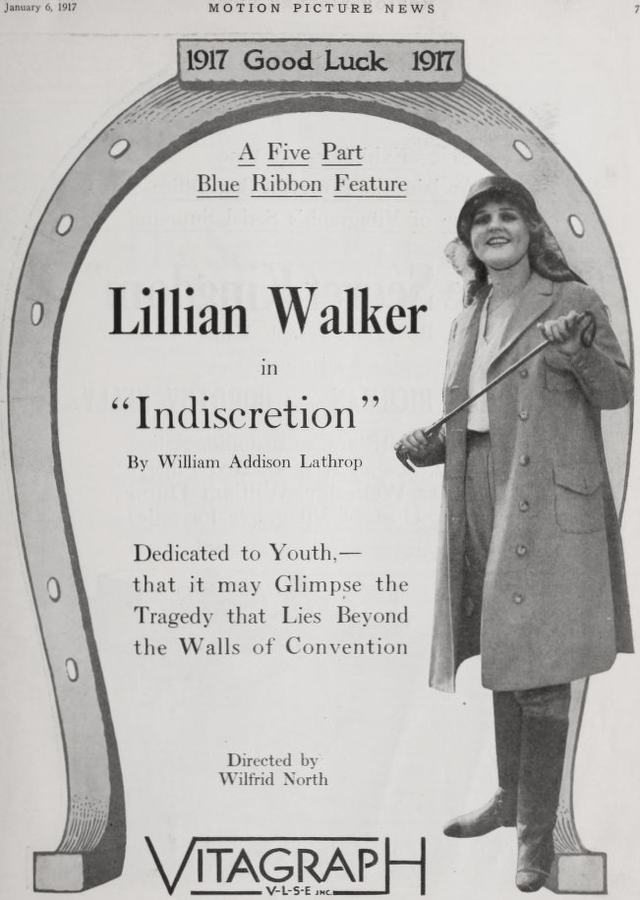
William Addison Lathrop’s Indiscretion arrives like a tarnished locket fished from a Connecticut river, its hinges crusted but the miniature portrait within startlingly alive. Viewed today, the film feels less a relic than a prophecy: every frame murmurs that America’s eternal tango between puritan dread and libertine hunger predates flappers, hashtags, and TMZ. The plot—ostensibly a cautionary tale about a headstrong girl who nearly becomes the other woman—is actually a cracked mirror held up to 1917’s jittery conscience: fathers who hide in scholarship instead of parenting; mothers who barter their sons for social leverage; detectives commodifying intimacy; wives weaponizing divorce statutes freshly sharpened by progressive legislatures.
Cinematographer Thomas R. Mills shoots the Holloway estate in wide tableaux that swallow Penelope’s tiny silhouette against Doric columns and dying elms, forecasting how the ancien régime will devour its daughters. When the action shifts to the boarding school, the aspect ratio seems to tighten like whalebone: windows become proscenium arches through which teachers peer like ex-officio Fates. Later, the road-house sequence explodes into chiaroscuro—headlights stabbing darkness, cigarette tips flaring like comets—anticipating the moral free-fire zones of film noir by a quarter-century.
Lillian Walker’s Penelope refuses the era’s default virginal vapidity; her laughter is too loud, her stride too long, her gaze a dare rather than a downcast plea. Watch the micro-moment when she first registers Rivers’ marital status: pupils dilate, nostrils flare, then the smile re-sets—a silent acknowledgement that danger is the only spice left on an otherwise bland plate. Opposite her, Robert Gaillard lends Rivers a lounge-lizard magnetism that never tips into moustache-twirling; his predation is managerial, the same instinct that will later run advertising agencies and Hollywood casting couches.
As Jimmy, Walter McGrail carries the thankless role of generic good-guy, yet inflects it with a stammering impatience—he wants to be her savior but fears becoming her jailer. Their final clinch is filmed in medium-shot, hands hesitating before interlocking, as if the couple must first forgive themselves for the sin of almost believing the gossip.
Lathrop’s intertitles oscillate between Edith Wharton-ish irony and tabloid yank. One card reads: “A Sabbath broken—like china mended with gold, more valuable for the fracture.” Another, during the road-house raid, snaps: “Virtue on hire @ $8 a day plus overtime.” The tonal whiplash keeps the narrative from calcifying into moral fable; instead it feels like a live newspaper being crumpled and re-inked while you read.
The film’s true chess masters are the women. Mrs. Travers (Mrs. West) brokers Penelope’s future like a Wall Street operator bundling risk. Mrs. Rivers (Katharine Lewis) wields divorce law as both sword and shield, her detectives an early incarnation of the surveillance economy. Even the boarding-school principal commodifies respectability, selling enrollment as a dowry substitute. Penelope’s crime is not flirtation but opting out of this marketplace—she desires sensation, not security, and that appetite terrifies the cartel of matrons who manage the social ledger.
Though originally accompanied by live house orchestras, modern restorations often pair the picture with a pastiche of early jazz 78s. The dissonance is revelatory: a jaunty Original Dixieland Jass Band record undercuts Penelope’s humiliation at the road-house, while a stark Erik Satie gymnopédie during her father’s funeral amplifies the hollow clang of an unanswered prayer. The tonal friction reminds us that the 1910s themselves were a mash-up: Victorian corsets yanked across the hips of a ragtime future.
Place Indiscretion beside Unjustly Accused (1916) and you see parallel heroines railroaded by rumor mills; swap in Notorious Gallagher for male counterparts who weaponize charm. The difference is that Penelope refuses the martyr’s mantle; she negotiates her own absolution, whereas Gallagher’s heroics hinge on courtroom pyrotechnics. Meanwhile, The Painted World offers an Expressionist nightmare of female identity; Indiscretion stays earthbound, its horrors bureaucratic rather than phantasmagoric.
The film vanished for decades, resurfacing in a 2018 Bologna archive nitrate auction—an incomplete Dutch print, Dutch intertitles translated back into flapper American. That patched version now streams on boutique platforms where thumbnail surfers, lured by keywords “pre-Code scandal,” discover a curio that anticipates everything from Rebecca (1940) to the influencer apology videos of TikTok. Its DNA persists: the surveillance photo, the scandalous road-house, the PR rehab tour.
Watch Penelope kneel before Mrs. Rivers and you feel the full medieval torque of slut-shaming centuries old yet algorithm fresh. The wife’s eventual mercy lands less as absolution than as a shareholder decision: drop the suit, avoid further exposure, protect the brand. The film knows that forgiveness is often a hostile takeover, and love the only IPO where vulnerability trades at a premium.
Indiscretion is neither cautionary sermon nor feminist manifesto; it is a weather report from the front of an ongoing storm. It tells us that every era believes it has just invented desire, scandal, and redemption—yet the template was etched in celluloid a century ago, waiting for fresh fingerprints. Stream it late at night when your own indiscretions whisper for context; you may find the intertitles answering back in your own voice, slightly speed-ramped, flickering but unextinguished.
IMDb 5.5
1920
Community
Log in to comment.