DbcultAccessing Vault...
Cult Review
Senior Film Conservator
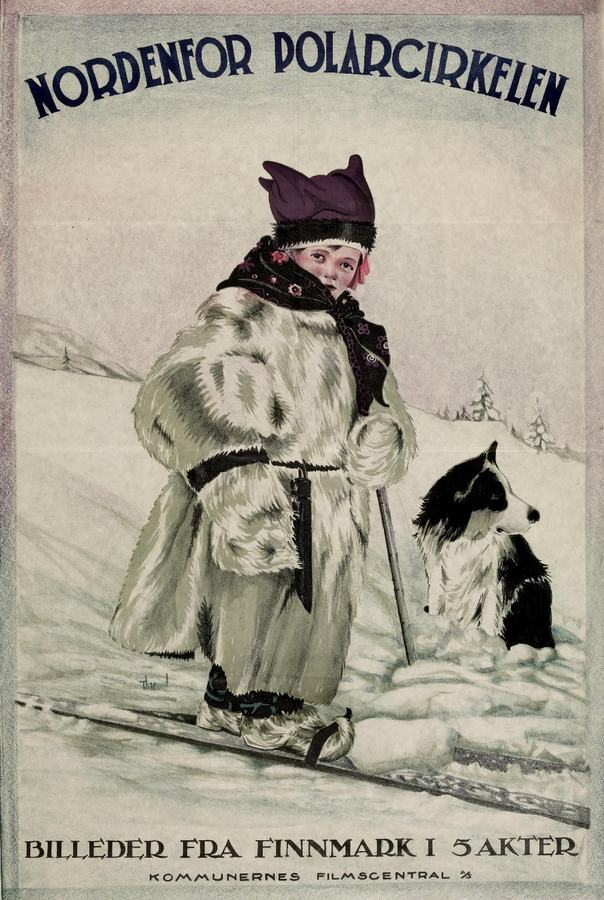
In the annals of early Scandinavian cinema, few works possess the raw, unadorned power of Nordenfor polarcirkelen. This is not merely a film; it is a temporal bridge to a world where the boundary between humanity and the elements is razor-thin. While many contemporary films of the era, such as the social satire Dabbling in Society, sought to reflect the burgeoning complexities of urban life, this documentary turns its gaze toward the primordial. It captures a reality that is both alien and deeply familiar, rooted in the fundamental struggle for sustenance and shelter.
The visual language of the film is one of stark contrasts. The cinematography utilizes the natural light of the Arctic—a light that is often harsh, flat, and unforgiving—to create a sense of immense scale. Unlike the stylized shadows of a mystery like Vidocq, the clarity here is clinical, almost surgical. We see the breath of the reindeer as a physical manifestation of life against the frozen void. The director understands that in the North, space is a character in itself. The vastness of the Finnmark plateau is rendered with a reverence that borders on the spiritual, reminding one of the thematic depth found in The Hidden Spring.
The pacing of the film reflects the inevitable march of the seasons. There is no rush here; the camera waits for the subjects. We watch the Sámi people as they move with a grace born of necessity. Every movement is calculated to conserve energy. This is a far cry from the frenetic energy of westerns like The Man from Montana or the comedic velocity of Give Her Gas. In the Arctic, speed is a luxury that few can afford, and the film honors this rhythm with a meditative editorial style.
What distinguishes Nordenfor polarcirkelen from its peers is its refusal to treat the Sámi as mere curiosities. There is a profound dignity in the way the daily chores are depicted. The milking of the reindeer, the preparation of skins, and the navigation through blinding blizzards are shown not as feats of heroism, but as the standard requirements of existence. This groundedness provides a compelling counterpoint to the more theatrical dramas of the time, such as The Seats of the Mighty or the religious allegories in La légende de soeur Béatrix.
The film functions as a historical document of immense value. It captures the Sámi before the full impact of 20th-century cultural assimilation policies had eroded their traditional structures. While films like Salvation Joan dealt with the moral salvation of the individual in the city, this work is concerned with the collective survival of a culture. The labor is communal, the struggle is shared, and the triumphs are quiet. The film captures the essence of what it means to be a part of a landscape, rather than merely an inhabitant of it.
When we compare the rugged authenticity of this documentary to the staged adventures of The Adventures of Bob and Bill, the difference in intent becomes clear. Where the latter seeks to entertain through artifice, Nordenfor polarcirkelen seeks to enlighten through observation. It possesses a grit that is absent even in the more serious dramas like Fighting Blood. There is no choreographed conflict here; the antagonist is the frost, the wind, and the sheer indifference of the natural world.
Even the more whimsical releases of the period, such as Ihre Hoheit die Tänzerin or the lighthearted Roaming Romeo, seem almost weightless when placed alongside the heavy, tactile reality of the Arctic herders. This film demands a different kind of engagement from the viewer—one that requires patience and an appreciation for the subtle shifts in the environment. It shares more DNA with the epic scope of Paradise Garden, though it swaps the lush greenery for a palette of whites, greys, and deep, oceanic blues.
One must acknowledge the sheer physical difficulty of filming in such conditions during the early 1920s. Hand-cranked cameras, temperamental film stock, and the constant threat of freezing mechanisms make the clarity of these images even more remarkable. The filmmakers were not merely observers; they were participants in the hardship. This shared experience is palpable in every frame. The film doesn't have the luxury of the high-stakes gambling themes in They're Off or the moral dilemmas of The Devil to Pay. Instead, it offers the ultimate stake: life itself.
The editing of Nordenfor polarcirkelen creates a hypnotic effect. The repetition of tasks—the packing of sleds, the guiding of the herd—builds a narrative of endurance. It is a cinematic poem dedicated to the concept of work as a defining human characteristic. The Sámi are not depicted as victims of their environment, but as its masters. They have negotiated a peace with the cold, a treaty written in reindeer bone and sinew. This level of respect for the subject matter is what elevates the film from a mere travelogue to a work of art.
To watch Nordenfor polarcirkelen today is to witness a ghost world. It is a reminder of the diversity of human experience and the incredible adaptability of our species. In an age of digital saturation, the silent, grainy footage of the Arctic tundra offers a moment of profound stillness. It invites us to consider our own relationship with the world around us. Are we as attuned to our environment as the herders on the screen? Or have we lost that connection in our pursuit of the comforts of the south?
The film remains a cornerstone of ethnographic cinema. It avoids the pitfalls of sentimentality and instead provides a robust, honest portrayal of a culture that thrives where others would perish. It is a essential viewing for anyone interested in the history of the North, the evolution of documentary film, or the enduring power of the human spirit. It stands as a silent giant, as enduring and majestic as the mountains it depicts, leaving an indelible mark on the viewer's consciousness long after the final frame has flickered out into the dark.
IMDb 5.1
1921
Community
Log in to comment.