DbcultAccessing Vault...
Cult Review
Senior Film Conservator
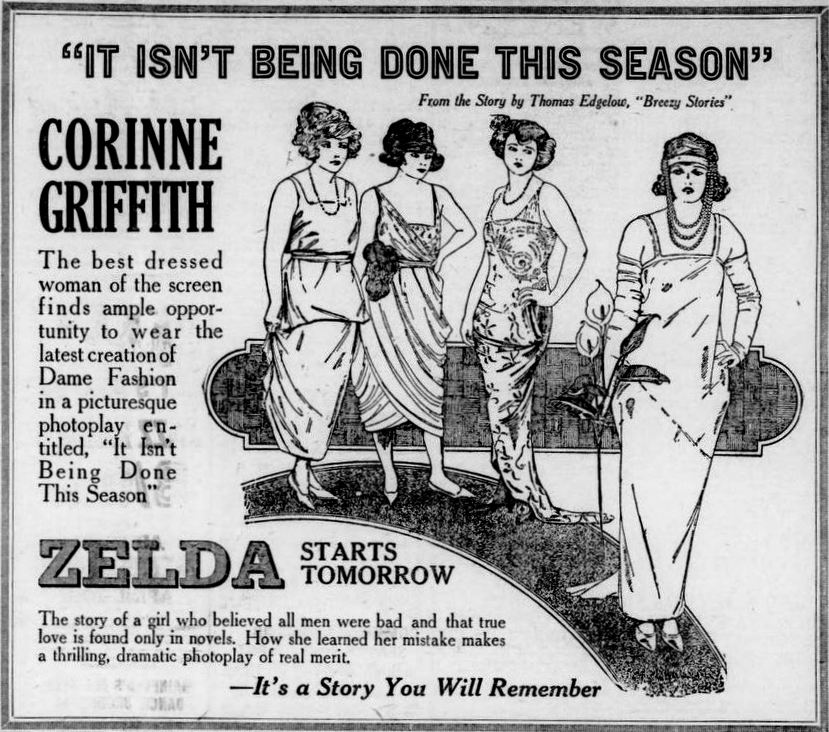
Thomas Edgelow’s script, sharpened by Harry Dittmar’s narrative precision, carves a labyrinthine path through the psyche of a woman trapped between societal obligation and carnal truth. Marcia Ventnor (Sally Crute), a model whose beauty is both her currency and her curse, embodies the duality of the flapper archetype: a creature of artifice yet possessed of visceral humanity. Her initial rejection of Oliver Lawton (Webster Campbell) isn’t merely a plot device but a searing indictment of the gendered economy of marriage. By choosing George Hunt (Charles Wellesley), an importer whose wealth reeks of colonial exploitation, Marcia becomes both architect and victim of her own disintegration.
The film’s Turkish interlude, ostensibly a backdrop for romantic tension, is a masterclass in orientalist subtext. Afeif Bey (Corinne Griffith), rendered as a sensual yet passive figure, becomes the catalyst for George Hunt’s unraveling. His jealousy, a grotesque inflation of masculine pride, is juxtaposed with Marcia’s calculated manipulation. The rug contract—literal and metaphorical—serves as a mirror, reflecting the transactional nature of all relationships in the film. Here, the orient is not a land but a condition: a space where desire is commodified and authenticity evaporates.
The film’s denouement, where Lawton’s failed murder attempt with a trick knife, is less a climax than a revelation. The weapon’s impotence—its blade a hollow threat—echoes the futility of all the characters’ machinations. Marcia’s final reconciliation with Lawton isn’t a resolution but a surrender to inevitability, a recognition that love, like wealth, is a mirror that distorts as much as it clarifies. The directors’ decision to frame this moment in stark chiaroscuro underscores the moral ambiguity: here is no triumph, only the exhaustion of all options.
Sally Crute’s portrayal of Marcia is a study in restrained volatility. Her eyes, often veiled in smoky shadows, betray a mind perpetually at war with itself. Webster Campbell’s Lawton, by contrast, is a storm of repressed emotion, his gestures too broad, his pauses too long—each a window into a soul adrift. Charles Wellesley’s Hunt is the most fascinating performance, a portrait of a man whose greed has hollowed him into a grotesque parody of respectability. Corinne Griffith’s Afeif Bey, though limited by script, adds a layer of exotic mystique that feels like a nod to the silent film stars of the era.
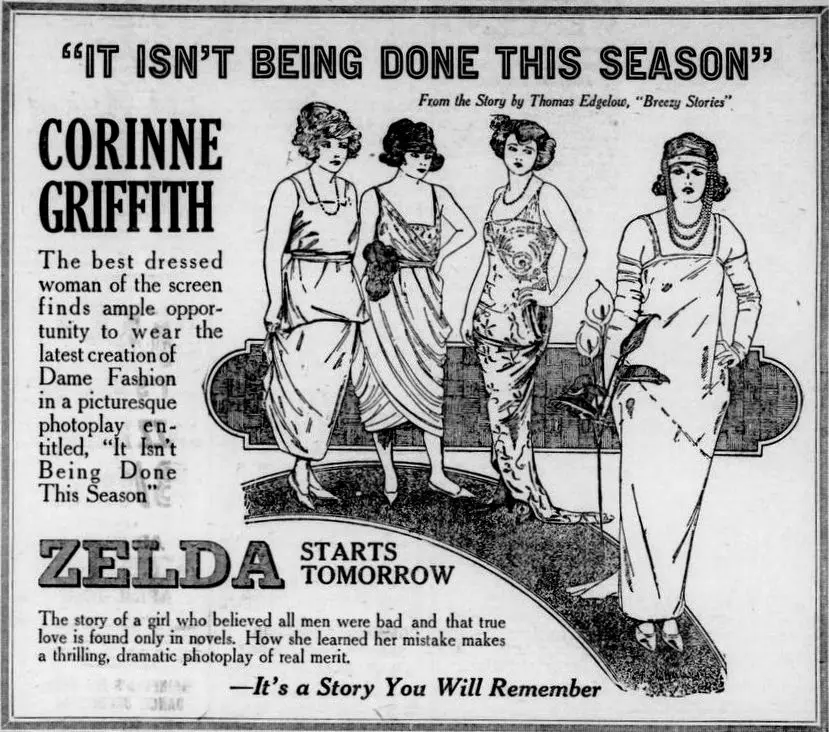
While ‘The Amateur Wife’ explores similar themes of mistaken identity and marital infidelity, ‘It Isn’t Being Done This Season’ distinguishes itself through its unflinching focus on economic determinism. The film’s preoccupation with colonial trade echoes the themes in ‘From Broadway to a Throne’, where power shifts are masked as romantic entanglements. Yet where those films employ whimsy, this one wields a scalpel. Its most direct cousin might be ‘The Golden Fetter’ (1926), which also critiques the commodification of women through the lens of industrial conflict.
C. Graham Baker’s direction is marked by a meticulous attention to spatial dynamics. The Turkey sequences are drenched in earthy hues, the rugs and textiles becoming characters in their own right. The use of negative space—doorways that frame characters like gallery portraits, windows that exclude as much as they reveal—is less a stylistic choice than a narrative strategy. Even in moments of dialogue, the camera lingers on hands, eyes, or fabrics, emphasizing the silence that speaks louder than words.
What makes ‘It Isn’t Being Done This Season’ endure, decades after its release, is its refusal to offer closure. The final scene, where Marcia and Lawton’s marriage hangs on the acquisition of a contract rather than mutual trust, is a pointed satire of capitalist romanticism. The film doesn’t answer the questions it raises about agency and complicity; it reframes them. In this, it shares kinship with ‘Her Life for Liberty’ (1915), where political idealism collides with personal sacrifice, but with a far more cynical undertone.
Though set in a bygone era of powdered wigs and steamship voyages, ‘It Isn’t Being Done This Season’ vibrates with contemporary resonance. Its exploration of identity as performance, of love as a transaction, and of jealousy as a marketable asset feels unnervingly prescient in the age of influencer culture and algorithmic relationships. The film is a time capsule that refuses to fossilize; it breathes, it challenges, and it haunts. For those seeking a cinematic experience that marries form with unflinching content, this is not just a recommendation—it’s an imperative.

IMDb 6.2
1937
Community
Log in to comment.