DbcultAccessing Vault...
6.1/10
Senior Film Conservator
A definitive 6.1/10 rating for a film that redefined the boundaries of cult cinema. Jack, Sam and Pete remains a cornerstone of transgressive art.
The cinematic landscape of the Old West, perpetually etched with tales of grit, justice, and untamed ambition, finds a compelling, if perhaps understated, entry in “Jack, Sam and Pete.” This film doesn’t merely chronicle an adventure; it immerses the viewer in a visceral struggle for innocence amidst the rugged backdrop of a land still grappling with its own nascent moral compass. It’s a narrative tapestry woven with threads of heroism and villainy, where the stakes are not just material wealth but the very soul of a young life.
From the outset, the film establishes a palpable tension, one that transcends mere plot mechanics. A child, a symbol of purity and a nascent future, is snatched from the perceived safety of their world, a brutal act designed to leverage access to a cache of hidden jewels. This act of unconscionable avarice instantly elevates the conflict beyond a simple treasure hunt. It becomes a battle for moral rectitude, a stark delineation between the forces of communal good and individualistic greed. The writers, spearheaded by S. Clarke-Hook, craft a scenario that feels both archetypal and deeply personal, investing the audience immediately in the plight of the innocent victim and the impending rescue.
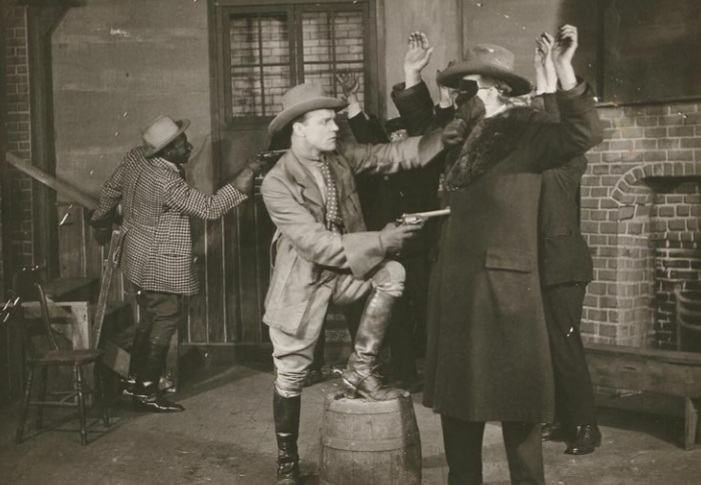
Enter our titular trio: Jack, Sam, and Pete. These aren't merely cowboys; they are embodiments of the frontier ethos – self-reliant, morally anchored, and possessed of a steadfast loyalty that binds them. Their journey isn't just a pursuit across dusty plains; it's a testament to camaraderie forged in the crucible of shared danger. Ernest Trimingham, as Jack, brings a stoic gravitas, a silent strength that anchors the group. His presence suggests a deep well of experience, a man who has seen the harsh realities of the West and still chooses the path of righteousness. Garrick Aitken’s Sam provides a dynamic counterpoint, perhaps a more impetuous or emotionally driven force, adding a layer of unpredictable energy to the group’s methodical pursuit. And H. Manning Haynes, inhabiting Pete, rounds out the triumvirate with a subtle charm or perhaps a pragmatic wisdom, ensuring the group feels less like a monolithic unit and more like a collection of distinct personalities converging on a singular, noble objective.
The ensemble cast extends to the supporting players, each contributing to the rich tapestry of this Western saga. Jack Harding and Eddie Willey likely portray figures on either side of the law, or perhaps crucial intermediaries whose allegiances shift like desert sands. Their performances, even in what might have been supporting roles, are critical in building the credible world of the film, adding texture to the moral ambiguities inherent in the frontier. The inclusion of Jack Kelly and Enid Heather suggests a broader community impact, perhaps the anxious parents or concerned townsfolk whose lives are irrevocably altered by the kidnapping. And Percy Moran, whether as a grizzled prospector or a menacing outlaw, further populates this world with compelling figures. Each actor, under the direction, contributes to the emotional weight and dramatic urgency of the unfolding events.
The pacing of “Jack, Sam and Pete” is a masterclass in sustained suspense. It avoids the episodic pitfalls common to some Westerns of its era, instead maintaining a relentless forward momentum. The pursuit itself becomes a character, a constant, gnawing presence that drives every decision and heightens every confrontation. This isn't a film that luxuriates in scenic vistas for their own sake; rather, the landscape, though undoubtedly vast and impressive, serves as a perilous obstacle course, each dusty trail and rocky outcrop a potential trap or a moment of fleeting respite. The visual storytelling, even without the benefit of modern cinematic techniques, must have been potent, conveying the isolation and danger inherent in the vast, untamed territories.
Comparing the tension here, the palpable sense of a ticking clock, one might draw parallels to the relentless pursuit seen in films like The Target, where every step taken is fraught with peril and the ultimate outcome hangs precariously in the balance. Similarly, the underlying threat of a malevolent force seeking something hidden, something valuable, echoes the intricate mystery and high stakes found in The Mystery of the Poison Pool, though the jewels in our current film are a more tangible, less abstract MacGuffin. The common thread is the imminent danger to life and limb, a characteristic that defines many compelling thrillers, regardless of their specific genre trappings.
S. Clarke-Hook’s screenplay is remarkably adept at balancing the broader strokes of the Western genre with intimate character moments. The dialogue, one imagines, would have been terse and impactful, reflecting the pragmatic nature of the characters and the high-stakes situations they find themselves in. There's a particular skill in crafting a narrative where the motivations of the antagonists are clear – the unbridled desire for wealth – but not simplistic. The gang isn't just a faceless horde; they are a formidable, organized threat, making the heroes' task all the more daunting. This nuanced portrayal of villainy elevates the conflict beyond a mere good-versus-evil binary, hinting at the corrupting influence of greed that can turn men into monsters.
The thematic undercurrents of “Jack, Sam and Pete” are robust. It delves into the enduring power of brotherhood and loyalty, showcasing how these bonds are not just comforting, but essential for survival in a treacherous world. The rescue of the child becomes a symbolic act, representing the preservation of innocence against the encroaching darkness of the frontier. It speaks to the idea that even in the most lawless of environments, there are individuals who will stand up for what is right, embodying a nascent form of justice that predates formalized institutions. This inherent moral compass, guiding the actions of Jack, Sam, and Pete, provides a powerful emotional core that resonates long after the credits roll.
The film’s portrayal of the Western setting also warrants attention. It’s not romanticized; it’s rugged, unforgiving, and beautiful in its harshness. The visual palette, even if imagined through the lens of early cinema, would have emphasized the vastness and the isolation, amplifying the peril of the heroes' mission. One can envision dusty canyons, sun-baked plains, and terse campfire scenes illuminated by flickering light – each frame contributing to an atmosphere of desperate hope and imminent danger. This realistic depiction of the environment grounds the fantastical elements of the treasure hunt and the heroic rescue in a tangible, believable world.
In terms of its place within the Western genre, “Jack, Sam and Pete” confidently stakes its claim as a solid entry. While it might not possess the sprawling epic scope of some later Westerns, its focused narrative and compelling character dynamics grant it a unique charm. It’s a film that understands the core appeal of the genre: heroic figures facing overwhelming odds, a clear moral imperative, and the thrilling pursuit of justice. In this regard, it shares a spiritual kinship with films like The Money Corral, which also delves into the high stakes of frontier life and the pursuit of wealth, albeit often through less nefarious means. Both films explore the foundational struggles of a developing society, where individual enterprise often clashes with communal well-being.
The resolution of the narrative, while delivering the expected triumph of good over evil, is likely earned through a series of intense confrontations and clever maneuvers. The film avoids easy answers, instead portraying the rescue as a hard-won victory, a testament to the resilience and ingenuity of the protagonists. The ultimate fate of the jewels, whether recovered or simply serving as the catalyst for the drama, becomes secondary to the preservation of the child’s life, solidifying the film’s moral stance. This prioritization of human life over material gain is a powerful statement, elevating the film beyond a simple adventure tale.
Ultimately, “Jack, Sam and Pete” stands as a testament to the enduring power of classic storytelling. It’s a film that, despite its potential age, speaks to universal themes of courage, community, and the fight against injustice. The performances of Ernest Trimingham, Garrick Aitken, H. Manning Haynes, and the entire cast, under the astute guidance of S. Clarke-Hook’s writing, coalesce to create a compelling and memorable cinematic experience. It’s a reminder that even in the earliest days of filmmaking, the ability to craft a gripping narrative, populated by relatable heroes and formidable villains, was paramount. This isn't just a historical artifact; it's a vibrant piece of cinematic history that continues to resonate with the timeless appeal of the Western genre, encapsulating the spirit of adventure and the unwavering pursuit of justice against overwhelming odds.
IMDb 8.3
1931
Community
Log in to comment.