DbcultAccessing Vault...
Cult Review
Senior Film Conservator
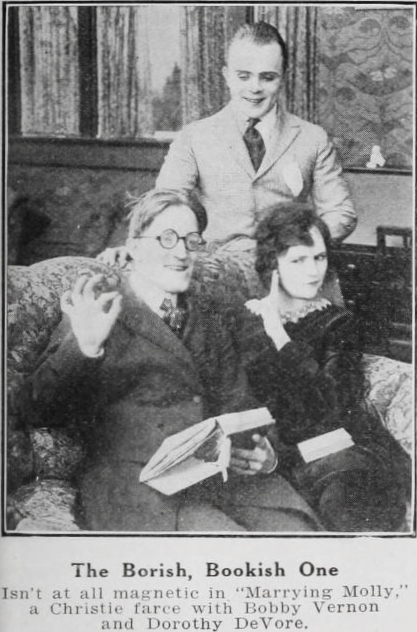
In the annals of early cinema, where narratives often served as moral compasses or escapist fantasies, Karl R. Coolidge's Marrying Molly emerges as a surprisingly nuanced exploration of societal strictures, personal ambition, and the transformative power of genuine affection. Starring the luminous Dorothy Devore as Molly O'Malley and the charming Bobby Vernon as Arthur Penhaligon, this film transcends its seemingly simple title to deliver a compelling, if occasionally melodramatic, discourse on love's ability to bridge the most formidable of divides. It's a testament to the era's storytelling prowess, even with its inherent constraints, that such a rich emotional landscape could be painted with broad strokes, yet still resonate with profound human truths.
Dorothy Devore, in a performance that solidifies her status as a captivating presence, imbues Molly O'Malley with an irresistible blend of resilience, artistic passion, and an almost defiant optimism. Molly is not merely a damsel in distress awaiting rescue; she is a burgeoning artist, her portraits capturing the soul of her vibrant, working-class neighborhood with an authenticity that speaks volumes. Her world, though modest, is rich in character and community, a stark contrast to the gilded cages of the elite. Devore’s portrayal avoids the pitfalls of caricature, presenting Molly as a woman acutely aware of her station, yet fiercely independent in spirit. When Arthur Penhaligon enters her life, ostensibly as a struggling architect, their connection is immediate and palpable, fueled by a shared appreciation for beauty and creation. This initial spark, however, is not without its undercurrents of dramatic irony, as the audience is privy to Arthur's true, aristocratic lineage, a secret that hangs heavy over their burgeoning romance. The film masterfully uses Molly’s artistic eye as a metaphor for her ability to see beyond superficial appearances, a trait that will be severely tested when Arthur’s deception is laid bare. Her journey from hopeful inspiration to heartbroken disillusionment, and finally to a nuanced understanding of love's complexities, forms the emotional core of the picture. Her character arc, while perhaps predictable to modern sensibilities, was groundbreaking in its emphasis on a woman's agency and self-worth, even in the face of societal pressures. One might draw parallels to the spirited independence seen in characters from The Winning of Sally Temple, where women often navigate complex social landscapes with a blend of charm and inner strength, though Molly's artistic bent provides a unique dimension.
Bobby Vernon, as Arthur Penhaligon, delivers a performance that oscillates between charming vulnerability and a quiet desperation to escape the shackles of his birthright. Arthur is not your typical romantic hero; he is a man burdened by wealth and expectation, disinherited for daring to pursue his architectural passions over the soulless machinations of his family's industrial empire. His aunt, Lady Beatrice, portrayed with chilling efficacy by an unnamed actress, embodies the rigid class consciousness of the era, seeing artistic pursuits as mere frivolous distractions for the privileged, certainly not a worthy career. Arthur's decision to conceal his identity from Molly stems not from malice, but from a profound fear that his wealth would irrevocably taint their connection, perceiving it as a barrier rather than an advantage. He yearns to be loved for himself, for his dreams and his character, rather than for his inherited fortune. Vernon beautifully conveys this internal conflict, making Arthur a sympathetic figure despite his initial deception. His architectural visions, initially dismissed as impractical, become a tangible expression of his desire to create something meaningful, something beautiful, a stark contrast to the sterile world of commerce his family inhabits. The film cleverly uses his architectural sketches as a visual representation of his inner world, a world Molly instinctively understands and encourages. His character's struggle against an overbearing family, albeit for different reasons, echoes the thematic undercurrents found in films like The Grandee's Ring, where inherited status and familial expectations often clash with individual desires and romantic aspirations. The emotional weight of his secret, and the eventual fallout, are handled with a sensitivity that elevates the film beyond a simple romantic comedy.
No romance is complete without an obstacle, and in Marrying Molly, that role is expertly filled by Reginald Finch. Finch is not a mustache-twirling villain in the traditional sense, but a more insidious, calculating social climber whose ambition knows no bounds. He sees Molly not as a woman to be loved, but as a stepping stone to greater social standing, drawn by her burgeoning artistic reputation and the perceived connections it might afford. His simultaneous pursuit of Molly and his efforts to expose Arthur's true identity to Lady Beatrice reveal a character driven purely by self-interest and a cynical understanding of social dynamics. His actions are the catalyst for the central conflict, shattering Molly's trust and forcing Arthur to confront his fears. The film's portrayal of Finch is subtle yet effective, showcasing how ambition, untempered by genuine affection, can wreak havoc on innocent lives. His presence underscores the film's thematic exploration of authenticity versus artifice, and the corrupting influence of status-seeking. The dramatic reveal at the charity ball, meticulously orchestrated by Finch, is a moment of high tension, effectively plunging the protagonists into crisis. This kind of manipulative character, though perhaps less overtly villainous, shares a spiritual kinship with antagonists in films such as Le baron mystère, where hidden identities and cunning schemes drive much of the plot's intrigue and emotional turmoil. The film leverages Finch's presence to not only create conflict but also to highlight the genuine nature of Molly and Arthur's bond in contrast to his transactional view of relationships.
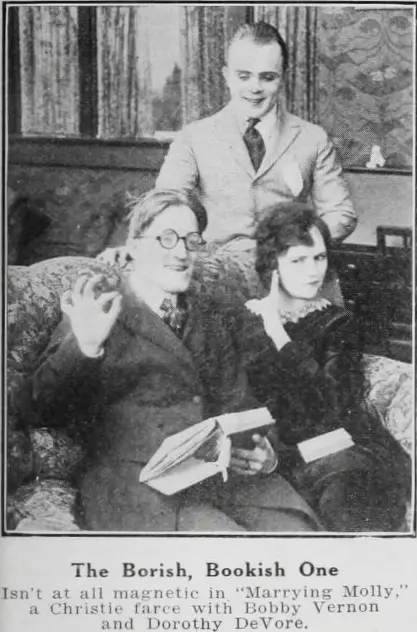
Beyond the romantic entanglement, Marrying Molly delves into the pervasive theme of class disparity, a recurring motif in early 20th-century narratives. The stark contrast between Molly's bustling, communal neighborhood and the austere, formal world of the Penhaligon estate is visually and thematically central. Lady Beatrice serves as the embodiment of this rigid social structure, her disdain for Arthur's artistic pursuits and her judgment of Molly's background reflecting the era's entrenched prejudices. The film argues, quite eloquently for its time, that true love and merit can transcend these artificial boundaries. It champions the idea that character, talent, and genuine connection are far more valuable than inherited wealth or social standing. Molly's art becomes a symbol of this truth; her ability to capture the essence of a person, regardless of their social standing, mirrors the film's own message. Arthur's journey is one of self-acceptance, learning to embrace his heritage not as a burden to be hidden, but as a tool for positive change, particularly when inspired by Molly's vision. This thematic richness elevates Marrying Molly beyond a mere romance, positioning it as a social commentary, albeit a gentle one. It shares a thematic resonance with films like Melissa of the Hills, where characters from different social strata often find themselves drawn together, challenging the conventions of their respective worlds. The film's exploration of these themes is surprisingly progressive, suggesting that societal progress often begins with individual acts of defiance against established norms.
Karl R. Coolidge, as the writer, constructs a narrative that, while adhering to many of the conventions of its time, manages to feel fresh due to its strong characterizations and clear thematic purpose. The pacing is generally well-judged, allowing the romance to develop organically before introducing the dramatic conflict. The screenplay skillfully builds tension, particularly around Arthur's secret and Finch's machinations, leading to a satisfying, if somewhat idealistic, resolution. The dialogue, though typical of the period, serves its purpose in advancing the plot and revealing character. The use of visual storytelling is particularly noteworthy; Molly's paintings, Arthur's architectural designs, and the contrasting settings all contribute to the narrative's depth without relying solely on exposition. While the director (uncredited in the prompt, but integral to the execution) ensures that the visual language supports Coolidge's script, it's the strength of the written narrative that truly shines. The film's ability to maintain audience engagement through its emotional peaks and valleys is a testament to its well-structured plot. Compared to some of its contemporaries, which could sometimes meander or rely on overly simplistic character arcs, Marrying Molly presents a more sophisticated narrative, reminiscent of the careful construction found in a film like A Pair of Silk Stockings, which also wove intricate plots around romantic entanglements. The film’s ability to balance dramatic tension with moments of genuine tenderness speaks volumes about its thoughtful construction.
The success of any romance hinges on the chemistry between its leads, and in this regard, Marrying Molly excels. Dorothy Devore and Bobby Vernon share a compelling on-screen rapport, their performances elevating the material. Devore's Molly is a beacon of warmth and authenticity, her expressive eyes conveying a multitude of emotions, from joyous affection to profound heartbreak. Vernon's Arthur is equally compelling, portraying a man caught between duty and desire, his quiet intensity a perfect counterpoint to Molly's effervescence. Their scenes together are imbued with a believable tenderness, making their eventual separation all the more poignant. The supporting cast, though less prominent, also contributes effectively to the film's overall texture. Lady Beatrice, though a secondary character, leaves a lasting impression as the formidable matriarch, her presence casting a long shadow over Arthur's life. Reginald Finch, while a less nuanced character, serves his purpose as the antagonist with a sneering efficiency that makes him genuinely unlikeable. The performances, particularly from the leads, ensure that the audience remains invested in their journey, rooting for their eventual reconciliation. This strong central pairing recalls the magnetic duos that anchored many successful films of the era, such as those found in The Queen's Jewel, where the interplay between characters often defined the film's appeal. The nuanced emotional exchanges, conveyed through gesture and subtle expression, demonstrate the power of silent film acting at its best.
The cinematography of Marrying Molly, while perhaps not groundbreaking for its time, effectively captures the contrasting worlds inhabited by its characters. The bustling energy of Molly's neighborhood is depicted with a sense of vibrant realism, utilizing street scenes and crowded interiors to convey a sense of community and everyday life. In contrast, the Penhaligon estate is often framed with a stark formality, emphasizing its grandeur yet also its emotional coldness. The use of light and shadow, typical of the era, is employed to underscore dramatic moments, particularly during the revelation at the charity ball. The costumes and set designs are meticulously crafted, adding to the film's period authenticity and helping to define character through visual cues. Molly's simpler, yet stylish attire, contrasts sharply with the opulent, often restrictive gowns worn by Lady Beatrice, subtly reinforcing their differing social positions and values. Arthur's architectural drawings, shown in close-up, serve as a clever narrative device, allowing insight into his creative mind and his aspirations. While it may not push the boundaries of visual innovation like some experimental films of the period, its aesthetic choices are purposeful and effective in supporting the narrative and thematic elements. The film's visual language, while traditional, is consistent and contributes significantly to the overall immersive quality, much like the detailed world-building seen in The Wishing Ring: An Idyll of Old England, which relied on rich visual tapestries to transport its audience to another time and place.
In conclusion, Marrying Molly, while not a cinematic titan on the scale of some of its more frequently discussed peers, holds a significant place as a charming and thoughtful romantic drama. Its enduring appeal lies in its sincere portrayal of love overcoming obstacles, its well-developed characters, and its subtle yet potent social commentary. Dorothy Devore and Bobby Vernon deliver performances that captivate and convince, making their on-screen romance genuinely affecting. The film's message — that authenticity and affection can triumph over superficial divisions of class and wealth — remains as relevant today as it was in its initial release. It is a film that reminds us of the power of individual choice and the courage required to defy societal expectations for the sake of true happiness. For those who appreciate the nuanced storytelling and heartfelt performances of early cinema, Marrying Molly offers a delightful and surprisingly profound viewing experience. It stands as a testament to the fact that even seemingly straightforward narratives can carry deep emotional and thematic resonance, cementing its place as a quiet gem in the tapestry of classic Hollywood romance. Its themes, though presented through the lens of a bygone era, continue to resonate, much like the timeless human struggles depicted in Two Women or the compelling character studies in Das Geschlecht derer von Ringwall, proving that certain narratives about love, identity, and societal pressure are universal. This film, therefore, is not merely a historical curiosity but a vital piece of cinematic heritage, offering insights into both the filmmaking techniques and societal values of its time, while still delivering a genuinely engaging story of love's triumph.
IMDb —
1930
Community
Log in to comment.