DbcultAccessing Vault...
7/10
Senior Film Conservator
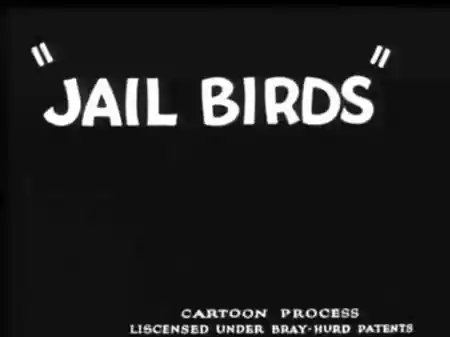
A definitive 7/10 rating for a film that redefined the boundaries of cult cinema. Jail Birds remains a cornerstone of transgressive art.
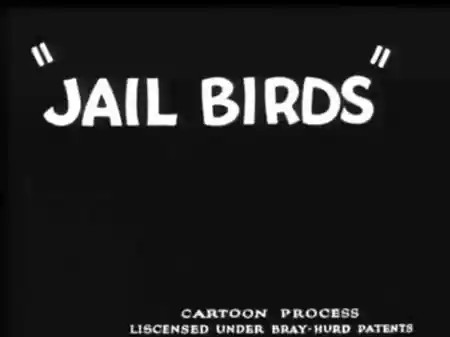
Alright, let’s talk about Jail Birds. If you’re someone who loves digging into the roots of animation, especially the stuff from the late 20s and early 30s, then yeah, this little short is absolutely worth a watch. It’s a quick peek into what Ub Iwerks was doing right after Disney, and it’s got that specific, bouncy charm. But if you’re hoping for a deep plot, or even just modern cartoon pacing, you’ll probably find yourself a bit bored. This one’s really for the historians and the curious.
So, Flip the Frog is a prison guard here. He’s got this big, goofy hat and a whistle, doing his rounds. The whole prison feels less like a grim place and more like a playground, honestly. Which, for a cartoon from 1930, makes total sense. Everything’s kinda soft and round.
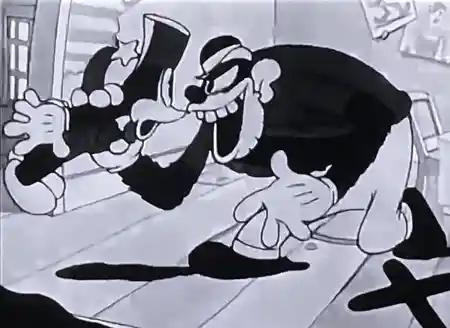
The convict, a big, shifty looking guy, breaks out with a classic bedsheet-rope trick. It’s pretty standard stuff, but the way his *legs just stretch and stretch* as he lowers himself? That’s pure rubber hose gold. It reminds you of how much freedom these animators had before things got more 'realistic.'
Flip’s reaction to the escape is priceless. It’s not panic, not really. More like, “Oh, bother, now I gotta go get him.” He blows his whistle, and it makes this *really loud, almost painful* sound. Early sound cartoons really liked their loud noises, huh? 🔊
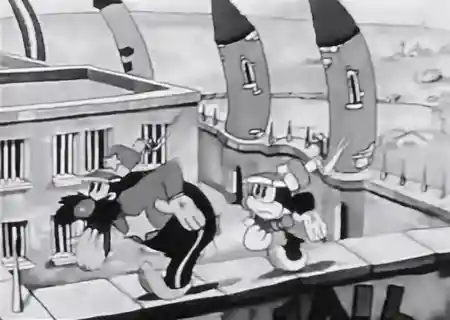
The chase itself is the whole meat of the short. It’s a lot of running, jumping, and characters morphing into all sorts of shapes. You see Flip stretching, squashing, and even using his own body as a springboard at one point. It’s just so fluid in its absurdity. Like, one minute he's a frog, the next he's a spring.
There's this one bit where the convict tries to hide in a pigsty, and the pigs are just as cartoony as everything else. They kinda wiggle and oink in this *very specific* 1930s cartoon way. It's a small detail, but it really nails the era's vibe.
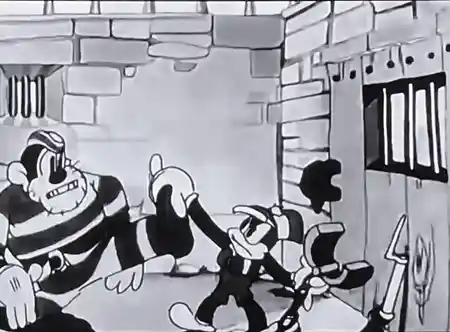
And the music! Oh, the music is *everything* here. It guides every single movement, every gag. It’s not just background noise; it’s practically another character, telling you when to laugh, when to anticipate. It’s a non-stop, peppy accompaniment. You can almost feel the musicians playing live in the recording studio.
One of the things I found myself thinking was how much personality Flip has, even with such simple design. He’s not a hero in the modern sense. More like a diligent, slightly flustered civil servant. You root for him mostly because he’s just trying to do his job, you know? Like he’s just having a really bad day at work.
There’s a moment near the end where Flip corners the convict, and the way the convict’s face just *collapses* into defeat. It’s a quick shot, but it really sells the moment. You feel a tiny bit bad for the guy, even though he's the 'bad' one.
This isn't The Gold Rush, by any stretch of the imagination, but it doesn't try to be. It’s a different kind of magic. It’s about the sheer inventiveness with limited tools, about making something move and entertain with just ink and sound. And for that, it’s kinda special.
IMDb 6.5
1936
Community
Log in to comment.