DbcultAccessing Vault...
6.5/10
Senior Film Conservator
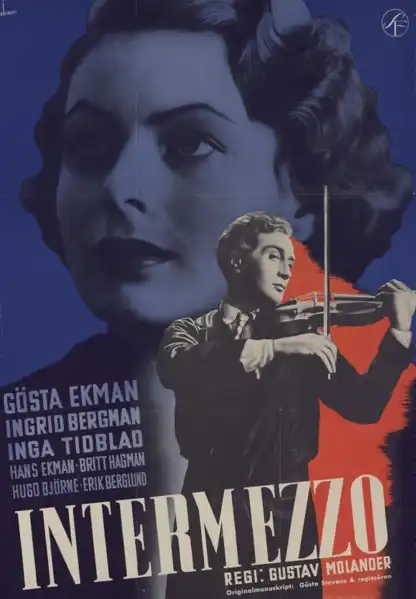
A definitive 6.5/10 rating for a film that redefined the boundaries of cult cinema. Intermezzo remains a cornerstone of transgressive art.
Should you actually sit down and watch this 1936 Swedish version of Intermezzo tonight? Well, if you love seeing a very young Ingrid Bergman practically glow on screen before Hollywood got their hands on her, yes, absolutely. But if you can't stand old-fashioned melodramas where people sigh heavily over pianos and make terrible life choices, you will probably want to turn it off after twenty minutes. 🎻
The setup is as old as time. Holger (played by Gösta Ekman) is a famous violinist who returns home to his nice, boring family and immediately falls for Anita (Bergman), his daughter's piano teacher.
What strikes me first is how... dusty the house feels. You can almost smell the old carpets and the heavy wooden furniture in these early scenes.
Holger's wife seems nice enough, which actually makes him look like a bit of a jerk right from the start. He has this tired, puppy-dog face that Ekman plays with a lot of theatrical sighing.
Ingrid Bergman, though. Wow.
She is only about twenty here, but she already has that quiet power where she doesn't have to do much to make you look at her. When she plays the piano, her face does this little twitch of concentration that feels completely real, not acted.
There is this one scene where they are practicing together, and the camera just sits on her hands for a bit too long. It is like the director, Gustaf Molander, forgot to yell cut because he was too busy listening.
Their affair starts with a lot of lingering looks over sheet music. Honestly, it's a bit silly how fast they fall into it.
One day she is teaching his kid, the next they are running off to Europe together like a couple of teenagers who stole a car. It makes you wonder how these people survived back then with so little impulse control.
The European trip part of the movie gets a bit slow. They walk around old ruins and look at water, and you start to realize that Holger is actually kind of a drag to hang out with.
He spends half his time complaining about his age and the other half feeling guilty. You want to shake Anita and tell her to go back to Stockholm and find a nice guy her own age.
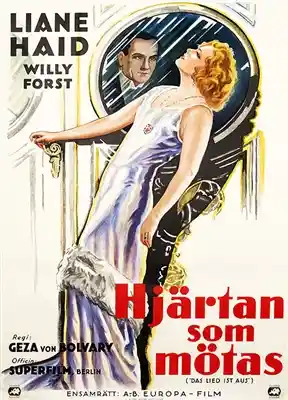
It reminds me of those old silent dramas like The Heart of a Gypsy where everyone is just doomed from the start because of "passion."
But then there are these small, weird details that keep you watching. Like the way Holger’s friend, played by Hugo Björne, always seems to be holding a hat like he’s about to leave the room but never does.
Or how the daughter's toy dog on the floor looks incredibly creepy in the background of a very serious argument. 🐶
The music is, of course, everywhere. If you don't like classical violin, this movie will feel like water torture.
They play the main theme so many times that it gets stuck in your head for days. I was humming it while doing the dishes this morning, and it made me feel way more dramatic than I actually am.
And the ending... well, it’s one of those classic '30s endings where a sudden accident has to fix everyone's moral problems. It feels incredibly cheap, like the writers ran out of paper and just decided to throw a car into the mix.
Still, there is something beautiful about how simple the whole thing is. It doesn't try to be a massive epic like War and Peace; it's just a small, messy story about three people hurting each other.
If you want a cozy Sunday afternoon movie with some beautiful black-and-white cinematography and a very young star being born, give it a go. Just don't expect the main guy to be very likable.
IMDb 5.2
1928
Community
Log in to comment.