DbcultAccessing Vault...
Cult Review
Senior Film Conservator
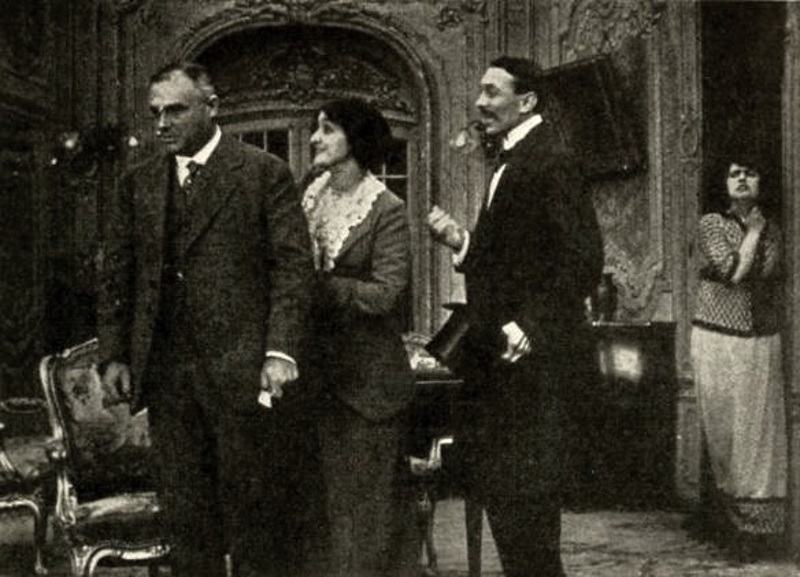
Parisian gilt peels into Norman fog as Jealousy charts the alchemy of affluence into ash, then into venom.
Stark monochrome cinematography—still luminous despite nitrate erosion—turns every drawing-room shimmer into a memento mori: chandeliers drip like frozen guillotines, and lace curtains billow like shrouds. The camera, rarely mobile, lingers on gloved hands and half-lit pupils until the tension hums like an overtightened violin string.
What elevates the scenario above standard melodrama is its pitiless chain reaction: fiscal ruin begets social rupture, rupture begets matrimonial panic, panic begets resentment, resentment begets horticidal intent. Each narrative hinge clicks with fatalistic precision, echoing the determinism of Zola minus the documentary sprawl. The screenplay—anonymous, like many transitional-era one-reelers—compresses a Balzacian sprawl into eleven spare intertitles, every card a razor.
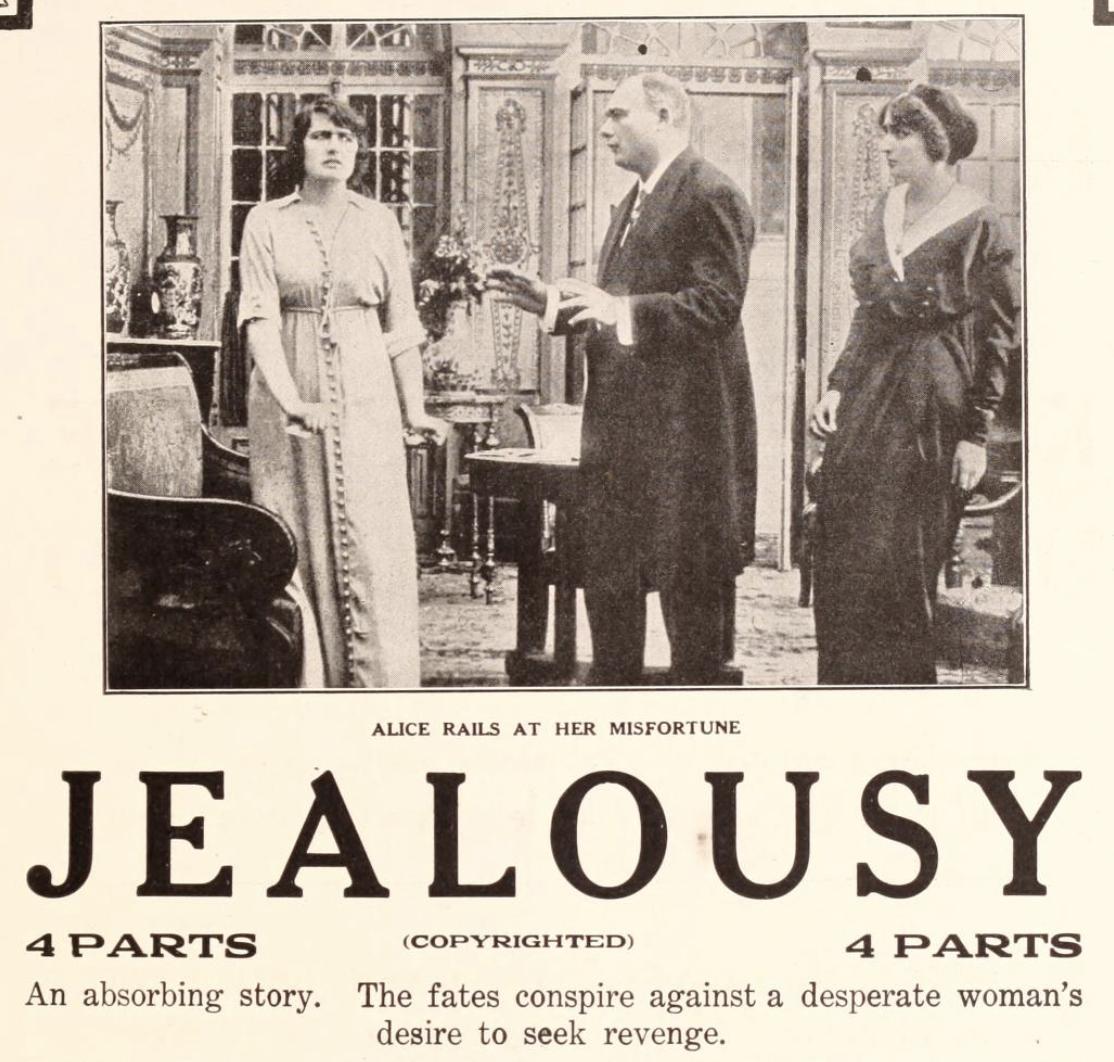
Alice, essayed by an unnamed tragedienne whose kohl-rimmed gaze could scorch parchment, weaponizes stillness; her spine straightens a millimeter when jilted, a brittle calibration that foreshadows the snap. Jeanne, all pastoral softness, counterbalances with open-palmed vulnerability, while Raoul’s hesitant ardor flickers like a faulty candle. Helen and the Marquis exist largely as catalysts—glamour in motion—yet even their horseback flirtation is framed through a lattice of branches, foreshadowing the hothouse entrapment to come.
Production design deserves a monograph. The glass-roofed conservatory—probably a borrowed botanical pavilion—becomes a secular cathedral where sunlight fractures into verdant daggers. The poison tree, unnamed but resembling a Cerbera odollam, stands center like a pagan altar; its leaves, back-lit, glow jade against Alice’s obsidian gown. Spatial geography is mined for suspense: aisles of potted palms compress bodies into stalking silhouettes, while the distant trickle of an unseen fountain underpins the hush with a metronomic dread.
Beneath the potboiler lurks a caustic commentary on Belle Époque patriarchy: daughters function as interest-bearing assets, their matrimonial value plummeting with paternal insolvency. When capital evaporates, Robert’s exit is not cruelty but ledger-book logic; Alice’s real tormentor is a socio-economic system that equates virginity with venture capital. The film’s refusal to moralize—there is no mustache-twirling villain—renders the poison plot less aberration than systemic indictment.
Botanic homicide was fashionable fodder in fin-de-siècle newspapers; here it migrates into semiotics. The act of milking sap literalizes the slow extraction of malice that Alice has distilled for reels. Self-administration doubles as perverse communion: by swallowing her own brew she reclaims agency, albeit nihilistically. The gesture anticipates the suicidal femmes fatales of 1940s noir, yet stripped of erotic flourish—her corpse sprawls amid ferns, hair uncoiling like spilled ink.
Original exhibition notes suggest a live pianist would pivot from Mendelssohn to dissonant improvisation once the poison vial appears. Contemporary festival restorations often commission discordant string motifs; the clash of Romantic lyricism with atonal dread mirrors the film’s rupture of bourgeois civility. Silence, when deployed—several seconds of blank leader before discovery—lands like a slammed coffin lid.
A Suspicious Wife shares the marital paranoia but lacks the class-collapse backdrop; The Flames of Justice wields poison for courtroom theatrics rather than intimate annihilation. Meanwhile, Aftermath explores sibling rivalry sans lethal flora, and The Country Mouse offers rustic escapism instead of aristocratic rot. Jealousy sits at the crossroads—too venomous for bucolic comfort, too laconic for grand guignol.
Only two nitrate prints survive: one at Cinémathèque Française (French intertitles, vinegar syndrome stabilized), the other in a private Rochester archive with English translations inked directly on emulsion. Neither is publicly scanned; festival curators occasionally splice a 2K reel for scholarly retrospectives. Cinephiles hungry for a glimpse must haunt archival blogs or bribe archivists with rare Anna Held lobby cards.
Jealousy endures because it distills the entire silent-era paradox: outwardly prim, inwardly septic; technologically nascent, thematically mature; running a brisk twenty-eight minutes yet haunting the psyche for years. The poison tree still grows somewhere—perhaps in the hothouse of every viewer who has felt love transmute into arsenic. To watch is to inhale its sap: caustic, invigorating, unforgettable.
IMDb —
1919
Community
Log in to comment.