DbcultAccessing Vault...
6.4/10
Senior Film Conservator
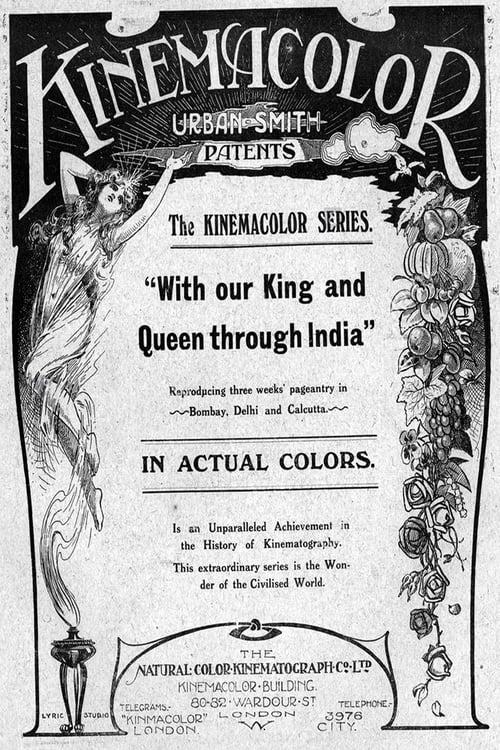
A definitive 6.4/10 rating for a film that redefined the boundaries of cult cinema. With Our King and Queen Through India remains a cornerstone of transgressive art.
To watch With Our King and Queen Through India is to step through a shimmering, two-color portal into a world of absolute certainty and terrifyingly vast scale. Released in 1912, this was not just a film; it was a technological manifestation of the British Empire’s zenith, captured through the revolutionary Kinemacolor process. While contemporary audiences are accustomed to the hyper-realism of 4K digital captures, the flickering, ethereal hues of this early additive color system provide a haunting texture that feels more like a living painting than a sterile record of history.
Charles Urban and G.A. Smith, the architects of this visual feast, achieved something that seemed like sorcery at the dawn of the 20th century. By rotating a red-green filter in front of the camera and then projecting the resulting black-and-white frames through a similar synchronized filter, they synthesized a spectrum that, while technically limited, felt miraculously vibrant. In comparison to the hand-tinted sequences found in Life and Passion of Christ, the colors here are organic, tied to the very chemistry of the light that hit the lens in Delhi. This wasn't an artistic interpretation of color; it was its capture.
The film’s duration—originally running over two hours—marked it as one of the first true "feature-length" experiences, predating the narrative complexities we see in later epics like Les misérables. It demanded a level of patience and immersion from the audience that was previously reserved for grand opera or the stage. When we look at the sheer logistical feat of transporting these heavy, specialized cameras to the Indian subcontinent, we realize that the film itself was an act of imperial engineering, much like the railways that crisscrossed the Raj.
The 1911 Delhi Durbar was the only time a reigning British monarch visited India for their coronation celebrations, and the film treats this event with the reverence of a religious liturgy. Unlike the gritty realism of The Corbett-Fitzsimmons Fight, where the camera serves as a neutral witness to physical struggle, the lens in With Our King and Queen Through India is an active participant in the glorification of the crown. Every frame is composed to emphasize the hierarchy of the era.
The sequence of the State Entry is particularly breathtaking. As the royal procession winds through the streets, the contrast between the dusty, sun-bleached architecture and the saturated silks of the Indian princes creates a visual tension. We see the King and Queen not as human beings, but as icons—statuesque figures atop massive elephants. This portrayal of royalty as a remote, almost divine force is a fascinating precursor to the way Hollywood would later treat its stars in films like Cleopatra.
One cannot discuss this film without addressing the sheer kinetic energy of the military reviews. The sight of thousands of soldiers marching in perfect unison, their bayonets catching the harsh Indian sun, is a display of soft and hard power combined. The Kinemacolor process excels here; the red coats of the British soldiers pop against the sepia-toned backdrop of the parade grounds, creating a rhythmic, pulsating visual effect that is almost hypnotic. It reminds one of the early cinematic fascination with movement seen in May Day Parade, yet scaled up to a level of staggering grandiosity.
The film also captures the "Badshahi Mela," or the people's fair, where the indigenous population is given space within the frame. However, the gaze remains decidedly colonial. The camera lingers on the "exotic" elements—the snake charmers, the dancers, the intricate crafts—categorizing them as curiosities under the watchful eye of the King-Emperor. This ethnographic bent is similar to the travelogue style of Glacier National Park, where the landscape and its inhabitants are presented as treasures within a vast imperial collection.
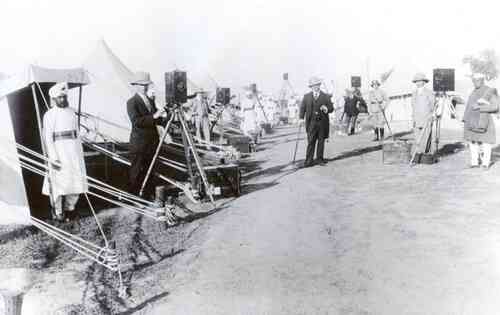
Viewing this film today requires a double-consciousness. On one hand, we must admire the technical audacity and the preservation of a moment that has entirely vanished. On the other, we are witnessing the mechanisms of a system that would soon face the irresistible force of decolonization. The film’s silence adds to its haunting quality; the thunderous hooves of the horses and the cheers of the crowds are lost to time, leaving only the ghost-like flicker of color to tell the story.
There is a strange, quiet moment in the film during a garden party where the King and Queen simply walk among guests. Here, the formal rigidity softens slightly, and we see the human scale of the event. It is a rare break in the propaganda, a glimpse into the mundanity that exists even within the most staged of spectacles. This balance of the monumental and the minute is what elevates the film above contemporary newsreels like The Kineto Coronation Series: Royal Progress Through London.
The tragedy of With Our King and Queen Through India is that the Kinemacolor process was essentially a dead end. Its reliance on specialized projectors and the inherent "fringing" of the colors (where fast-moving objects would show red and green halos) meant it was soon eclipsed by more stable systems. Yet, for a brief window, it was the pinnacle of the cinematic art. It offered a level of verisimilitude that early audiences found overwhelming. Reports from the time suggest that viewers were moved to tears by the sight of the "real" colors of India, a reaction not unlike the religious fervor inspired by From the Manger to the Cross.
The film also stands as a precursor to the modern documentary. It lacks the voice-over narration we have come to expect, relying instead on intertitles and the inherent power of the image. This visual-first approach forces the viewer to engage more deeply with the frame, searching for details in the background—the expression of a weary soldier, the dust kicked up by a carriage, the intricate embroidery on a royal canopy. It is a masterclass in observational cinema, even if the observation is heavily biased.
In the grand history of early cinema, few works are as imposing as this. It lacks the narrative charm of Oliver Twist or the visceral thrill of The Story of the Kelly Gang, but it possesses a gravity that is unmatched. It is a record of a world that believed it would last forever, captured in a color process that was gone in a decade. This irony only adds to the film's power.
For the modern cinephile, With Our King and Queen Through India is an essential watch, not merely for its historical value, but for its reminder of what cinema was originally intended to be: a window into the unreachable. Whether it is the vast landscapes of Scotland or the political upheavals in Defense of Sevastopol, early film sought to bring the world to the viewer. In its vibrant, flickering reds and greens, this film brought an entire empire into the darkened theaters of London and beyond, forever changing the way we perceive the past.
Ultimately, the film is a testament to the ambition of the early pioneers. They weren't just making movies; they were capturing reality in its most elusive form—color. And while the empire it celebrated has since dissolved into the pages of history, the film remains, a vivid, chromatic ghost that continues to haunt and fascinate. It is a monumental achievement that deserves its place among the most significant works of the silent era, standing tall alongside the passion plays and the early dramas as a pillar of cinematic heritage.
IMDb 6.5
1928
Community
Log in to comment.