DbcultAccessing Vault...
Cult Review
Senior Film Conservator
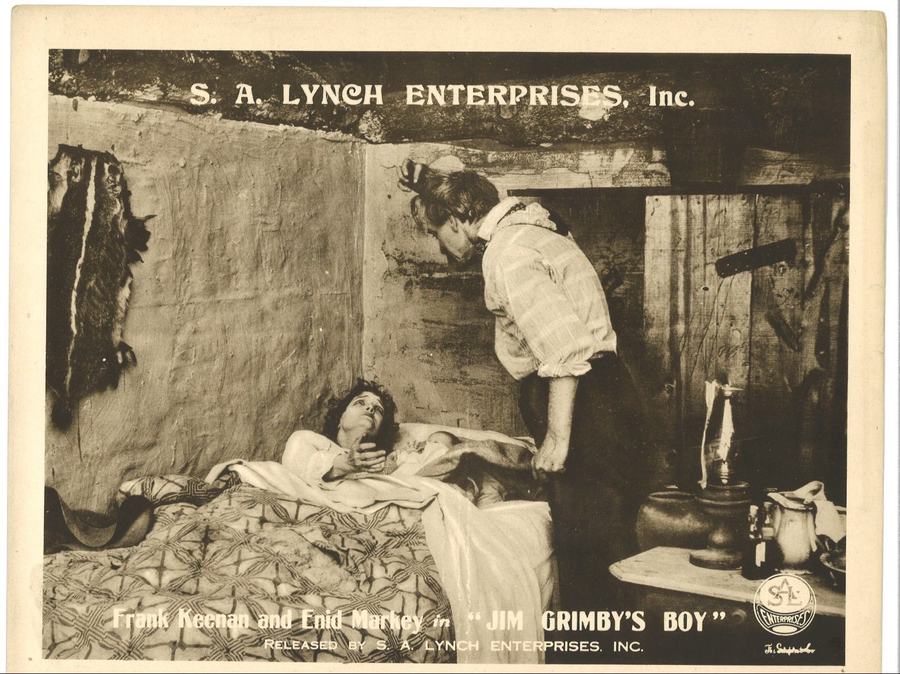
Stepping back into the silent film era, one occasionally unearths a narrative so profoundly prescient, so rich in its exploration of human identity and societal constructs, that it reverberates with a startling contemporary resonance. Jim Grimsby's Boy, a cinematic artifact from a bygone epoch, is precisely such a discovery. It’s a film that, beneath its seemingly quaint veneer of early 20th-century melodrama, grapples with themes of gender, parental expectation, and the unyielding spirit of self-determination in ways that feel both timeless and remarkably bold for its period. Lanier Bartlett’s script, brought to life by a dedicated cast, doesn't just tell a story; it stages a psychological drama wrapped in frontier grit, challenging audiences to look beyond superficial appearances and question the very definitions of masculinity and femininity.
At its core, the film presents us with the titular Jim Grimsby, portrayed with a compelling blend of stoicism and misguided affection by Frank Keenan. Jim is a man forged in the crucible of the mountains, a figure of rugged individualism whose world is irrevocably altered by the devastating loss of his wife during childbirth. This tragedy, rather than softening him, seems to harden his resolve, leading him down an unconventional, almost defiant, path. In a decision that sets the entire narrative in motion, he names his newborn daughter Bill. This isn't merely a quaint appellation; it's an ideological decree, a paternal pronouncement intended to shape her very being. Jim’s motivation, while born of grief and a desire to protect, is deeply flawed. He believes that by raising Bill as a boy, by imbuing her with masculine traits and denying her feminine expression, he can somehow shield her from the vulnerabilities he associates with womanhood, perhaps even from the tragic fate that befell her mother. It's a fascinating, if problematic, premise that immediately plunges the audience into a debate about nature versus nurture, and the societal pressures that dictate identity.
The true heart of the film, and indeed its most captivating element, lies in the character of Bill, brought to vibrant life by the expressive Enid Markey. Despite Jim’s best efforts, Bill is not merely a boy in name only; she is a young woman whose inherent femininity cannot be suppressed by rough-and-tumble upbringing. Markey’s performance is a masterclass in silent film acting, conveying Bill’s internal struggle and burgeoning desires through subtle gestures, longing glances, and the very way she carries herself. We witness her natural inclination towards self-expression – the desire to style her hair, to adorn herself in the latest fashions, to embrace the aesthetic pleasures that societal norms of the time often associated exclusively with women. This isn't a rebellion born of malice, but an organic unfolding of her true self, a quiet but persistent pushback against the rigid confines of her father’s design. Her journey reminds one of the resilient spirit seen in characters like those in Helene of the North, where female protagonists often navigate challenging landscapes, both physical and emotional, to assert their agency.
The arrival of the new sheriff, Waldo Whittier, played by Robert McKim, serves as the pivotal catalyst for Bill’s awakening. Whittier represents a more conventional masculinity, a figure of authority and, crucially, a potential romantic interest. Bill’s crush on him is not just a simple infatuation; it’s a profound affirmation of her womanhood, a desire for connection that transcends her father’s imposed identity. This romantic entanglement becomes the ultimate test of Jim’s convictions, pushing him to the brink. His horror at the prospect of his 'son' marrying a man highlights the deep-seated anxieties and patriarchal expectations that underpin his worldview. It’s a moment of profound irony, as Jim’s efforts to make Bill 'strong' have inadvertently led her to a path that, to his mind, is a betrayal of that very strength.
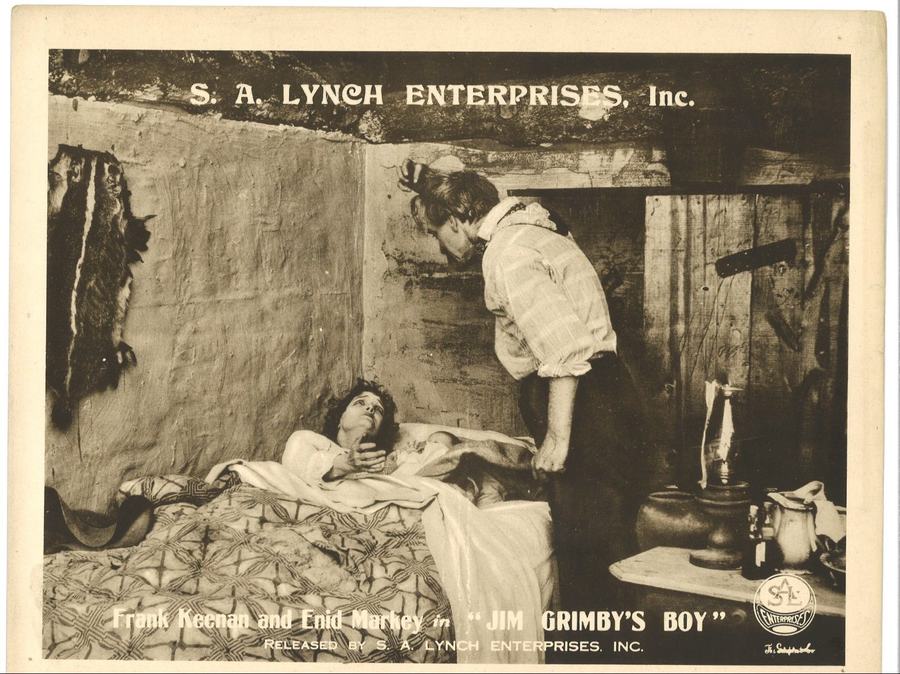
Jim Grimsby’s reaction to Bill’s burgeoning romance is perhaps the most fascinating, and problematic, aspect of his character. Unable to reconcile his vision of 'Bill, the boy' with the reality of 'Bill, the woman in love,' he resorts to an extreme, almost farcical, measure: he decides to test Waldo’s 'grit.' His plan? To rob a casino, believing that Waldo, like any 'sensible' man, would be too frightened to pursue a dangerous criminal. This act of desperation is a transparent attempt by Jim to reassert control, to prove his distorted notion of masculinity, and perhaps, to scare Waldo away. It’s a dramatic escalation that moves the film from a domestic drama into a thrilling chase sequence, a common trope in silent cinema, but here imbued with deep psychological undertones. One might draw parallels to the high-stakes moral dilemmas explored in films like The Devil at His Elbow, where characters are pushed to their limits to prove their integrity or courage.
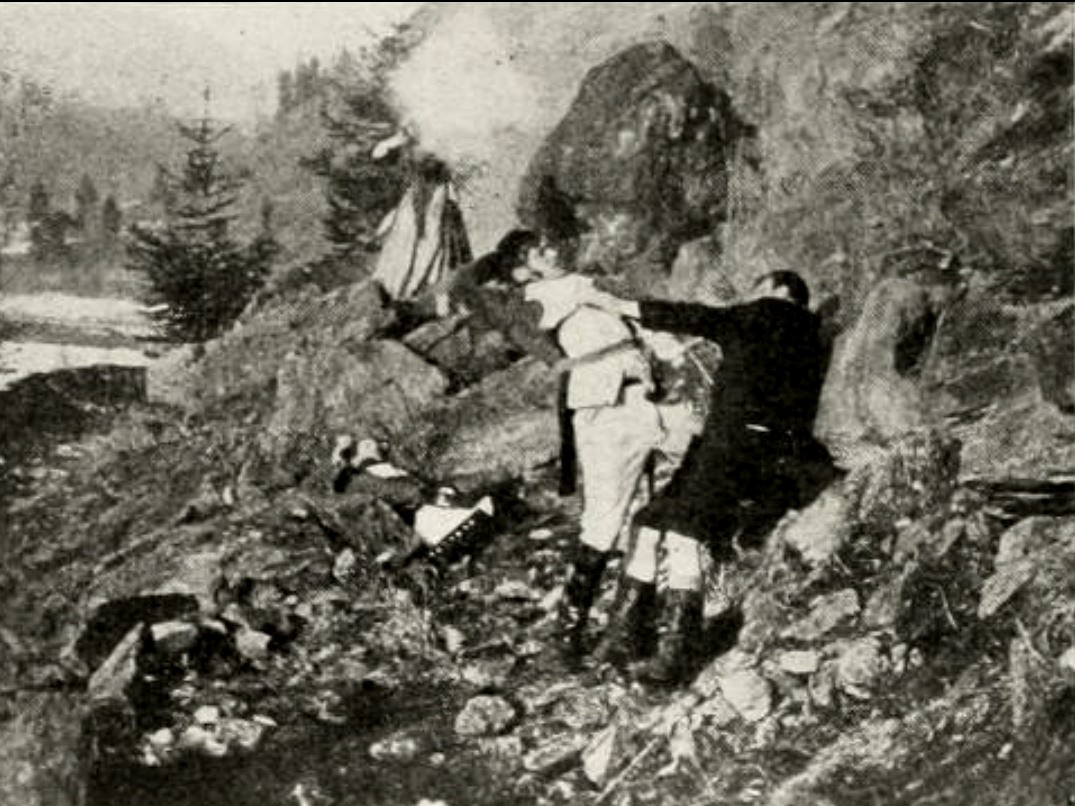
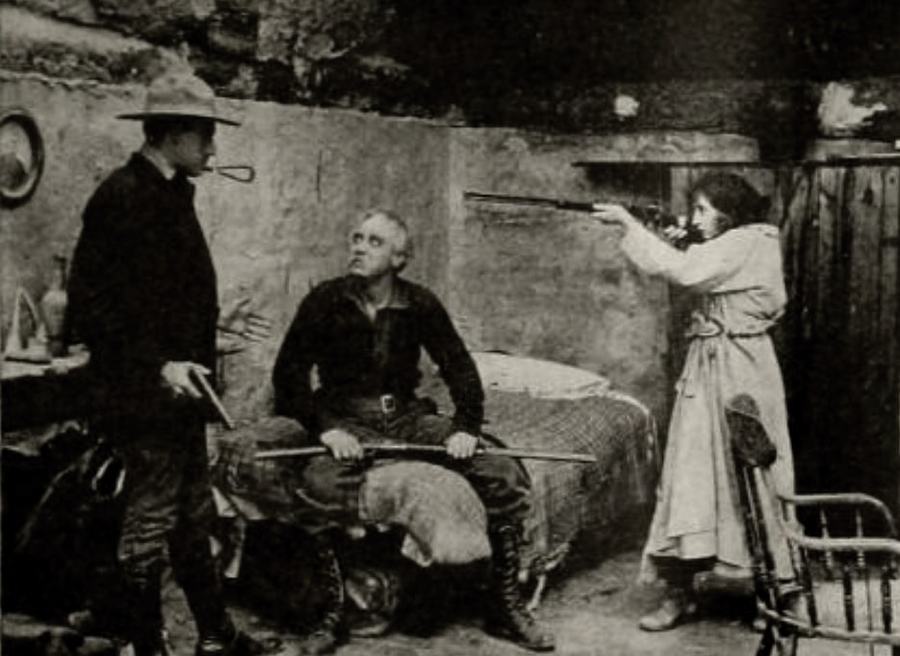
However, Jim’s carefully constructed plan unravels spectacularly. Waldo, far from being intimidated, proves his mettle by pursuing Jim with unwavering determination. This unexpected display of courage from the sheriff further complicates Jim’s worldview. The ultimate twist in Jim’s perception comes not from Waldo’s actions, but from Bill’s. In a moment of intense loyalty and filial protection, Bill pulls a rifle on Waldo, threatening him to save her father. This act of aggressive defense, ironically, is precisely the kind of 'manly' behavior Jim had tried so hard to instill in her. It’s a powerful, almost tragicomic, climax where Bill’s actions, intended to protect her father, inadvertently validate his warped sense of what constitutes strength and loyalty. The film brilliantly plays with the audience's expectations here, subverting a typical damsel-in-distress scenario and instead presenting a daughter who, even while yearning for feminine expression, can still embody a fierce, protective spirit that Jim mistakenly equates with masculinity.
The resolution of Jim Grimsby's Boy is a fascinating study in compromise and grudging acceptance. Jim, having witnessed Waldo’s steadfast pursuit and Bill’s aggressive defense, is finally convinced of the sheriff’s 'manliness.' More importantly, he believes that his daughter, despite her feminine aspirations, has not entirely forgotten 'how to act like a man' – or at least, how to embody the strength and loyalty he values. It's a resolution that doesn't necessarily dismantle Jim’s patriarchal views entirely, but rather finds a way for them to coexist, however awkwardly, with Bill’s true desires. He returns the casino’s money, a symbolic act of contrition and perhaps a tacit acknowledgment of his folly, and agrees to let Bill and Waldo continue their courtship. This ending, while not a complete triumph of gender fluidity, is a significant step for its time, suggesting that strength and character are not exclusive to one gender, and that love can indeed bridge divides of expectation and upbringing.
The performances are central to the film’s enduring appeal. Enid Markey, as Bill, delivers a nuanced portrayal of a young woman caught between filial duty and personal longing. Her expressive eyes and subtle physicality convey a depth of emotion that transcends the spoken word, making Bill’s journey incredibly relatable. Frank Keenan’s Jim Grimsby is a testament to the power of character acting in the silent era; he imbues Jim with a compelling blend of stubbornness, love, and ultimately, a touch of bewildered acceptance. Fanny Midgley and J.P. Lockney, in supporting roles, add texture to the small community, grounding the more dramatic elements of the plot in a believable social fabric. The film's narrative structure, crafted by Lanier Bartlett, is tightly woven, building tension and character development with remarkable efficiency, a hallmark of effective silent film storytelling.
What makes Jim Grimsby's Boy particularly noteworthy is its willingness to tackle complex themes of gender identity and societal roles at a time when cinema was still in its infancy. While not as overtly political as some later films, it subtly critiques rigid gender expectations, highlighting the absurdity of trying to force an individual into a pre-determined mold. This film, in its own quiet way, contributes to a burgeoning conversation in early cinema about female agency and identity, a conversation also present in other works of the period like The Opened Shutters or even the serial adventures of Beatrice Fairfax, which showcased strong, independent female characters. The struggle to reconcile personal desires with societal expectations is a universal one, and this film captures it with surprising clarity.
The film's exploration of parental control and the inevitable rebellion of youth also places it within a long tradition of storytelling. Jim’s attempts to dictate Bill’s identity resonate with the timeless conflicts between generations, where parents project their hopes and fears onto their children. It’s a dynamic that can be seen in countless narratives, from literary classics like David Copperfield to more contemporary dramas. However, Jim Grimsby's Boy adds a unique twist by making gender identity the central battleground, a choice that feels remarkably forward-thinking for the 1910s. The film doesn't preach; instead, it allows the characters' actions and reactions to speak volumes, inviting the audience to ponder the implications of Jim's choices and Bill's resilience.
Moreover, the film also touches upon the notion of what constitutes 'true' strength. Is it the rugged, solitary existence Jim champions, or is it the courage to be oneself, to pursue love, and to protect those you care about, regardless of gendered expectations? Waldo Whittier's quiet steadfastness, contrasted with Jim's theatrical robbery, offers a subtle commentary on different forms of heroism. Bill's ultimate act of pulling a rifle on Waldo, while seemingly fulfilling Jim's desire for 'manly' action, is ultimately an act of fierce loyalty and protection, qualities that transcend gender. It’s a nuanced portrayal that avoids easy answers, much like the complexities presented in films that delve into moral fortitude, such as A Fool's Paradise, which often test characters' inner strength against external pressures.
In conclusion, Jim Grimsby's Boy stands as more than just a historical curiosity; it is a compelling piece of early cinema that continues to provoke thought and conversation. Its themes of identity, love, and the complex dynamics between parents and children are as relevant today as they were over a century ago. The film challenges us to consider how much of our identity is innate, how much is shaped by upbringing, and the often-painful process of reconciling those two forces. The strong performances, particularly from Enid Markey and Frank Keenan, elevate Lanier Bartlett's thoughtful script, making this film a poignant and surprisingly modern exploration of what it means to be true to oneself, even when the world – or one's father – has other plans. It’s a testament to the power of storytelling that even in the silent era, filmmakers were tackling such profound and enduring aspects of the human condition, offering a mirror to society's evolving understanding of gender and individuality. This film, much like a well-preserved artifact, offers a unique window into the past, while simultaneously reflecting aspects of our present debates with surprising clarity and grace.
IMDb —
1916
Community
Log in to comment.