DbcultAccessing Vault...
Cult Review
Senior Film Conservator

From the very first frame, Just Dogs thrusts the viewer into a world where fur, feathers, and fur‑like imagination dominate the screen. The opening sequence—Pal, a down‑and‑out drifter, curled beneath a threadbare blanket, and Joe, his hyperactive monkey sidekick—functions as a kinetic tableau of slap‑stick comedy and tender camaraderie. The director, Albert Herman, orchestrates Joe’s acrobatic wake‑up call with a kinetic energy that recalls the frenetic pacing of The Last of the Mafia, yet infuses it with a distinctly animal‑centric humor.
The film’s second act pivots to a rustic breakfast tableau that serves as both narrative catalyst and visual gag. Joe’s attempt to milk a goat—repeatedly butt‑ed, yet undeterred—mirrors the absurd perseverance found in classic silent comedies. Pal’s fish‑catching scene, shot with a lingering close‑up of shimmering scales, juxtaposes the gritty realism of a riverine setting against the cartoonish exaggeration of the characters’ motions. The cinematography employs a muted palette punctuated by splashes of the film’s signature dark orange (#C2410C) during moments of triumph, a choice that underscores the thematic warmth amid a predominantly monochrome world.
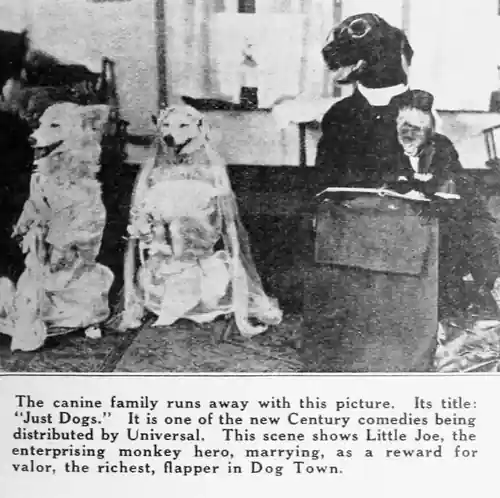
Enter the white dog flapper, a figure of ethereal elegance whose presence redefines the story’s trajectory. Her father’s grocery empire—Barktown’s commercial leviathan—acts as a satirical mirror to human capitalism, echoing the corporate satire in The Seal of Silence. The flapper’s immaculate coat, rendered in a luminous wash of sea blue (#0E7490), contrasts starkly with the darker environs, suggesting a purity that both captivates and unsettles Pal. Their budding romance is conveyed through a series of choreographed sequences that blend canine courtship rituals with 1920s jazz‑age dance motifs, a daring stylistic fusion that pays homage to Pierre of the Plains’s genre‑bending bravado.
Structurally, the screenplay adheres to a three‑act paradigm but subverts expectations through its animal protagonists. The inciting incident—Joe’s relentless wake‑up—propels the plot forward with an urgency that feels both comedic and earnest. The middle act, dominated by the duo’s wanderings, is peppered with episodic vignettes—encounters with a street‑wise alley cat, a melancholy pigeon poet, and a troupe of circus‑trained ferrets—that enrich the world‑building without derailing the central love story. The climax, a sun‑kissed wedding officiated by a dignified black dog minister, resolves the narrative threads while delivering a visual crescendo of white satin, tulle, and a chorus of barking applause. This resolution feels reminiscent of the heartfelt denouement in After the Ball, yet it remains uniquely its own through the lens of animal allegory.
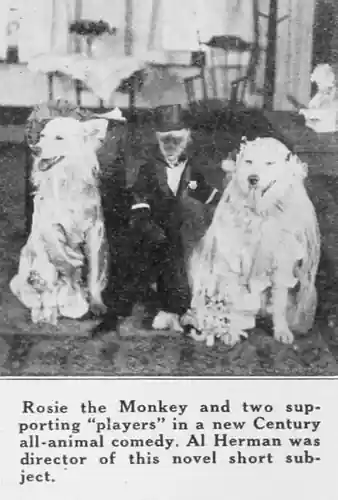
The voice cast, led by the charismatic Brownie the Dog, delivers performances that oscillate between earnest pathos and uproarious comedy. Brownie’s timbre carries a gravitas that anchors Pal’s otherwise hapless demeanor, while the monkey’s vocalizations—performed by an uncredited yet undeniably skilled voice artist—inject a manic energy that keeps the audience engaged. The supporting cast, including the solemn black dog minister, provides a tonal counterbalance, offering moments of reflective silence that allow the film’s more frenetic sequences to breathe. The ensemble’s chemistry is palpable, a testament to Herman’s direction and the script’s nuanced dialogue.
Visually, Just Dogs is a study in contrast. The predominant black background—a deliberate homage to classic noir—creates a stark canvas upon which the film’s three signature hues dance. Dark orange (#C2410C) surfaces during moments of triumph or emotional intensity, such as the goat‑milking showdown or the climactic vows. Yellow (#EAB308) highlights comedic beats, illuminating the scene when Joe’s antics cause a cascade of slap‑stick chaos. Sea blue (#0E7490) is reserved for moments of introspection, most notably the river scene where Pal contemplates his place in the world. This disciplined palette not only unifies the visual language but also reinforces thematic undercurrents of hope, humor, and melancholy.

The auditory landscape of Just Dogs is a symphonic blend of diegetic animal sounds and an original score that leans heavily on jazz motifs and orchestral swells. The score’s leitmotif—played on a muted trumpet—accompanies the white dog flapper’s appearances, evoking the spirit of 1920s flapper culture while simultaneously underscoring her otherworldly allure. Meanwhile, the percussive thuds of goat butts are amplified to comedic effect, a sound design choice that mirrors the exaggerated physical comedy of The Dare-Devil Detective. The sound mix is meticulously balanced, ensuring that dialogue remains intelligible against the backdrop of bustling Barktown streets.
At its core, Just Dogs explores the elasticity of loyalty and love through the prism of anthropomorphism. Pal’s devotion to Joe, despite the monkey’s chaotic nature, mirrors the classic human bond of friendship tested by circumstance. The white dog flapper’s romance with Pal offers a commentary on class disparity—her affluent lineage juxtaposed with Pal’s itinerant existence—yet the film resolves this tension through a universally resonant ceremony that celebrates unity over status. The wedding, replete with white satin and tulle that echo the couple’s coats, becomes a visual metaphor for the shedding of external trappings in favor of authentic connection.
When situated alongside other animal‑centric narratives such as Body and Soul (1920) or the more recent No Children Wanted, Just Dogs distinguishes itself through its unwavering commitment to visual stylization and its willingness to blend genre conventions. While Poor Karin leans heavily on melodrama, Herman’s film opts for a balanced cocktail of comedy, romance, and social satire, resulting in a richer, more layered viewing experience.
Just Dogs is an ambitious, visually arresting piece that pushes the boundaries of animal storytelling. Its strengths lie in its inventive color palette, deftly choreographed comedic set‑pieces, and a heartfelt narrative that resonates beyond its anthropomorphic veneer. The film’s occasional pacing lulls—particularly during the extended grocery‑store montage—prevent it from achieving flawless momentum, yet these moments are offset by the exuberant energy of the climactic wedding sequence. For audiences seeking a film that marries whimsical charm with substantive thematic inquiry, Just Dogs delivers a satisfying, bark‑laden adventure that lingers long after the credits roll.
IMDb 6
1931
Community
Log in to comment.