DbcultAccessing Vault...
6.8/10
Senior Film Conservator
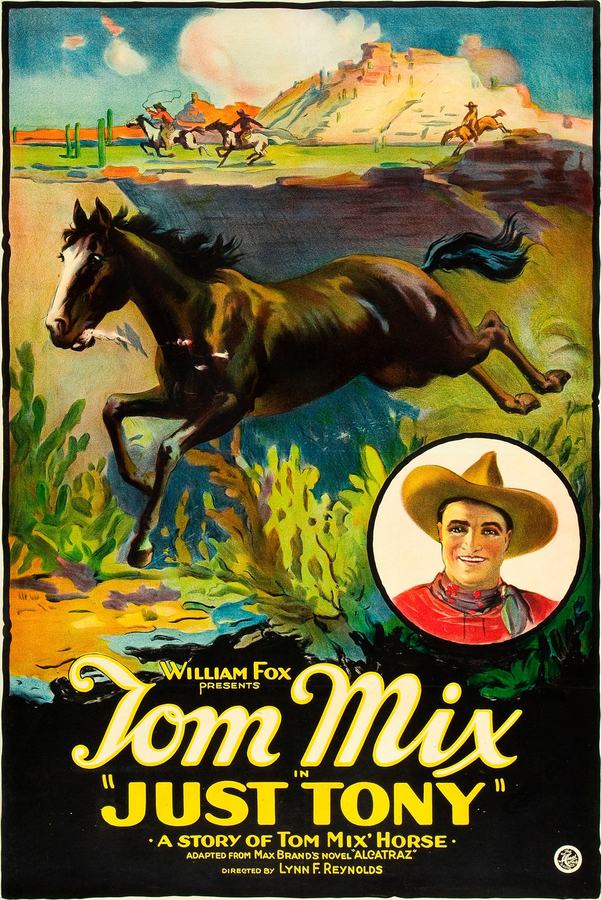
A definitive 6.8/10 rating for a film that redefined the boundaries of cult cinema. Just Tony remains a cornerstone of transgressive art.
To view Just Tony (1922) through the lens of modern action cinema is to fundamentally misunderstand the seismic shift it represented in the early 20th-century zeitgeist. This isn't merely a vehicle for the athletic prowess of Tom Mix; it is a cinematic hagiography of a horse. In an era where the Western was beginning to transition from the gritty, dour realism of William S. Hart to something more flamboyant and mythic, Just Tony stands as the foundational text of the 'Wonder Horse' subgenre. While films like Black Beauty attempted to anthropomorphize the equine experience through Victorian sentimentality, Just Tony retains a raw, atavistic energy that feels remarkably modern even a century later.
The screenplay, adapted from Max Brand's prose, carries the distinct literary weight of a man who understood the frontier not as a place, but as a psychological state. Brand, a prolific weaver of myths, imbues the protagonist Jim Ferris with a brooding intensity that feels miles apart from the sanitized heroes of later decades. Ferris is a man defined by a wound—both physical and spiritual—inflicted in the dim, beer-soaked atmosphere of a frontier saloon. This inciting incident sets the stage for a narrative that is as much about the reclamation of masculinity as it is about the hunt for a villain.
The collaboration between director Lynn Reynolds and writer Max Brand creates a fascinating tension. Reynolds, known for his kinetic visual style, finds the perfect counterpoint in Brand’s penchant for Shakespearean irony. The plot’s central conceit—the hero falling for the daughter of his nemesis—is a classic trope, yet here it feels earned because it is juxtaposed against the literal and metaphorical 'breaking' of the stallion. The stallion, Tony, isn't just a mount; he is the externalization of Ferris’s own wildness. To tame Tony is to tame the murderous rage that threatens to consume Ferris’s soul.
When comparing this to contemporary works like The Crossroads of New York, one notices a stark difference in spatial awareness. While urban dramas of the time were often claustrophobic, Just Tony utilizes the vast, unblinking eye of the desert to emphasize the isolation of its characters. The landscape is a character in itself, much like the rugged terrains seen in A Desert Hero, but here it is rendered with a higher degree of cinematographic sophistication. The use of natural light and the deep-focus shots of the galloping stallion create a sense of scale that was rarely achieved in the early twenties.
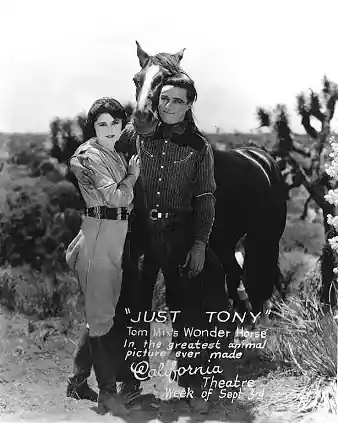
Tom Mix was the quintessential showman, a performer who understood that in the silent era, the body was the primary instrument of storytelling. His athleticism in Just Tony is breathtaking, but it is his rapport with the horse that provides the film’s emotional anchor. There is a palpable, tactile quality to their interactions—the way Mix handles the reins, the way the horse responds to his touch—that suggests a level of training and mutual respect that no amount of modern CGI could replicate. This is a far cry from the more staged performances in The Beauty Market, where artifice often overshadowed the visceral reality of the human condition.
"In the dance between the rider and the ridden, we see the true genesis of the Western hero—not as a conqueror of the land, but as a partner to its spirit."
The supporting cast, including Frank Campeau and Claire Adams, provide the necessary human friction to keep the plot moving. Campeau, as the man who shot Ferris, brings a sneering, low-level menace that makes him a formidable antagonist. Claire Adams, playing the daughter, manages to transcend the 'damsel' archetype by injecting her character with a quiet strength. Her chemistry with Mix is subtle, built on shared glances and the shared love for the wild stallion, which serves as the bridge between their two disparate worlds. This romantic subplot is handled with more grace than the often heavy-handed melodramatics found in The Girl of the Sunny South.
It is impossible to discuss this film without acknowledging that Tony the Horse is the true star. Before Trigger, before Silver, there was Tony. He was the first horse to receive billing alongside his human counterpart, and for good reason. His performance—if one can call it that—is remarkably expressive. The sequence where Ferris first encounters the stallion in the wild is a masterclass in editing and animal choreography. The camera captures Tony’s defiance, his power, and eventually, his submission, with a reverent eye that elevates the film from a mere Western to a work of naturalistic art.
This focus on the animal kingdom as a source of moral instruction is a recurring theme in the era's better films. While Where the Trail Divides explored the racial and social bifurcations of the frontier, Just Tony looks at the divide between the civilized and the wild. The horse represents a purity that the human characters, bogged down by vendettas and societal expectations, have lost. By the time the film reaches its climax, the audience is rooting for the horse as much as for the hero’s redemption.
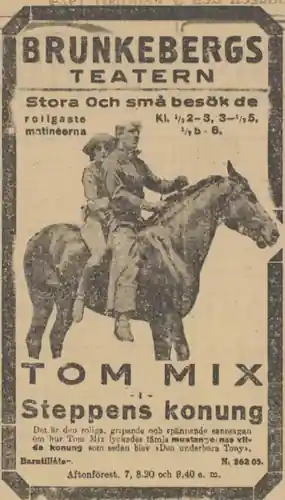
From a technical standpoint, Just Tony is a revelation. Lynn Reynolds pushes the boundaries of what was possible with early 20th-century camera equipment. The tracking shots during the chase sequences are remarkably stable, providing a sense of momentum that is often missing from static dramas like The Three of Us. There is a grit to the film—a layer of dust that seems to permeate every frame—that gives it an authentic, lived-in feel. The costume design, though stylized for the screen, feels functional rather than purely decorative, a stark contrast to the high-fashion artifice of The Beauty Market.
The pacing of the film is equally noteworthy. Reynolds understands when to linger on a landscape and when to tighten the edit for maximum impact. The bar-room brawl that sets the plot in motion is edited with a frantic, percussive energy that mirrors the chaos of the fight itself. This isn't the sanitized, choreographed violence of later decades; it feels messy, dangerous, and consequential. It sets a high bar for the rest of the film, ensuring that the stakes remain high even as the story shifts toward its more romantic and contemplative middle act.
The brilliance of the screenplay lies in its chiasmic structure. As Ferris moves closer to his goal of revenge, he moves further away from his own humanity, only to be brought back by the very things he sought to dominate: the horse and the woman. The irony of loving the daughter of his enemy is not played for cheap laughs or easy drama; it is presented as a genuine moral conundrum. Does he choose the blood-debt of the past, or the potential for a future? This thematic depth is what separates Just Tony from the assembly-line Westerns of the time.
The film’s resolution is both satisfying and intellectually honest. It doesn't shy away from the reality of the frontier—that violence leaves scars that never truly heal—but it offers a path forward through the bond of the 'domesticated' wild. The stallion, now a loyal companion, becomes the symbol of this new equilibrium. It is a powerful image that resonated deeply with audiences in 1922 and continues to hold a certain poetic power today. It is a far more resonant ending than the somewhat predictable conclusions of The Girl of the Sunny South.
Just Tony is more than just a footnote in the career of Tom Mix. It is a vibrant, breathing piece of cinema that captures a specific moment in American history when the myth of the West was being forged in the flickering light of the projector. It manages to be both a thrilling adventure and a thoughtful character study, anchored by a performance from a horse that is genuinely legendary. For anyone interested in the evolution of the Western, or the history of animal actors in cinema, this film is essential viewing. It possesses a rugged beauty and a narrative sincerity that many modern blockbusters would do well to emulate.
In the grand tapestry of 1920s cinema, alongside works as diverse as The Crossroads of New York and Black Beauty, Just Tony holds its own as a unique, visceral, and ultimately moving experience. It reminds us that sometimes, the most profound stories are the ones that don't need words—just a man, a horse, and the open horizon.
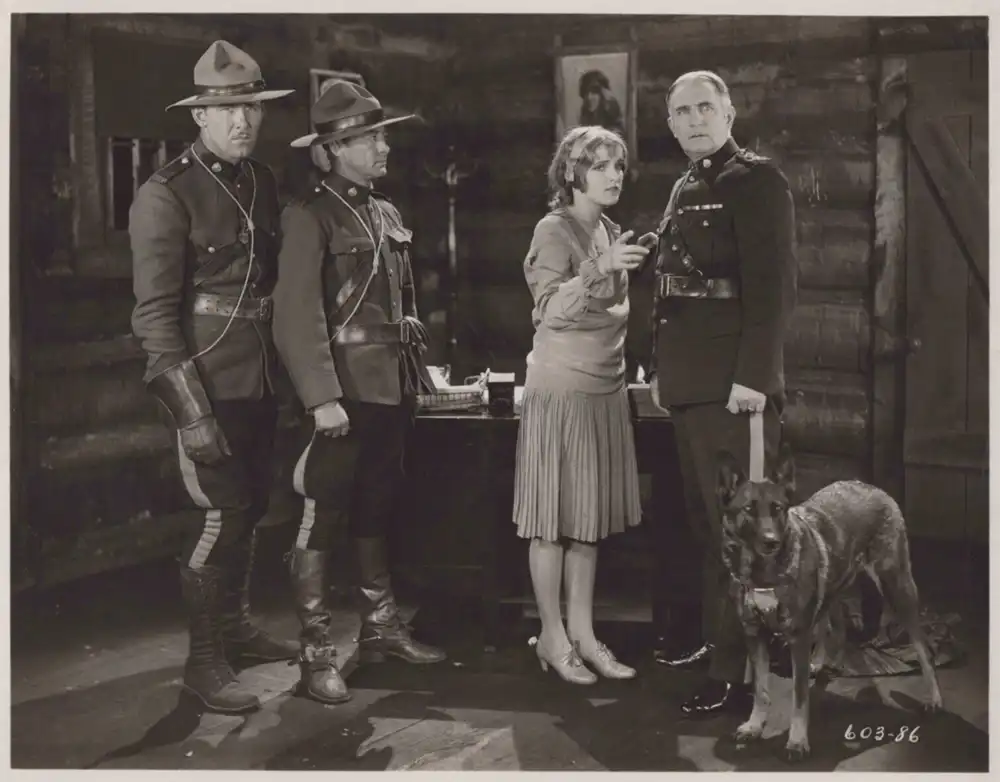
IMDb 5.6
1928
Community
Log in to comment.