DbcultAccessing Vault...
Cult Review
Senior Film Conservator
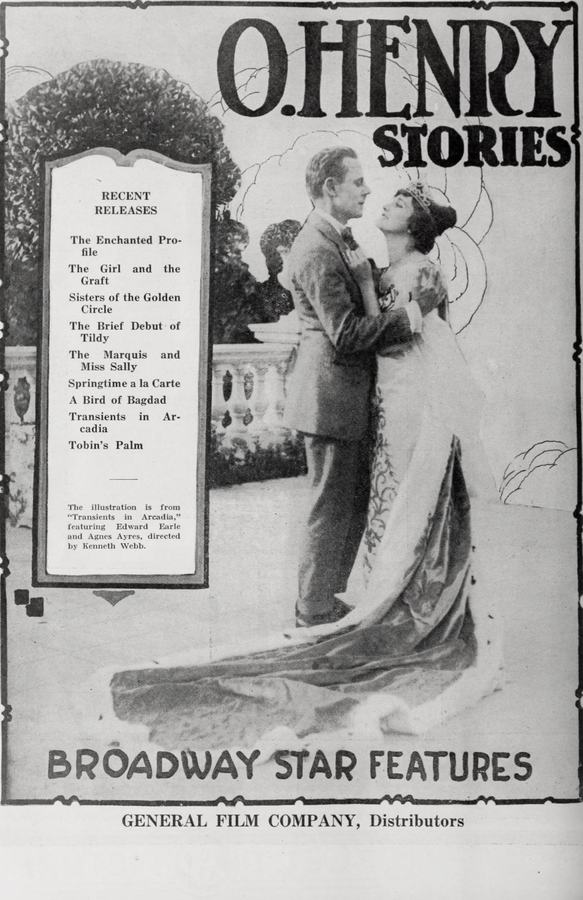
Stepping back into the nascent days of cinema, when storytelling was often an intricate dance between visual poetry and evocative intertitles, we encounter a gem that beautifully encapsulates the charm and ingenuity of its literary progenitor: A Bird of Bagdad. This adaptation of an O. Henry tale, while perhaps not as widely celebrated as some of its contemporaries, offers a delightful foray into a world where everyday lives are imbued with an unexpected romanticism and a dash of Eastern allure. It's a film that speaks to the enduring appeal of the underdog, the quiet dreamer, and the peculiar twists of fate that O. Henry so masterfully wove into his narratives. For aficionados of early cinema and those captivated by the subtle artistry of silent-era performances, this picture is more than just a historical artifact; it's a vibrant, engaging piece of cinematic heritage that still resonates with its unique blend of humor, heart, and a truly unforgettable climax.
At the heart of this narrative tapestry is the enigmatic figure of "Caliph" Quigg, portrayed with a subtle yet potent charisma by Frank Kingsley. Quigg is a character defined by a fascinating duality, a trope that O. Henry often explored with great relish. By day, he is the unassuming proprietor of a modest, perhaps even cheap, restaurant – a purveyor of simple fare, grounded in the mundane realities of daily commerce. Yet, as twilight descends and the city lights begin to twinkle, Quigg undergoes a metamorphosis. He sheds the apron of the restaurateur and embraces the persona of an adventurous seeker, a nocturnal wanderer whose spirit yearns for escapades befitting a sultan or a desert prince, echoing the romanticized mystique suggested by his self-appointed moniker, "Caliph." This dichotomy is not merely a superficial plot device; it serves as a profound commentary on the human desire for something beyond the ordinary, a yearning for an existence more thrilling, more meaningful, than the daily grind. It's a poignant illustration of how imagination can transform reality, even if only in the quiet hours of the night. This yearning for a grander existence, a secret life, can be seen in other silent films that explore personal aspirations against societal expectations, though perhaps few with the specific Arabian Nights flavor that Quigg embodies. His secret life is not one of villainy or deception, but rather one of internal quest, a pursuit of an undefined "adventure" that speaks volumes about his character's romantic soul.
Kingsley's portrayal of Quigg manages to convey both the quiet resignation of his daytime existence and the vibrant, almost boyish enthusiasm of his nighttime pursuits. There's a certain wistful quality to his gaze, suggesting that while he fulfills his duties, his heart truly lies elsewhere, navigating the labyrinthine alleys of his own imagined Bagdad. This internal conflict, though often unspoken, is powerfully communicated through his expressions and demeanor, a testament to the nuanced acting prevalent in the silent era. His character embodies a kind of quiet heroism, proving that adventure isn't always found in distant lands but can be cultivated within the confines of one's own spirit, even if it manifests as a nocturnal perambulation through familiar streets, reimagined through the lens of a vivid imagination. The film subtly asks us to consider whether Quigg's "adventure" is a true quest or merely a reflection of a soul too grand for its humble circumstances.
Against Quigg's introspective journey, the film weaves a more conventional, yet equally compelling, romantic subplot centered around Laura, the daughter of the prosperous harness maker, Ogden. Agnes Ayres delivers a performance that skillfully captures Laura's delicate position – a young woman on the cusp of womanhood, burgeoning with her own romantic inclinations, yet firmly under the thumb of a domineering father. Her situation is immediately relatable, resonating with the universal struggles of youth seeking independence and self-determination against the backdrop of parental authority. The "harness strap" isn't just a literal object of Ogden's trade; it's a potent metaphor for the restrictive control he exerts over his daughter's life, a constant, unspoken threat that stifles her burgeoning desires and dictates her choices. The script explicitly states she is "only a kid and should not be dreaming of husbands," a line that perfectly encapsulates the patriarchal attitudes of the era and the infantilization of young women, even those nearing an age where marriage would be considered.
Laura's affections are divided, or rather, sought by two of her father's employees: Ed Simmons, played by Edward Earle, and Bill Hillman, portrayed by Frank Norcross. These two represent distinct archetypes of suitors, each vying for Laura's hand and, by extension, a stake in Ogden's prosperous business. Their rivalry forms a significant comedic and dramatic backbone of the film, highlighting the often-unspoken pressures and social customs surrounding courtship in early 20th-century America. Ayres imbues Laura with a quiet strength, a subtle defiance that suggests she is not merely a passive object of affection but an individual with her own preferences and dreams, even if she dares not voice them openly to her formidable father. Her internal struggle is palpable, a silent rebellion against the strictures imposed upon her. One might draw parallels to the constrained romantic options and societal pressures faced by heroines in films like The Girl from His Town or Her Sister's Rival, where women navigate complex social landscapes to find love and autonomy. However, Laura's predicament is uniquely framed by her father's eccentricities, adding another layer of challenge.
Arthur Donaldson's portrayal of Ogden, the harness maker, is nothing short of brilliant. He is not merely a stern father but a man possessed by a singular, eccentric passion: riddles. This peculiar intellectual obsession becomes the central mechanism for determining Laura's future, elevating the film from a simple romantic triangle to a clever battle of wits. When the thorny question of Laura's prospective husband is finally broached, Ogden, rather than weighing the suitors' merits or Laura's desires, poses a cryptic challenge: "What kind of a hen lays the longest?" This riddle is not just a quirky plot device; it's a profound reflection of Ogden's character – a man who values intellectual acumen and cleverness above all else, perhaps as a means of control or as a reflection of his own idiosyncratic worldview. The riddle serves to externalize the internal struggle, transforming a personal decision into a public contest of intelligence, adding a layer of suspense and intellectual engagement to the narrative.
Ogden's insistence on a riddle to decide such a momentous life choice speaks volumes about the societal norms of the time, where a father's word was law, and a daughter's agency was often secondary. Yet, O. Henry, through this narrative, subtly critiques such authoritarianism by making the resolution dependent on wit rather than brute force or wealth. Donaldson plays Ogden with a captivating blend of gravitas and subtle humor, his stern countenance often betraying a spark of delight in his own cleverness. His character is a pivotal force, driving the plot forward with his unyielding demands and setting the stage for the film's climactic revelation. The entire setup feels like a classic folk tale reimagined for the modern age, where a princess is won not through dragon-slaying, but through intellectual dexterity. This kind of high-stakes, riddle-based challenge can be seen in various forms throughout storytelling, from ancient myths to more contemporary thrillers like High Stakes, where a decisive challenge dictates fate. However, the domestic, almost quaint setting of "A Bird of Bagdad" gives this particular riddle a unique charm and immediacy.
It is impossible to discuss A Bird of Bagdad without acknowledging the profound influence of its source material, a masterwork by the inimitable O. Henry. The film is a faithful and spirited translation of his signature style to the silent screen, replete with the irony, wit, and, most importantly, the unexpected "snappiest of climaxes" that defined his literary output. O. Henry was a master of the twist ending, a narrative device that not only surprised his readers but often recontextualized everything that came before it, revealing deeper layers of meaning or a wry commentary on human nature. This film, in its careful pacing and character development, builds towards such a revelation, ensuring that the audience's investment in the characters and their predicaments is fully rewarded. The riddle, initially a seemingly arbitrary hurdle, becomes the ultimate vehicle for this narrative characteristic, demanding not just an answer, but a particular kind of insight that only an O. Henry story could provide. The anticipation of this answer is expertly built, keeping viewers engaged and pondering the solution alongside the characters.
The film’s climax is not merely a resolution; it is an intellectual punchline, a moment of profound satisfaction that solidifies the narrative’s cleverness. It's a testament to the screenwriters' understanding of O. Henry's unique voice that they were able to translate this literary magic so effectively into a visual medium. This particular story, with its blend of urban realism and fanciful escapism, serves as an excellent canvas for O. Henry's thematic concerns: the struggle of the common man, the unexpected turns of fate, and the triumph of ingenuity over mere circumstance. The film's ability to maintain the spirit of the short story, particularly its blend of humor and pathos, is commendable. It avoids the pitfall of many adaptations that merely replicate plot points, instead striving to capture the very essence of the author's narrative spirit. The ending is not just a surprise; it's an affirmation of the subtle intelligence embedded within the narrative structure, a hallmark of O. Henry that distinguishes his work. One might compare this cleverness to the intricate plots found in other literary adaptations of the era, such as The Great Adventure, which also navigated complex character journeys towards a fulfilling resolution.
The success of A Bird of Bagdad rests significantly on the shoulders of its talented ensemble cast, each member contributing to the film’s vibrant characterizations. Frank Kingsley, as the titular "Caliph" Quigg, anchors the film with his compelling portrayal of a man living a dual existence. His ability to convey both the mundane reality of his daytime job and the romantic yearning of his nocturnal adventures without uttering a single word is a masterclass in silent film acting. He makes Quigg's inner life palpable, allowing the audience to empathize with his quiet aspirations and root for his eventual triumph. His expressive eyes and subtle gestures communicate volumes, drawing viewers into his unique world.
Agnes Ayres, a prominent figure of the silent screen, brings a nuanced vulnerability and spirited resolve to the role of Laura. Her performance artfully navigates the complexities of a young woman caught between filial duty and burgeoning personal desires. Ayres conveys Laura's apprehension of her father's "harness strap" while simultaneously hinting at an underlying strength and independence that waits for the opportune moment to surface. Her expressions of longing, frustration, and eventual hope are beautifully rendered, making her a sympathetic and engaging heroine. Her subtle defiance is a silent testament to the evolving role of women, even within the constraints of early 20th-century narratives.
The rivalry between Edward Earle's Ed Simmons and Frank Norcross's Bill Hillman is another highlight. Earle and Norcross bring distinct personalities to their respective suitors, creating a dynamic tension that fuels much of the romantic conflict. Simmons, perhaps the more conventional suitor, and Hillman, with his own particular charm, provide a compelling contrast, making Laura’s choice, and ultimately Ogden’s riddle, all the more impactful. Their interactions, often characterized by subtle competition and unspoken antagonism, are expertly choreographed for maximum dramatic and comedic effect.
Finally, Arthur Donaldson delivers a memorable performance as Ogden, the eccentric harness maker. His portrayal is a delicate balance of stern authority and peculiar humor, making him a formidable yet ultimately endearing figure. Donaldson masterfully conveys Ogden's obsession with riddles, making it feel like a deeply ingrained character trait rather than a mere plot device. His expressions of intellectual satisfaction and his unyielding stance on the matrimonial challenge are crucial to the film's comedic timing and dramatic tension. The entire ensemble works harmoniously, creating a believable and engaging world, a hallmark of well-executed silent cinema where every gesture and expression carries immense weight. The depth of characterization achieved by this cast, particularly given the limitations of the silent medium, is truly remarkable and speaks to their collective talent.
While specific directorial credits and detailed technical analyses often elude us for many early silent films, A Bird of Bagdad nonetheless offers valuable insights into the cinematic craftsmanship of its era. The film likely employed many of the visual storytelling techniques common in the early 20th century: tableau shots that mimic theatrical staging, expressive intertitles to convey dialogue and narrative progression, and a reliance on exaggerated, yet emotionally clear, physical acting. The visual composition would have been crucial for conveying the narrative nuances, especially the contrast between Quigg's drab restaurant and his imagined, more exotic nocturnal world. Lighting, though perhaps less sophisticated than later periods, would have been used to delineate mood and highlight key characters, particularly during moments of introspection or dramatic confrontation.
The adaptation of an O. Henry story for the screen also presents unique challenges and opportunities for early filmmakers. O. Henry's narratives are often driven by internal monologues, clever wordplay, and narrative misdirection – elements that require careful visual translation in a silent medium. The film likely excelled in its use of character reactions and carefully chosen intertitles to deliver the story's wit and irony, ensuring that the essence of O. Henry's prose was not lost. The pacing, too, would have been meticulously crafted, building suspense towards the inevitable O. Henry twist. The visual language would have had to be precise and unambiguous to communicate the complex emotional states and plot intricacies without the aid of spoken dialogue. This required a keen understanding of cinematic grammar at a time when it was still being invented.
Comparing its stylistic approach to contemporary films of its period, one might find commonalities with the narrative structures of dramas like The Battle of Life or the romantic entanglements in The Spirit of Romance. However, the unique O. Henry framework provides "A Bird of Bagdad" with a distinct flavor. The portrayal of "Bagdad" itself, likely through evocative set dressing and costume design, even if limited by early film budgets, would have aimed to transport the audience to Quigg's imagined world, adding a layer of exotic fantasy to an otherwise grounded tale. This blending of the mundane with the fantastical, achieved through visual cues and character performance, is a testament to the creative resourcefulness of early cinematic artists. The film serves as a fascinating document of how early directors and cinematographers grappled with bringing complex literary narratives to life on the nascent silver screen, employing every tool at their disposal to engage and enchant their audiences.
In an era dominated by sprawling epics and melodramatic romances, A Bird of Bagdad stands out for its concise yet deeply satisfying narrative. It's a film that, despite its age, retains a remarkable freshness, primarily due to the timeless appeal of O. Henry's storytelling. The themes explored – the yearning for adventure beyond the ordinary, the struggle for autonomy against patriarchal authority, and the triumph of wit – are universal and continue to resonate with audiences today. The film serves as a wonderful example of how early cinema, even with its technical limitations, could deliver sophisticated and emotionally engaging stories. It reminds us that compelling characters and a clever plot can transcend technological advancements, proving that the heart of good storytelling remains constant.
Moreover, for students and enthusiasts of film history, "A Bird of Bagdad" offers an invaluable window into the stylistic conventions and narrative ambitions of the silent era. It showcases the interpretive power of actors like Frank Kingsley and Agnes Ayres, whose performances relied entirely on physical expression and emotional depth. It also highlights the crucial role of intertitles in shaping audience understanding and delivering the literary nuances of the source material. The film is a testament to the ingenuity of early filmmakers in adapting beloved literary works, translating the written word into a captivating visual experience. Its charm lies not just in its narrative surprise, but in its ability to transport us to a simpler yet equally complex time, where human desires and societal pressures played out on the silver screen with a poignant elegance.
Ultimately, A Bird of Bagdad is more than just an O. Henry adaptation; it is a delightful cinematic journey that celebrates the power of imagination, the complexities of love, and the unexpected wisdom found in the most unassuming of places. Its "snappiest of climaxes" is not merely a clever trick but a satisfying culmination of character arcs and thematic explorations, leaving the viewer with a smile and a renewed appreciation for the enduring magic of classic cinema. It's a testament to the fact that even in its infancy, film possessed the profound capability to enchant, provoke thought, and deliver truly memorable moments. This enduring appeal makes it a valuable watch for anyone interested in the evolution of cinematic narrative and the timeless art of adaptation.
IMDb —
1915
Community
Log in to comment.