DbcultAccessing Vault...
6.4/10
Senior Film Conservator
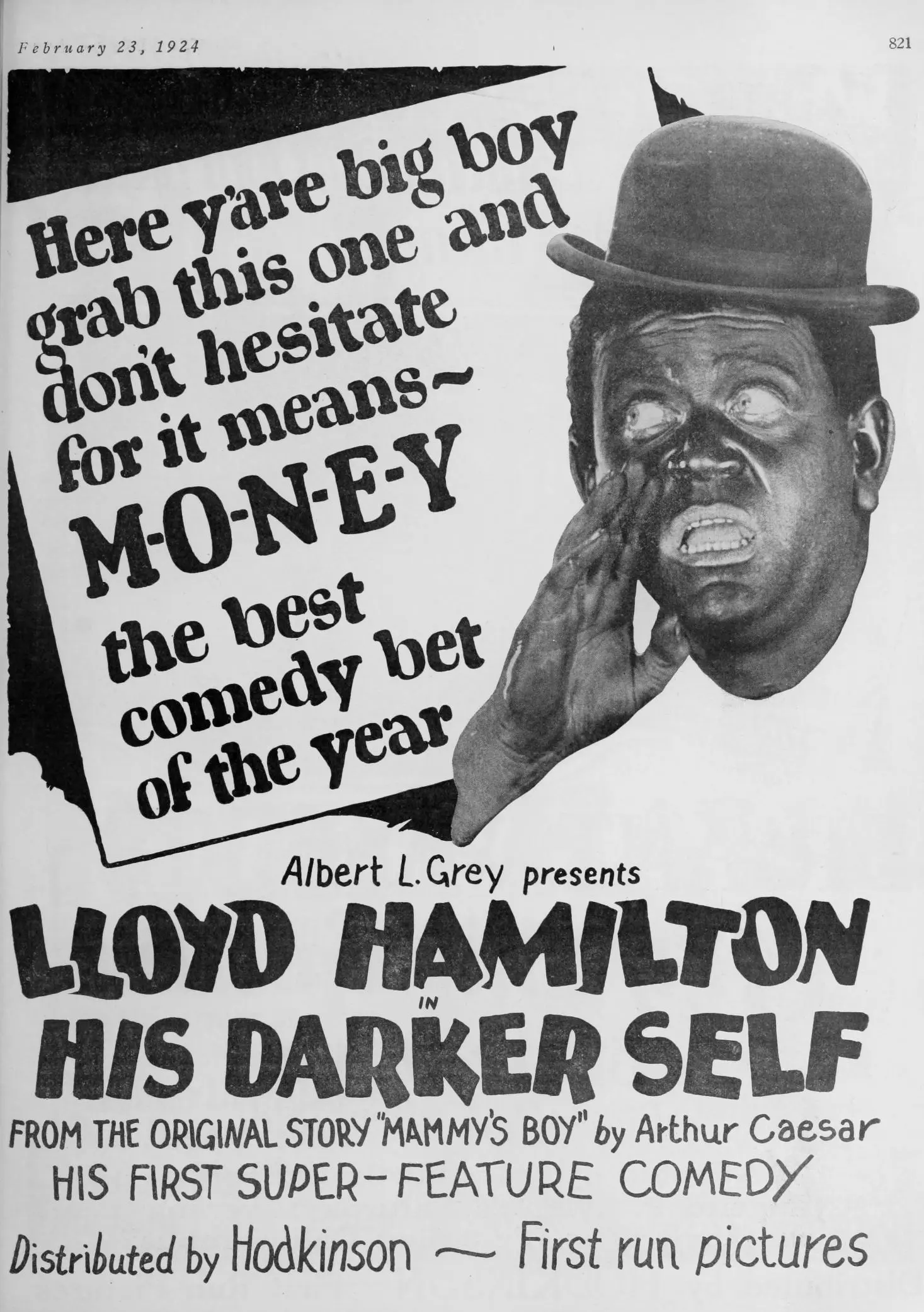
A definitive 6.4/10 rating for a film that redefined the boundaries of cult cinema. His Darker Self remains a cornerstone of transgressive art.
The silent era was often a laboratory for the bizarre, a period where the boundaries between slapstick comedy and harrowing social commentary were frequently blurred, sometimes intentionally and often through the sheer clumsiness of contemporary sensibilities. His Darker Self (1924) stands as a towering, if deeply problematic, monument to this era. Directed by Albert Parker and written by the sharp-witted Arthur Caesar and Ralph Spence, the film was famously intended as a vehicle for Al Jolson before Lloyd Hamilton stepped into the breach. What remains is a cinematic artifact that oscillates between the lighthearted whimsy of a The Little Fool and the darker, more visceral undercurrents of the bootlegging underworld.
The film opens with a quintessential trope of the 1920s: the mail-order education. Much like the protagonists in In Bad, Claude is a man defined by his aspirations rather than his attributes. Lloyd Hamilton, with his signature checkered cap and mournful countenance, portrays Claude not as a hero, but as a vessel for the audience's own naive fantasies of justice. His study of the 'detective course' is treated with a mock-seriousness that highlights the gulf between the pulp fiction of the day and the grit of actual crime. When his friend is murdered, the shift in tone is jarring, a narrative whiplash that forces the film out of the sun-drenched streets of small-town safety and into the shadows of moral ambiguity.
This transition is where the film begins its descent into the controversial. To solve the crime, Claude decides that his only path to the truth lies in total immersion—specifically, by donning blackface to enter a space where he would otherwise be an alien presence. From a modern perspective, this is a difficult pill to swallow, yet to understand the film as a critic, one must dissect the intent behind the artifice. The disguise is presented as the ultimate 'undercover' operation, a testament to the era's perception of race as a costume rather than an identity. This thematic clumsiness is somewhat mirrored in the social dynamics of The Halfbreed, though Parker’s film lacks the nuanced empathy found in the better works of that lineage.
Once the action shifts to the notorious roadhouse, the cinematography takes on a claustrophobic, almost expressionistic quality. The set design of Bill’s Place is a masterclass in atmospheric dread. Here, the sea-blue shadows (#0E7490) of the night are punctuated by the flickering yellow (#EAB308) of lanterns and the orange (#C2410C) glow of illicit hearths. It is a den of bootleggers and knife-wielders, a setting that feels far more dangerous than the typical Hamilton comedy would suggest. The presence of Tom Wilson and the formidable Lucille La Verne adds a layer of gravitas to the proceedings. La Verne, in particular, brings a sharpness that cuts through the slapstick like a razor.
The tension in these scenes is palpable. Claude’s performance-within-a-performance is a tightrope walk. He is a man pretending to be someone he is not, in a place where being found out means certain death. The physical comedy Hamilton employs—the trembling knees, the wide-eyed terror—is recontextualized as a survival mechanism. It’s a fascinating contrast to the more straightforward political maneuvering seen in A Gentleman from Mississippi. While the latter deals with the corruption of the halls of power, His Darker Self deals with the corruption of the soul in the literal and metaphorical basement of society.
The writing by Caesar and Spence is surprisingly dense with irony. They utilize the detective course as a recurring motif, a 'Chekhov’s Gun' that Claude repeatedly misfires. Every time he attempts to apply a 'rule' from his manual, reality intervenes with a violent or absurd correction. This creates a rhythmic dissonance that keeps the viewer off-balance. Is it a comedy? A tragedy? A thriller? It refuses to settle into a single groove. This ambiguity is what makes it a more compelling watch than more formulaic contemporaries like Her Five-Foot Highness or Her First Kiss.
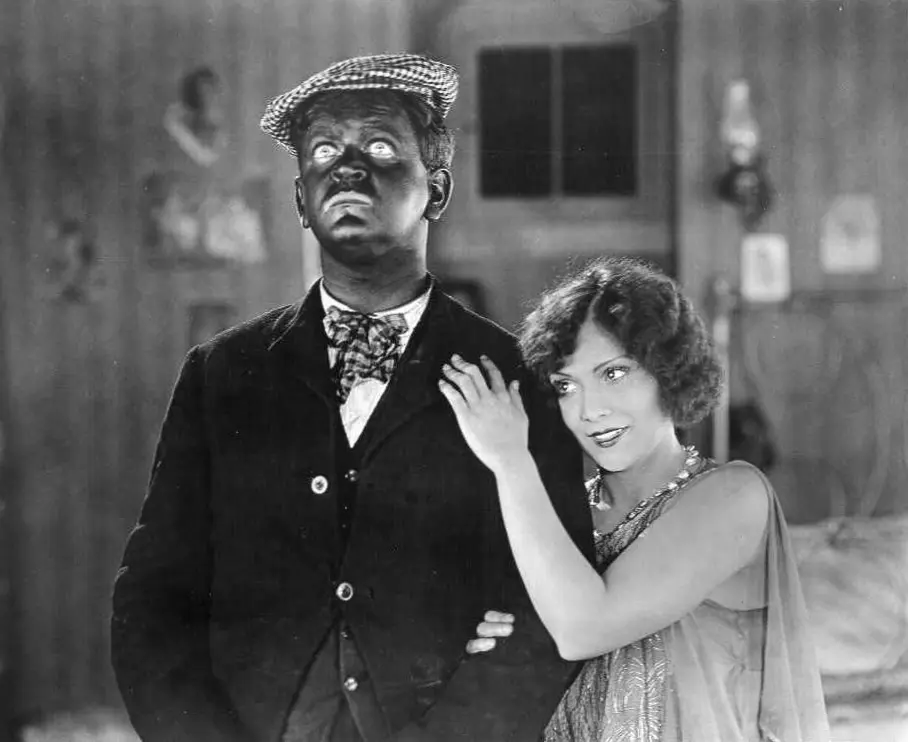
The supporting cast, including the likes of Jack Oakie and Irma Harrison, provide a rich tapestry of 1920s archetypes. Kate Bruce, playing the maternal figure, offers a grounding emotional core that contrasts sharply with the chaotic energy of the roadhouse. The film’s pacing is relentless once the investigation begins, mirroring the frantic heartbeat of a man who realizes he is in way over his head. The stakes feel genuine, a rarity in films that rely so heavily on a central comedic figure. When the knives come out, the threat isn't just a punchline; it's a visceral danger that echoes the rugged survivalism of The Alaskan.
Technically, the film is a marvel of its time. The use of low-key lighting to obscure Claude’s features and heighten the suspense of his disguise is an early precursor to the noir aesthetic that would dominate the 1940s. The camera work is dynamic, capturing the chaotic scuffles of the roadhouse with a clarity that many other silents lacked. There is a specific sequence involving a chase through the labyrinthine corridors of the bootlegger's den that rivals the tension found in Blind Man's Holiday. The editing is sharp, cutting between Claude’s internal panic and the external threats with a precision that elevates the material.
The color palette of the restoration—or at least the imagined palette of the era's tinted prints—would likely have utilized deep ambers for the interiors and cold blues for the night exteriors. These visual choices reinforce the dual nature of the title. 'His Darker Self' refers not just to the physical disguise, but to the latent courage and capacity for violence that Claude discovers within himself. It is a psychological transformation that mirrors the rugged individualism of Devil McCare or the stoic endurance in The Bargain.
In the pantheon of Lloyd Hamilton’s work, His Darker Self is an outlier. It lacks the pure, unadulterated joy of his shorter comedies, replacing it with a cynical, often grim worldview. Yet, as a piece of social history, it is indispensable. It captures a moment when America was wrestling with the fallout of Prohibition, the rise of organized crime, and the deeply entrenched racial biases that informed its entertainment. The film’s attempt to find humor in a murder investigation involving such heavy racial tropes is a testament to the 'wild west' nature of 1920s screenwriting.
When we compare it to the more pastoral or romanticized visions of the era, such as Nan of Music Mountain or Golden Dreams, the grit of His Darker Self becomes even more apparent. It is a film that refuses to offer easy comfort. Even the resolution, while satisfying in a narrative sense, leaves a lingering taste of unease. Claude survives, but the world he inhabits remains a place where mail-order dreams are frequently crushed by the weight of systemic reality.
Ultimately, the film is a fascinating failure of empathy but a resounding success of atmosphere and performance. Hamilton’s physicality is a marvel, his ability to convey a spectrum of emotion through a mask of greasepaint is a masterclass in silent acting. While the film may be an uncomfortable watch for a modern audience, it remains a vital chapter in the evolution of the detective genre and a stark reminder of the complexities of our cinematic heritage. It is as much a character study as The Career of Katherine Bush, albeit one focused on the desperate measures of a man lost in a world he wasn't built to navigate. To watch His Darker Self is to peer into a mirror that reflects the best and worst of early 20th-century storytelling—a reflection that is as distorted and captivating as a funhouse mirror in a darkened room.
IMDb —
1919
Community
Log in to comment.