DbcultAccessing Vault...
Cult Review
Senior Film Conservator
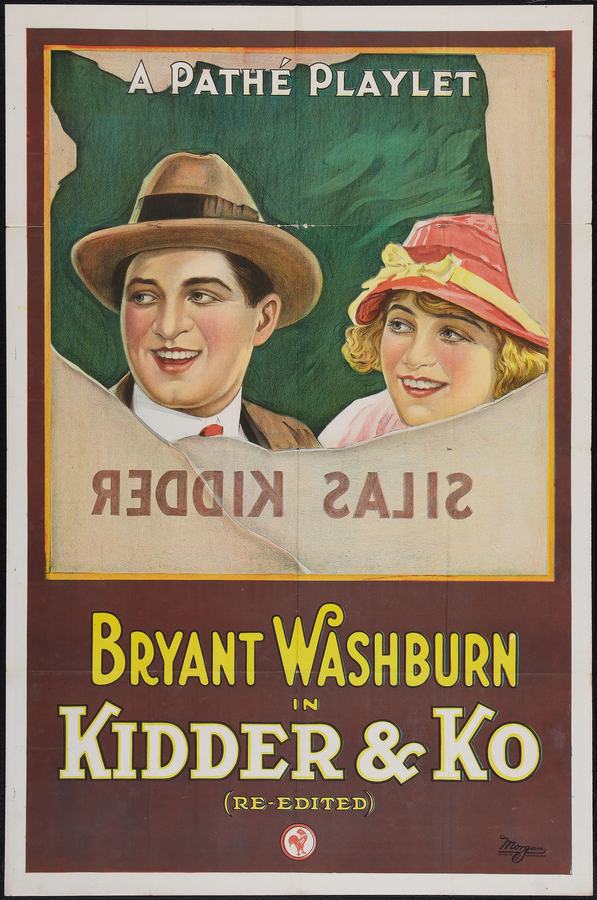
In the pantheon of early twentieth-century cinema, few films manage to balance the disparate tones of domestic drama, urban thriller, and industrial satire as deftly as Kidder and Ko (1918). Directed with a keen eye for socioeconomic contrasts, this silent gem offers more than just the standard rags-to-riches trajectory; it provides a sophisticated look at the American ethos of the era. Much like the tonal shifts found in Nancy Comes Home, the film navigates the precarious space between family expectations and individual ambition, though it swaps the rural homecoming for a high-stakes industrial conquest.
The film opens in the austere, salt-caked atmosphere of New England. Silas Kidder, played with a gruff, immovable gravity by Carl Stockdale, is the quintessential patriarch of the old guard. His world is one of codfish and tradition, a legacy he expects his son, Cuthbert, to inherit without question. However, Bryant Washburn’s Cuthbert represents the burgeoning modern spirit—restless, unconventional, and possessed of a skill set that Silas views with utter contempt. The billiards table, with its precise angles and calculated risks, becomes the battlefield for their ideological divide. When Silas turns his son out, it isn't just a rejection of a person; it's a rejection of a changing world where 'play' might actually be a precursor to 'power.'
Cuthbert’s arrival in Chicago shifts the visual palette of the film. The cinematography captures the predatory nature of the city, a stark contrast to the maritime stillness of his home. Here, the pool hall is no longer a place of leisure but a den of sharks. The sequence where Cuthbert outplays the local grifters is a masterclass in silent tension. Washburn uses his physicality to convey a sense of effortless superiority, which makes the subsequent betrayal—the theft of his winnings and the physical assault—all the more jarring. This moment of vulnerability is crucial; it strips Cuthbert of his arrogance and prepares him for the transformation that follows.
The introduction of James Knight (Harry Dunkinson) and his daughter Julie (Gertrude Selby) serves as the narrative’s pivot point. The Knight estate is portrayed with a lavishness that rivals the aristocratic settings of Le diamant noir, yet it retains a distinctly American sense of accessibility. When Cuthbert is discovered rummaging through the icebox at midnight, the film leans into a lighthearted domesticity. The ensuing capture of two burglars is handled with a rhythmic slapstick that feels both organic and earned. It is this act of 'accidental' heroism that grants Cuthbert entry into the inner sanctum of the Knight family, setting the stage for his foray into the world of manufacturing.
Perhaps the most fascinating aspect of Kidder and Ko is its celebration of the 'inventor' as a cultural hero. Cuthbert, posing as an innovator, champions the 'cutless' can invented by the clerk Bill Atwell. This subplot elevates the film from a simple romance to a commentary on the burgeoning consumer culture of 1918. The marketing of the 'Keyless Kutless Kan' is depicted as a whirlwind of success, a sharp divergence from the slow, laborious process of codfish packing. It suggests that the future belongs to those who can simplify life, not those who cling to the arduous methods of the past.
The dynamic between Cuthbert and Julie Knight is one of mutual respect and burgeoning affection, though it is threatened by the arrival of a 'bogus count.' This subplot serves as a critique of American insecurity regarding European nobility—a theme explored with more tragic weight in Hamlet, but here treated with a satirical edge. Cuthbert’s exposure of the fraud is not just a victory for his romantic prospects; it is a victory for the self-made man over the hollow titles of the Old World. He wins Julie’s love not through inheritance, but through his own wit and the fortune he amassed via the 'Kutless Kan.'
Bryant Washburn’s performance is the undeniable heart of the film. He possesses a facial elasticity and a grace of movement that allows him to transition from the 'pool hall dandy' to the 'industrial magnate' with total conviction. Gertrude Selby provides a perfect foil as Julie; she is not merely a prize to be won but a character with her own agency and discerning eye. Their chemistry is palpable, even through the flickering grain of a century-old print. The supporting cast, particularly Harry Dunkinson as the tin-can king, adds layers of humor and warmth that ground the more fantastical elements of the plot.
Technically, the film utilizes lighting to distinguish between its various locales. The shadows of the pool hall are deep and oppressive, while the Knight estate is bathed in a soft, welcoming glow. This visual storytelling is reminiscent of the atmospheric work seen in 1812, though on a much more intimate, character-driven scale. The pacing, overseen by writers Charles Sarver, M. Ramirez-Torres, and John Grey, is brisk, ensuring that the transition from New England to Chicago to the Knight estate never feels disjointed.
The climax of the film brings Cuthbert back to his roots, but he returns not as a supplicant, but as an equal. The reconciliation with Silas Kidder is handled with a restraint that avoids the overly sentimental traps of many silent dramas. While films like De forældreløse deal with the trauma of abandonment, Kidder and Ko treats Cuthbert’s exile as a necessary catalyst for growth. Silas’s eventual pride in his son’s success is a tacit admission that the 'new ways' have merit, provided they are backed by the same tenacity that built the codfish empire.
In comparing this work to other contemporary pieces like Red and White Roses, one notices a distinct lack of cynicism in Kidder and Ko. It is a film that believes in the possibility of reinvention. It suggests that the skills learned in the shadows of a pool hall—focus, precision, and the ability to read one's opponent—are the very same skills required to dominate the boardroom. This synthesis of 'low' and 'high' culture is what gives the film its enduring charm and its relevance as a historical document of American social mobility.
Ultimately, Kidder and Ko (1918) remains a vibrant testament to the storytelling prowess of the silent era. It eschews the melodrama of many of its peers in favor of a witty, energetic narrative that champions innovation and the resilience of the human spirit. Whether viewed as a romantic comedy or a study of industrial evolution, it stands as a significant achievement in Bryant Washburn’s filmography and a delightful experience for any enthusiast of early cinema. It is a film that, much like its titular 'cutless' can, opens up a world of possibilities without the mess of traditional genre constraints.
IMDb 5.4
1933
Community
Log in to comment.